
How To
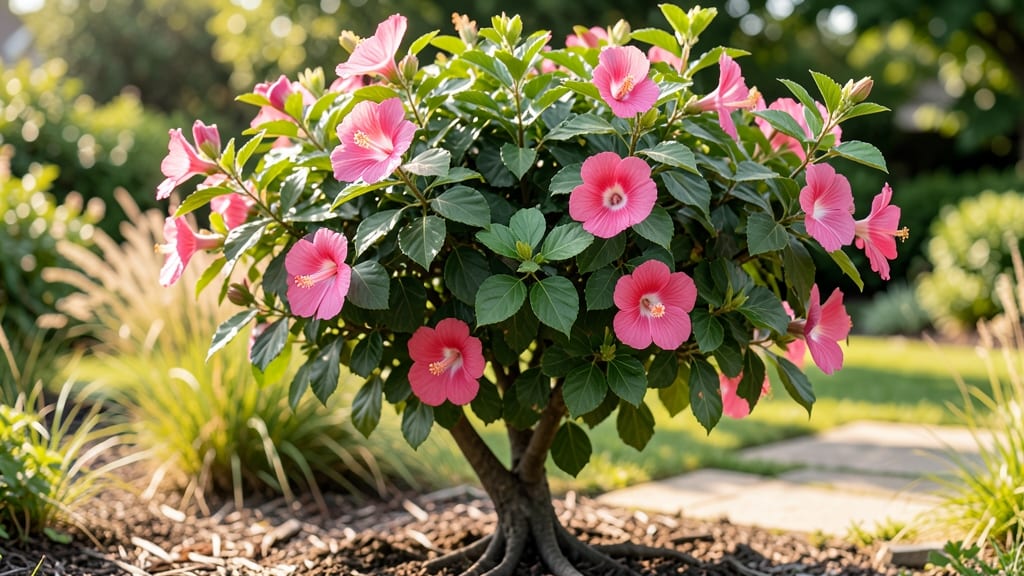
A hibiscus tree grows to how tall does a hibiscus tree grow heights between 10 and 20 feet at maturity, but its final size depends on the species, climate, and how you prune it.
Picture this: your vibrant 🌸 hibiscus tree reaching for the sky, its towering branches creating a natural privacy screen—or worse, crowding out your patio furniture. The good news? You have full control over its height with the right techniques.
Tropical hibiscus varieties can stretch toward 20 feet if left unchecked, while hardy types like Hibiscus syriacus typically top out around 10 feet. Climate plays a role too—warmer zones accelerate growth, while cooler areas (like USDA Zone 6a) may keep it more compact.
In this guide, I’ll show you how to prune for perfect height, avoid common mistakes that make trees grow too tall, and even work with dwarf varieties if space is tight.


Natural hibiscus tree height: species breakdown and growth factors
If you're dreaming of a stately hibiscus tree in your garden, you're in for a treat—but first, let's talk height! The natural growth of hibiscus trees varies wildly by species, from compact shrubs to towering 20-foot giants.
Understanding these differences helps you choose the perfect variety for your space and climate.
Hibiscus trees generally fall into two main categories: tropical hibiscus (like Hibiscus rosa-sinensis) and hardy hibiscus (such as Hibiscus syriacus, the rose-of-Sharon). Tropical varieties thrive in warm climates and can grow aggressively, while hardy hibiscus are cold-resistant and more manageable in size.
Let’s break down what to expect from each.
Your hibiscus’s final height depends on three key factors: species genetics, growing conditions, and pruning habits. For example, a Hibiscus syriacus left unpruned might reach 12-15 feet, while a Hibiscus rosa-sinensis can soar to 20 feet or more in ideal conditions.
Let’s explore these differences in detail.
🌱
As you can see, the tropical hibiscus is the fastest-growing and tallest variety, while dwarf hibiscus stays compact and manageable. If you live in USDA Zone 5 or colder, opt for Hibiscus syriacus—it’s the hardiest choice and still offers stunning blooms.
For warmer climates, tropical hibiscus will thrive but may need regular pruning to keep it from becoming a backyard giant.
Sunlight plays a huge role in height control. Hibiscus trees need full sun (6+ hours daily) to grow vigorously, but too much shade can stunt their growth. If your hibiscus isn’t getting enough light, it may grow taller and leggy as it stretches toward the sun.
In contrast, overcrowded roots or poor soil drainage can slow growth, keeping your tree shorter than expected.
Soil quality also impacts height. Hibiscus trees prefer well-draining, slightly acidic soil (pH 6.0-7.0). If your soil is clay-heavy or alkaline, roots struggle to absorb nutrients, leading to slower growth.
Amending the soil with compost or peat moss can give your hibiscus the boost it needs to reach its full potential height—or stay compact if that’s your goal.
🌿
One of the most effective ways to control hibiscus height is through pruning. For tropical hibiscus, prune in late winter or early spring to remove up to one-third of the plant’s height.
Hardy hibiscus benefit from light pruning after blooming to encourage bushier growth. Avoid heavy pruning in fall, as this can stress the plant before winter.
If you’re growing hibiscus in a container, expect it to stay shorter—typically 3-5 feet tall—unless you’re cultivating a tropical variety. Containers limit root growth, which naturally restricts height. Just ensure the pot is at least 18 inches deep and has drainage holes to prevent root rot.
🌳
Step-by-step pruning guide to control hibiscus tree height
If your hibiscus tree is reaching for the sky faster than you’d like, strategic pruning is your best tool to guide its growth. Unlike aggressive cutting that can stunt the plant, targeted pruning encourages bushier, more manageable height while preserving its blooming potential.
The key is timing—prune at the right moments to avoid stressing the tree during critical growth phases.
Before grabbing your shears, know that hibiscus trees naturally grow between 6 to 20 feet tall, depending on the variety. Hardy hibiscus (Hibiscus syriacus) typically stay on the shorter end (10–15 feet), while tropical species can soar to 15–20 feet if left unchecked.
Pruning isn’t just about height control; it’s also about shaping the tree for better airflow and sunlight penetration, which reduces disease risk.
- 1 Choose the right season: Prune late winter or early spring (just before new growth starts) to avoid shocking the tree. Avoid pruning in fall or winter, as this can limit next year’s blooms.
- 2 Gather the right tools: Use clean, sharp pruners (bypass pruners for branches under ½ inch thick) and disinfect them with rubbing alcohol to prevent disease spread. Avoid dull tools, which tear branches.
- 3 Identify the target branches: Remove dead, diseased, or crossing branches first. For height control, focus on upper branches growing vertically. Cut just above a leaf node or outward-facing bud to encourage lateral growth.
- 4 Make clean cuts: Angle cuts ¼ inch above the bud at a 45-degree angle to prevent water from pooling. Avoid leaving stubs, which invite rot. For thick branches, use loppers or a handsaw and seal the cut with pruning sealant if the branch is over ½ inch thick.
- 5 Limit pruning to 25–30% of the tree: Never remove more than one-third of the foliage in a single session. Over-pruning stresses the tree and can reduce flower production. For dramatic height reduction, spread cuts over 2–3 years.
- 6 Post-pruning care: Water deeply after pruning to help the tree recover. Apply a balanced fertilizer (7-9-5 NPK) to support new growth. Monitor for pests or disease in the weeks following pruning.
Pro tip: If your hibiscus is a tropical variety, it may need year-round light pruning to maintain shape, but always avoid heavy cuts during blooming season (summer for most varieties). For hardy hibiscus, a single late-winter pruning session is usually enough to keep it at your desired height.
Remember, pruning is a conversation with your plant. Observe how it responds—if it produces fewer blooms after pruning, you may have cut too aggressively. Adjust your approach next time, and soon your hibiscus will be the perfect height for your space without sacrificing its stunning flowers. 🌸