
Pruning
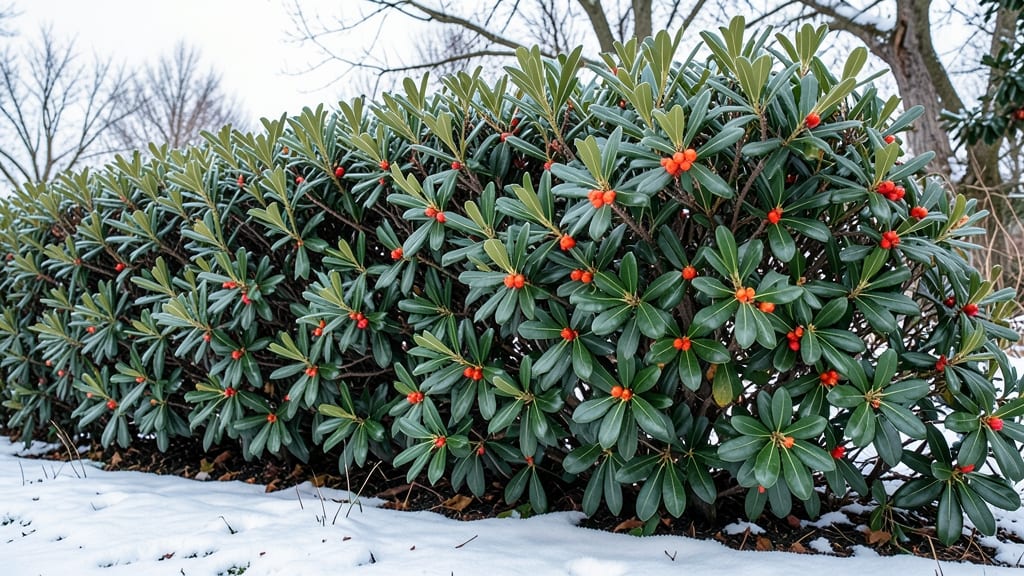
Transform your garden into a lush, fruiting paradise with these 10 stunning strawberry tree hedge designs. Discover pruning techniques that maximize fruit production while maintaining beauty year-round, perfect for both novice and experienced gardeners.
Classic Formal Strawberry Tree Hedge
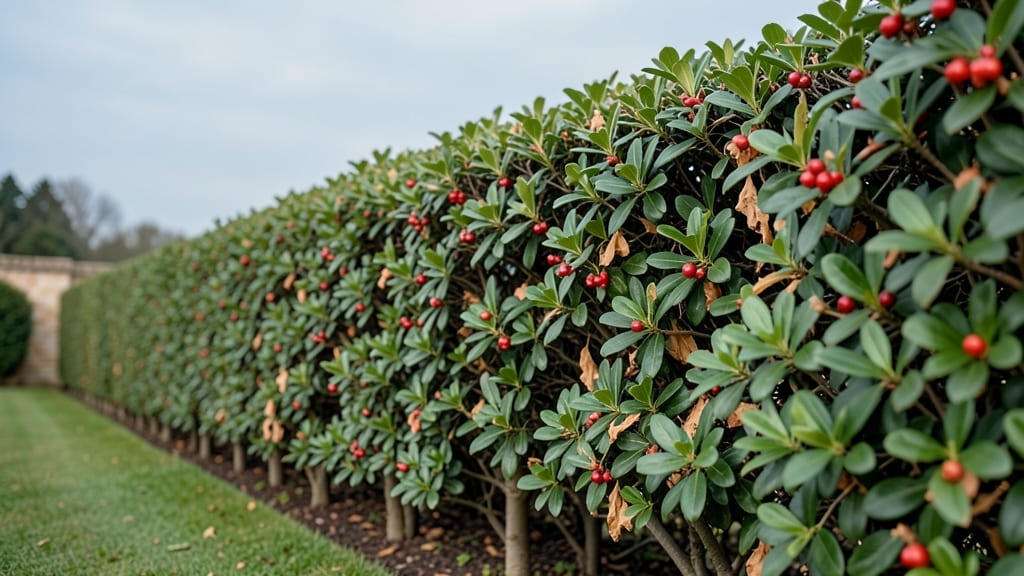
Craving a hedge that screams "old-world elegance" while still bearing fruit? The classic formal strawberry tree hedge delivers both sophistication and harvests—think rectangular perfection with year-round interest.
Plant Arbutus unedo saplings 3-4 feet apart for a dense, impenetrable barrier that matures into a glossy green wall. The key to that geometric symmetry> lies in pruning: shape in late winter before growth begins, then lightly trim after flowering to encourage bushier growth. This hedge thrives in full sun to partial shade>, making it ideal for Mediterranean-style gardens or traditional English borders.
Perfect for gardeners who love structure without sacrificing productivity—this design guarantees abundant fruit> while keeping your landscape immaculate. 🌟
Wildflower Understory Strawberry Tree Hedge
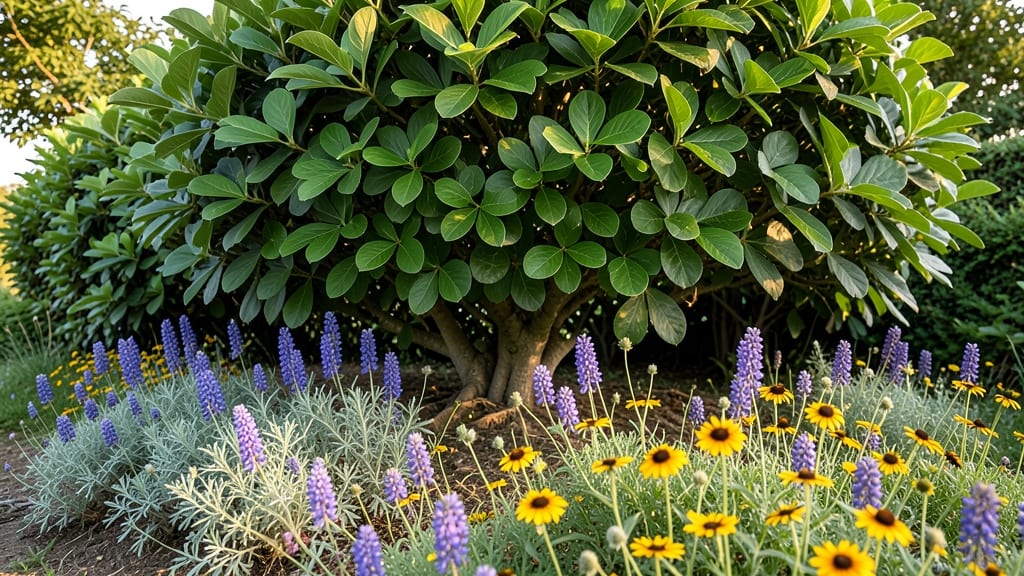
Turn your strawberry tree hedge into a buzzing pollinator paradise by weaving in native wildflowers at its base. This low-maintenance ecosystem not only supports bees and butterflies but also naturally fertilizes your fruit trees through increased pollination activity.
Choose wildflowers like lupine, black-eyed Susan, or milkweed that thrive in partial shade—ideal for the hedge's dappled sunlight. Plant them in a 2-3 foot wide band at the base, watering deeply during establishment. The flowers will attract beneficial insects that boost fruit set by 30-50% while reducing the need for chemical interventions.
This design is perfect for eco-conscious gardeners who want beauty and productivity without heavy maintenance. The wildflowers also suppress weeds naturally, saving you time and effort. 🌿
Espaliered Strawberry Tree Against Fence
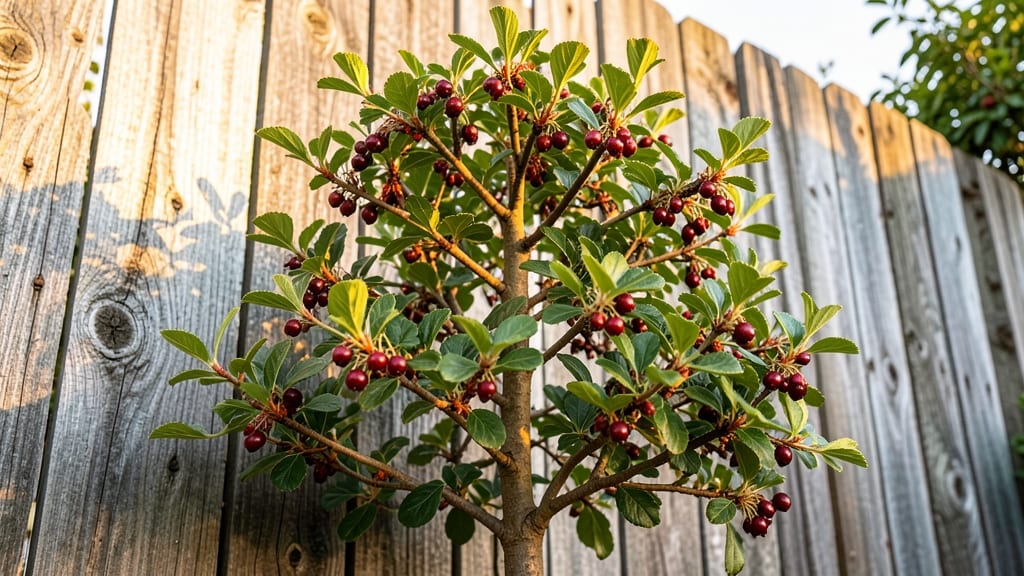
Small gardens deserve big results—and this espaliered strawberry tree delivers both! By training branches horizontally against a fence, you create a space-saving privacy screen that produces fruit while adding architectural charm to narrow spaces.
Start by selecting a young strawberry tree (Arbutus unedo) and attach branches to a sturdy fence or trellis using soft ties. Space branches 12-18 inches apart to encourage airflow and fruit development. Prune in late winter to shape the fan, removing any crossing branches to maintain the flat design. The result? A year-round living screen with edible fruit and seasonal interest from flowers and peeling bark.
This design is perfect for urban gardeners or anyone with limited space who still wants a functional hedge that doubles as a fruit producer. 🌱
Multi-Tiered Strawberry Tree Hedge
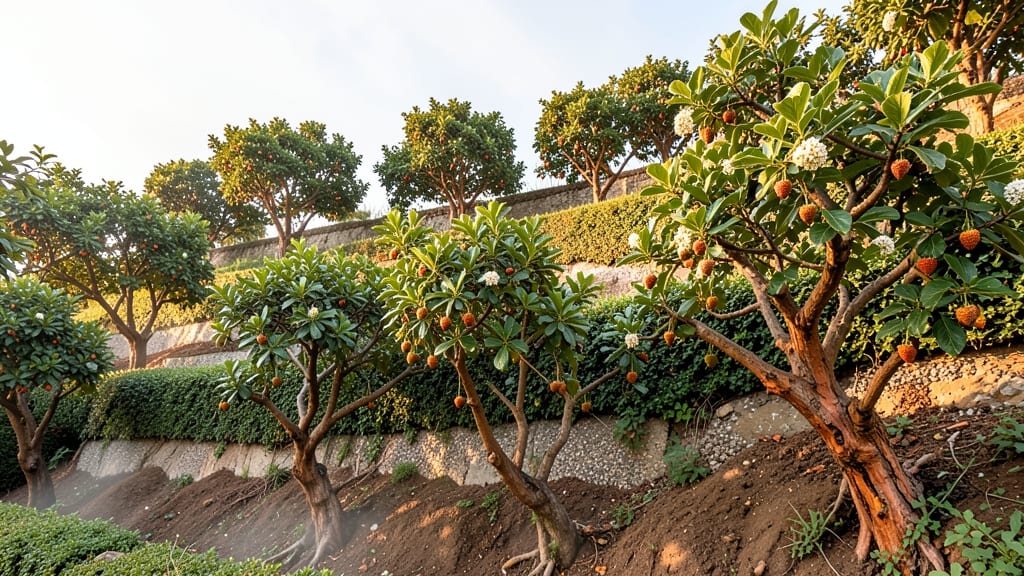
Transform sloped gardens into stunning terraces with a multi-tiered strawberry tree hedge that combines fruit production with erosion control. This design uses staggered heights to create natural layers, making steep areas both functional and visually striking.
Plant trees at varying elevations—typically 3-5 feet apart—along retaining walls or terraces. The staggered heights allow sunlight to reach all levels while the deep root systems stabilize soil. Prune lightly in late winter to encourage new growth, and enjoy year-round interest from the peeling bark, fragrant flowers, and edible berries.
Perfect for Mediterranean-style gardens or hilly landscapes, this hedge thrives where others struggle. It’s ideal for gardeners who want both beauty and practicality without sacrificing fruit. 🌟
Topiary Strawberry Tree Hedge
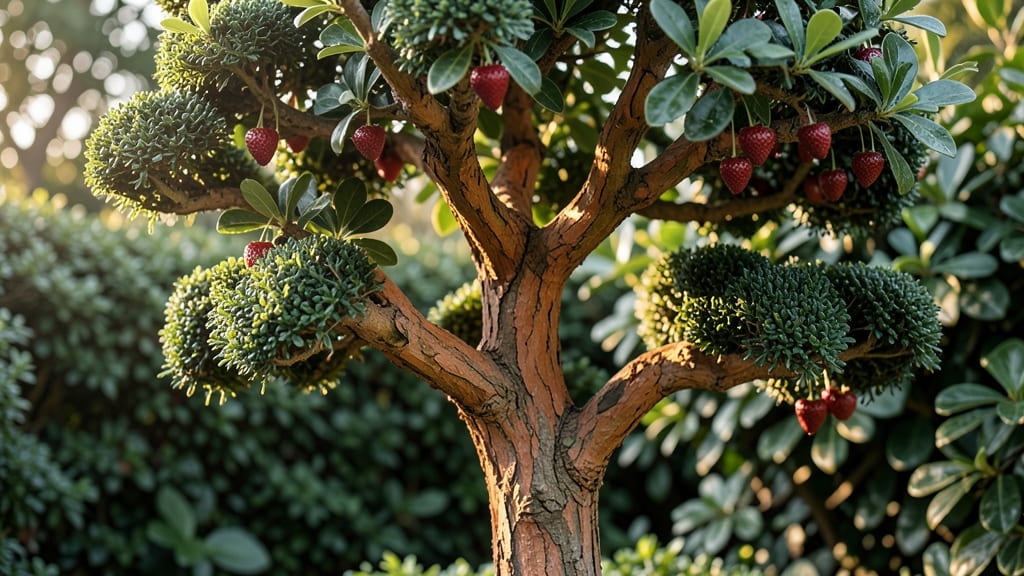
Turn your garden into a living masterpiece with a topiary strawberry tree hedge—where edible fruit meets sculptural artistry. This design transforms ordinary hedges into eye-catching focal points, blending the rustic charm of Arbutus unedo with the precision of formal topiary.
Start by selecting young, flexible branches for shaping—think spirals, cones, or animal silhouettes. Prune in late winter or early spring to encourage new growth, using sharp shears to maintain clean lines. The key is patience: strawberry trees respond well to gradual shaping over time, rewarding you with year-round interest from glossy foliage, delicate flowers, and edible berries.
This hedge is perfect for gardeners who love drama and functionality. Whether framing an entrance or anchoring a formal parterre, it delivers a high-impact look that’s as productive as it is beautiful. 🌟
Informal Curved Strawberry Tree Hedge
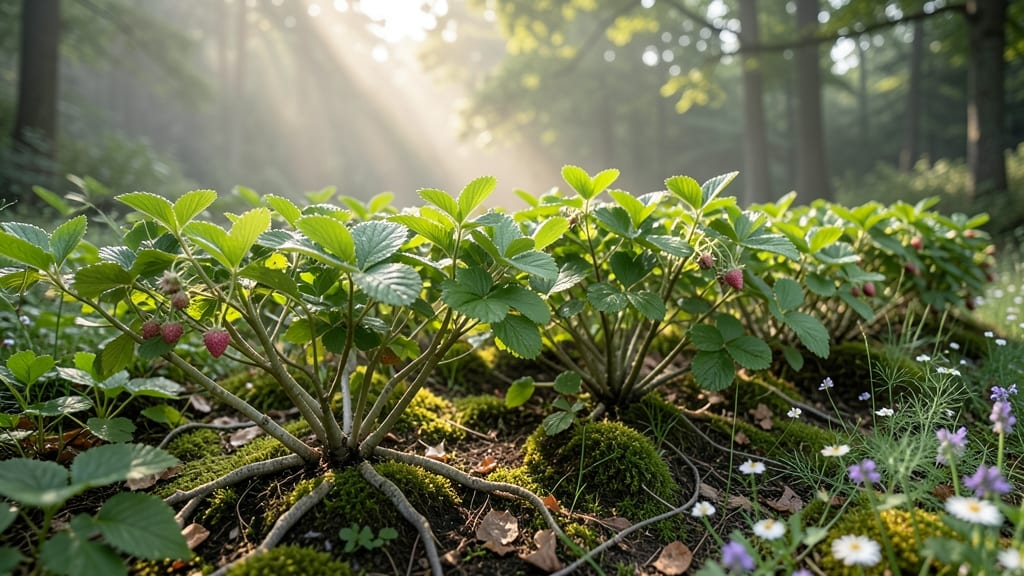
Skip the rigid lines and embrace the wild charm of a strawberry tree hedge with effortlessly curved edges. This organic design mimics nature's own meandering paths, blending seamlessly into cottage gardens or woodland borders while producing edible fruit.
Plant saplings every 3-4 feet along a gently curving line, allowing branches to grow naturally without strict pruning. The key is light shaping in late winter—simply trim back any straggly growth to maintain the hedge's graceful silhouette. This approach yields consistent fruit without the upkeep of formal hedges, as the tree's natural shape encourages better air circulation and sunlight penetration.
Perfect for gardeners who love low-maintenance beauty, this hedge thrives in partial shade to full sun and pairs beautifully with native shrubs or wildflowers. Let your strawberry tree hedge grow wild with purpose! 🌿
Dwarf Strawberry Tree Hedge for Containers
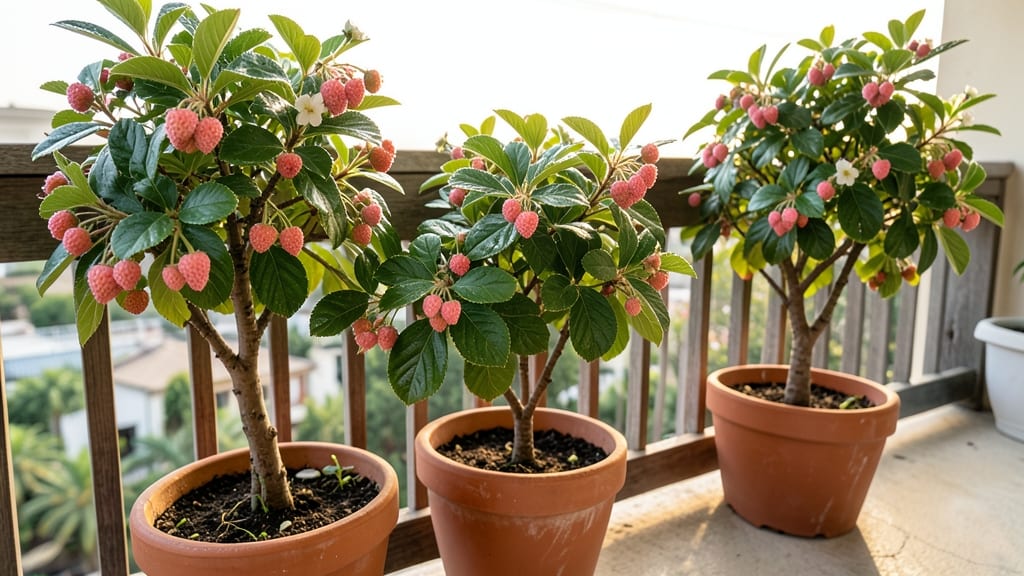
Turn your balcony or patio into a fruiting paradise with dwarf strawberry trees in containers—these compact varieties thrive in limited spaces while delivering sweet, edible berries. Unlike their larger counterparts, these plants stay under 3 feet tall, making them perfect for urban gardeners with small outdoor areas.
For optimal growth, choose well-draining pots at least 18 inches deep and prune after fruiting (late fall or winter) to encourage bushier growth. Avoid overcrowding—space plants 3-4 feet apart in containers to allow airflow and prevent disease. With full sun to partial shade, these trees reward you with year-round interest, from fragrant spring flowers to glossy evergreen leaves.
Ideal for renters or small-space gardeners, dwarf strawberry trees bring the beauty and bounty of a hedge without the footprint. Their low-maintenance nature makes them a dream for city dwellers craving greenery and fruit. 🌱
Pollenizer Strawberry Tree Hedge Pair
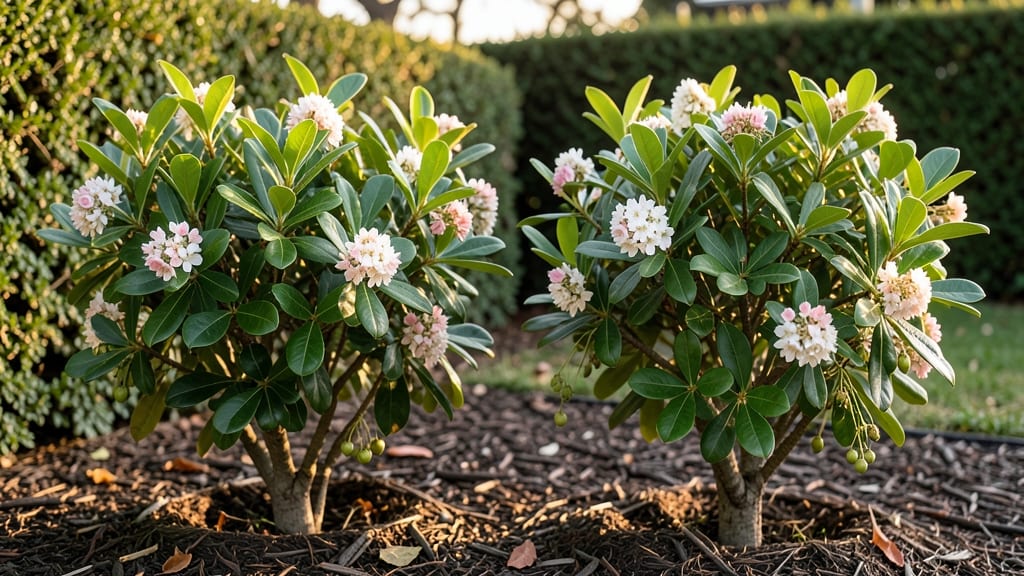
Want a guaranteed boost in strawberry tree fruit production without extra effort? Planting two compatible varieties side-by-side creates a natural pollination powerhouse—each tree’s flowers cross-pollinate with the other, resulting in 50-100% more fruit than single varieties alone.
Choose varieties like ‘Elena’ (early bloomer) paired with ‘Marina’ (late-season fruit) for year-round harvests. Space them 3-4 feet apart to ensure branches intertwine naturally. This method works especially well in small gardens or urban spaces where single trees might underperform due to limited pollinators.
Perfect for homeowners who love low-maintenance yet high-reward gardening, this hedge pair delivers both beauty and bounty with minimal extra work. 🌟
Strawberry Tree Hedge with Climbing Roses
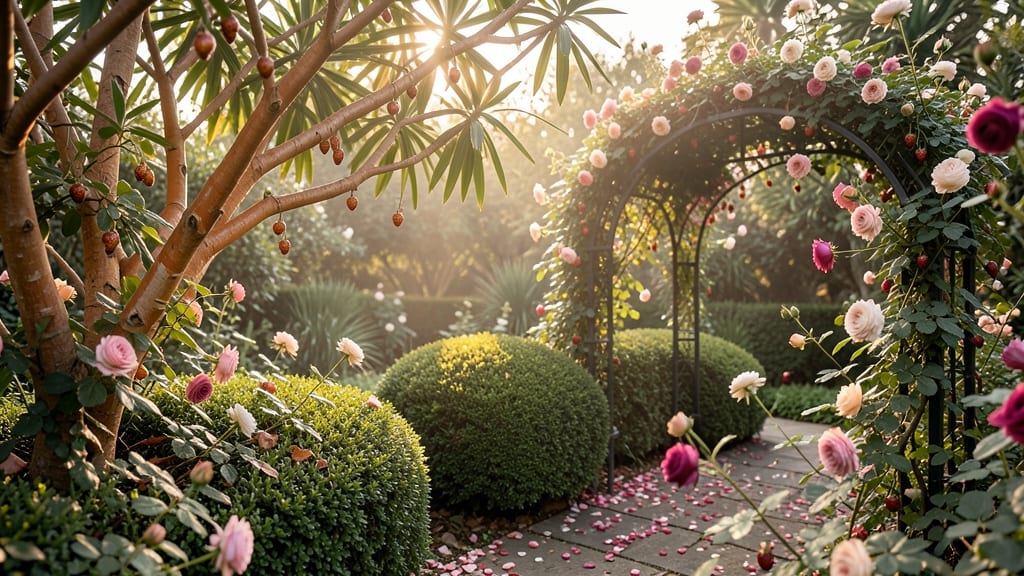
Create a dreamy, sensory-rich garden that doubles as a wedding venue or romantic hideaway by combining strawberry trees with climbing roses. This layered design marries the tree's fragrant spring flowers and edible autumn berries with roses' velvety petals and intoxicating scent, delivering a year-round display of color and fragrance.
Plant the strawberry trees first, spacing them 6-8 feet apart to form a low hedge (4-6 feet tall). As they establish, weave climbing roses through the branches or train them along nearby trellises. Choose rose varieties like 'Climbing Iceberg' or 'New Dawn' for their disease resistance and long bloom seasons. Prune the strawberry trees lightly in late winter to encourage new growth, while shaping roses after their spring bloom to maintain their structure.
This combination thrives in full sun to partial shade and works beautifully in Mediterranean or cottage-style gardens. Perfect for gardeners who want both beauty and bounty, this duo creates a fragrant, photogenic backdrop that's ideal for special occasions. 🌷
Winter Interest Strawberry Tree Hedge

When winter strips most gardens bare, a strawberry tree hedge stands out with its evergreen foliage and persistent fruit, offering a striking contrast against snowy landscapes. Unlike seasonal plants, cold-hardy varieties like Arbutus 'Marina' or 'El Dorado' retain their glossy leaves and bright red berries through frost, creating a focal point that works year-round.
Plant these hedges in well-draining soil with full sun to partial shade for best results. Prune lightly in late winter to shape the hedge while removing any dead or crossing branches. The fruit, though not edible for humans, adds vibrant color and attracts wildlife like birds. This design thrives in USDA zones 7-10, making it ideal for Mediterranean or coastal gardens.
Perfect for gardeners seeking low-maintenance winter interest, this hedge also works beautifully in urban landscapes where seasonal changes are stark. 💚