
Trees
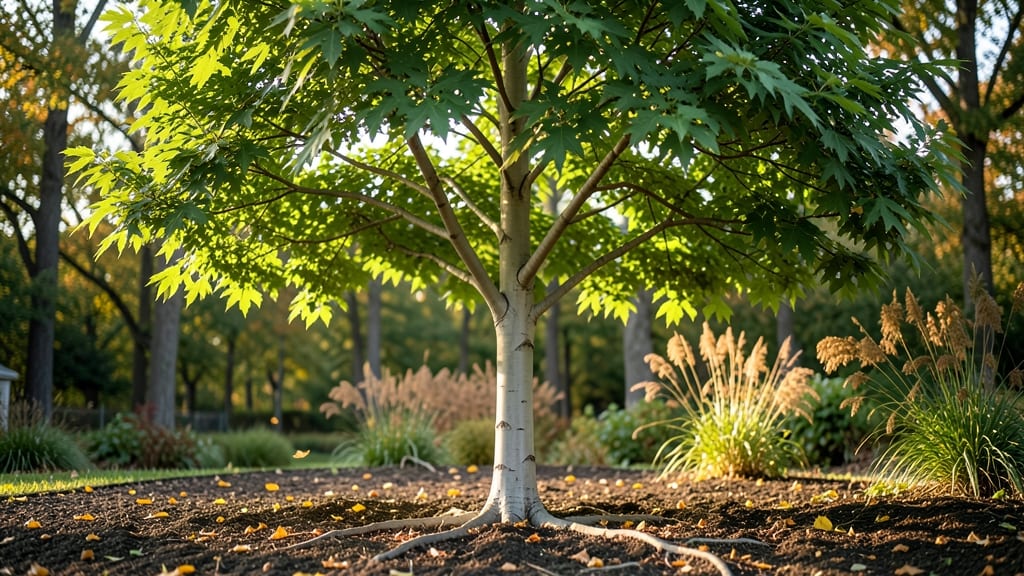
Poplar tree leaves in fall typically turn a dull yellow or brown before dropping, often without vibrant reds or oranges. They usually change color in late autumn, around October to November, depending on climate and tree health, as cooler temperatures trigger chlorophyll breakdown and nutrient redistribution.
Poplar trees stand out in autumn for their lack of showy colors, unlike maples or oaks. 🌳 The muted yellows and browns come from limited anthocyanin production, which is what creates those fiery reds in other species.
Instead, poplars focus on quickly recycling nutrients back into their roots before shedding leaves—a survival strategy that explains their early color change. This process often starts earlier in cooler climates, sometimes as early as September, rather than waiting until November like many deciduous trees.
What makes identification tricky is that poplar leaves can sometimes develop faint orange tinges near the edges before fully browning. Look for their distinct diamond-shaped leaves with smooth edges and pointed tips, paired with their distinctive white or gray bark that peels in strips.
Many gardeners mistake poplars for willows or aspens, but the bark texture and leaf shape are key differentiators. If you're near a river or wetland, you're even more likely to spot poplars—they thrive in moist soils where other trees might struggle.
💡 In This Article
- Why Poplar Leaves Don’t Turn Bright Colors in Fall
- Best Ways to Identify Poplar Trees by Fall Foliage
Why poplar leaves don’t turn bright colors in fall
The muted fall colors of poplar leaves stem from their unique biochemical makeup. Unlike maples or oaks that produce vibrant reds and oranges, poplars have low anthocyanin production—the pigments responsible for those fiery hues.
Instead, they rely primarily on carotenoids (yellow pigments) and the gradual breakdown of chlorophyll, which creates their dull yellow-brown tones. This process happens faster in poplars because their leaves contain higher levels of tannins, which accelerate chlorophyll degradation.
Here’s what’s happening at the cellular level: As temperatures drop below 50°F, poplar trees trigger a rapid nutrient recycling process. The chlorophyll molecules, which give leaves their green color, break down into xanthophylls (yellow) and carotenoids (orange), but without the anthocyanin boost.
This is why you’ll often see poplar leaves turn a pale yellow or grayish-brown before dropping—sometimes within just 2-3 weeks of color change. Compare this to maples, which take 6-8 weeks to develop their peak reds due to higher anthocyanin synthesis.
Poplars also prioritize nutrient redistribution differently. While trees like oaks hold onto some chlorophyll longer to maximize sugar production, poplars quickly reabsorb nutrients from their leaves and transport them to roots and stems.
This early shutdown explains why poplar leaves often appear dry or papery before falling, unlike the crisp, vibrant foliage of other species. The trade-off? They sacrifice colorful displays for faster survival in colder climates.
Another key factor is light exposure. Poplar leaves growing in full sun may develop slightly more orange edges due to increased carotenoid activity, but this is subtle compared to species like sweetgums. In shaded areas, the colors fade even faster to a dull brown.
This is why poplars in urban parks—often planted in tight spaces—rarely put on a spectacular show. 🌿 Their fall foliage is more about function than flair.
What most people don’t realize is that poplar leaves’ early color change is a stress response. The tree’s rapid nutrient recycling is an adaptation to their fast-growing nature—poplars can grow up to 3-5 feet per year in ideal conditions.
This growth demands quick nutrient turnover, which explains why their leaves often look wilted or curled before dropping, a sign of accelerated senescence (aging process).
For comparison, consider the sugar maple: its anthocyanin production peaks when days are 50-60°F and nights drop below 40°F, creating those iconic reds. Poplars, however, trigger leaf drop when nighttime temps hit 35-40°F, skipping the anthocyanin phase entirely.
This biological difference is why poplars are rarely featured in fall foliage tours—they’re the "quiet achievers" of the tree world.