
Neem Oil
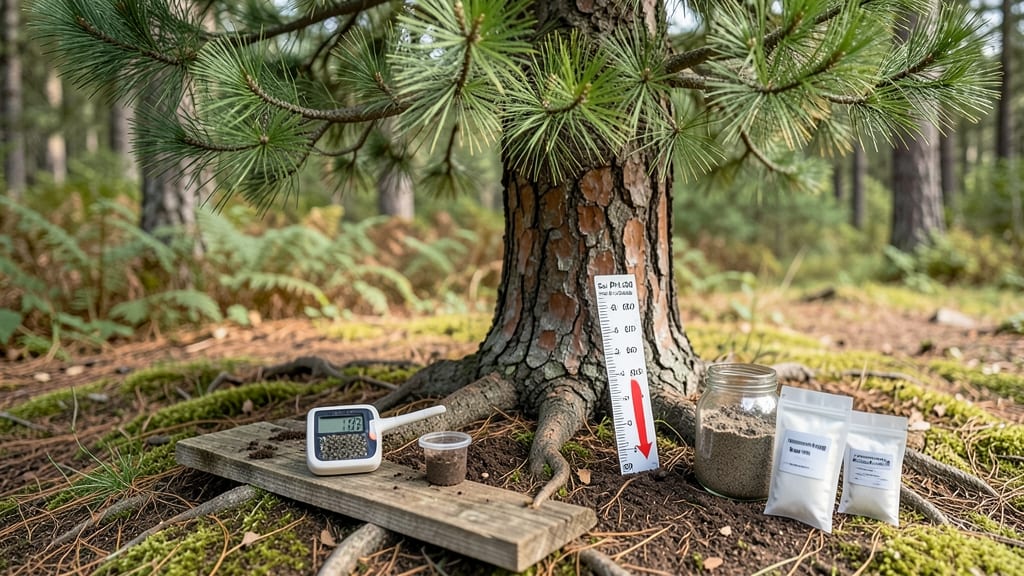
Pine trees thrive in soil with a pH between 4.5 and 6.0—too high or too low, and you’ll see stunted growth, yellowing needles, or even pest problems.
Picture this: you’ve planted your 🌲 with care, but six months later, it’s barely taller than a soda can. The issue might be lurking right under your feet—your soil’s pH could be off by just a point or two, slowing growth to a crawl.
Most gardeners overlook soil pH when planting pine trees, assuming any well-draining dirt will do. But pines are picky—they crave acidic conditions, and getting it right means faster growth, stronger roots, and fewer diseases.
In this guide, I’ll walk you through how to test your soil’s pH, the best amendments to use, and the exact ranges for different pine species—so you can give your tree the perfect foundation for years of healthy growth.
Optimal pine tree soil pH levels by species and growth stage
Pine trees thrive when their soil pH matches their natural preferences—most prefer acidic soil between pH 4.5 and 6.0. However, not all pines are created equal. Some species, like the Scots pine, tolerate slightly higher pH, while others, such as the Eastern white pine, demand stricter acidity.
Understanding these differences is key to avoiding stunted growth or nutrient deficiencies.
Young pine seedlings often need slightly more acidic soil (pH 4.5–5.5) to establish strong roots, while mature trees can adapt to a broader range. Over time, their root systems release organic acids that naturally lower soil pH, creating a self-regulating environment.
But if your soil is too alkaline or compacted, you’ll need to intervene.
Here’s how the ideal soil pH for pine trees varies by species and growth stage, plus which types are acid-loving versus adaptable:
For acid-loving pines like the Eastern white pine or Mugo pine, maintaining a pH below 5.5 is critical. These species struggle in alkaline soils, where nutrient uptake—especially for iron and manganese—becomes difficult.
In contrast, adaptable species like the Scots pine can handle slightly higher pH levels, making them better suited for regions with naturally alkaline soils.
If you’re planting a new pine tree, test your soil’s pH before digging. Most garden centers sell affordable DIY pH test kits (or you can send a sample to a lab for precise results).
For acidic soils, add sulfur or pine needles to lower pH gradually. If your soil is too alkaline, peat moss or composted pine bark can help acidify it over time.
One common mistake is assuming all pine trees have the same pH needs. For example, a Ponderosa pine might tolerate a pH of 6.0–6.5 as a mature tree, but its seedlings will wilt or yellow if the pH rises above 5.5.
Always match the growth stage to the correct pH range to avoid stress.
Regional soil types also play a role. In the Pacific Northwest, where soils are naturally acidic, most pines thrive with minimal adjustments. But in arid or limestone-heavy areas (like parts of the Southwest), you may need to amend soil annually to keep pH in check.
Mulching with pine straw or oak leaves can help maintain acidity naturally.
Pro tip: Monitor your pine tree’s foliage color as a
How to test and adjust soil pH for pine trees: step-by-step guide
Pine trees thrive in acidic soil with a pH range of 4.5 to 6.0. If your soil is too alkaline or acidic, your trees may struggle with nutrient uptake, stunted growth, or even disease.
Testing and adjusting soil pH is simpler than you think—let’s break it down into clear, actionable steps.
Before you begin, gather your tools: a soil pH test kit (digital or liquid), a small trowel, gloves, and organic or inorganic amendments like elemental sulfur (to lower pH) or pelletized lime (to raise pH). Safety first—always wear gloves when handling amendments to protect your skin.
Step-by-Step Guide to Testing and Adjusting Soil pH
-
Step 1: Collect Soil Samples
Dig a hole 6 inches deep near your pine tree’s dripline (outer edge of branches). Collect 5-6 small samples from different spots, then mix them in a clean bucket. -
Step 2: Test Soil pH
Follow kit instructions: mix soil with distilled water, wait 5-10 minutes, then compare to the color chart. For a home method, use red cabbage juice (steep cabbage in boiling water, cool, then mix with soil—purple indicates acidic, blue-green indicates alkaline). -
Step 3: Interpret Results
pH 4.5–6.0: Ideal for pines—no changes needed.
pH < 4.5: Too acidic—add pelletized lime (1 lb per 100 sq ft).
pH > 6.0: Too alkaline—add elemental sulfur (1 lb per 100 sq ft) or pine needles (natural acidifier). -
Step 4: Apply Amendments
Spread amendments evenly around the tree’s root zone (avoid the trunk). Water thoroughly to activate changes. For organic options, use composted pine bark or peat moss to acidify soil naturally. -
Step 5: Retest in 2–3 Months
Soil pH changes take time. Retest after amendments and adjust as needed. For sensitive species like white pine, monitor closely—over-correcting can harm roots.
🌲 Pro Tip: Mulch with pine straw to maintain acidity naturally over time.
If your soil is extremely alkaline (pH > 7.0), consider planting in a raised bed with acidic soil mix. For organic gardeners, coffee grounds or vinegar (diluted) can help lower pH temporarily, but use sparingly to avoid burning roots.
Remember, pine trees are resilient, but gradual adjustments work best. Avoid drastic pH shifts, which can shock the tree’s root system. With the right pH, your pine trees will grow stronger, resist pests, and thrive for decades.
Got a stubborn pH issue? Try testing multiple spots in your yard—soil pH can vary drastically even in small areas. Happy gardening! 🪴