
Pests and Diseases
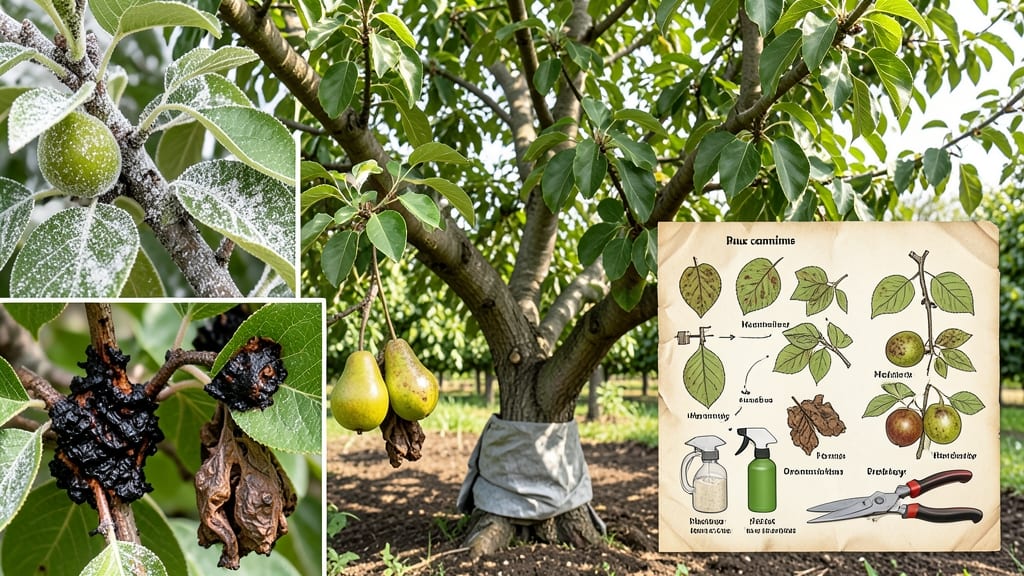
Pear tree diseases and treatment can turn your harvest into a disappointment faster than you think. 🌿 I’ve seen healthy trees wither overnight from these fungal blights—until I learned the early warning signs and quick fixes that actually work. The key is acting before the disease spreads beyond control.
Most problems start with wet spring weather or poor air circulation, which is why prevention matters just as much as treatment. You’ll need sharp pruning shears, copper fungicide, and a clear plan for removing infected branches before they kill the whole tree.
I’ll show you exactly how to spot the difference between blackened leaves (scab) and oozing cankers (fire blight).
With the right tools and timing, you can save your tree—and your pears—without harsh chemicals. Organic options like neem oil work well for mildew, while copper sprays stop fire blight in its tracks. The goal? A tree that looks healthy by summer and produces fruit again next year.
This isn’t just about fixing what’s wrong—it’s about keeping your tree strong for decades. Whether you’re dealing with a young sapling or a mature orchard, these steps cut down on guesswork and get you results fast. Let’s get your pears back on track.
Root Causes of Pear Tree Struggles
Pear trees, like any living plant, are susceptible to diseases when their natural defenses weaken. Understanding why these issues arise is the first step in prevention and treatment.
Below, we break down the key factors that create the perfect storm for fungal infections, bacterial attacks, and environmental stress in pear trees.
Fungal diseases thrive in moist, warm conditions—ideal environments that often develop when pear trees are stressed. Here’s how fungi exploit your tree:
- Overhead Irrigation: Watering from above (especially late in the day) keeps leaves and fruit damp for extended periods, giving fungi like Venturia (causing scab) or Erwinia (fire blight) a foothold. Fungal spores splash onto wounds or healthy tissue, germinating within hours.
- Poor Air Circulation: Dense canopies or overcrowded orchards trap humidity. Fungi spread faster in stagnant air, while good airflow (from pruning and spacing) helps leaves dry quickly.
- Weakened Tree Defense: Nutrient deficiencies (especially calcium or zinc) or drought stress make trees vulnerable. Fungi target trees with thin, brittle bark or damaged bark from hail/sunburn.
💡 Pro Tip: Fungal spores often overwinter in fallen leaves or mummified fruit. Rake up debris in late winter to starve them before the growing season.
Bacteria like Erwinia amylovora (fire blight) or Pseudomonas syringae (bacterial spot) don’t need spores—they hitch rides on wind, insects, or tools. Here’s how they gain entry:
- Open Wounds: Pruning cuts, storm damage, or insect bites create entry points. Bacteria ooze into the tree’s vascular system, clogging xylem and causing wilting ("shepherd’s crook" in fire blight).
- Contaminated Tools: Pruners or loppers carrying bacterial slime from infected branches spread disease to healthy tissue. Even a tiny smear can introduce Erwinia.
- Bloom Time Infections: Pear trees are most susceptible during full bloom (April–May). Rain during this window dilutes natural antibacterial compounds in nectar, making flowers prime targets for bacterial spot.
⚠️ Warning: Fire blight can kill a tree in 24–48 hours if left untreated. Prune below infected branches by 6–12 inches to remove latent bacteria.
Diseases don’t just appear—they exploit stress. Pear trees under environmental duress drop their guard, inviting pathogens. Common triggers include:
| Stressor | How It Weakens the Tree | Disease Risk |
|---|---|---|
| 💧 Overwatering | Soggy roots suffocate beneficial microbes, while waterlogged soil promotes Phytophthora root rot. | Root rot, crown rot, fungal leaf spots |
| ☀️ Sun Scorch | Sudden heat or drought causes bark splitting, inviting Botryosphaeria canker fungi. | Canker diseases, dieback |
| 🍄 Competing Fungi | Weeds or grass smothering the base block sunlight, while their decay feeds Armillaria (honey fungus). | Root rot, decline |
🌡️ Climate Connection: Pear trees in humid climates (like the Pacific Northwest) face higher fungal pressure, while arid regions risk bacterial spot from dry-wet cycles.
Insects don’t just eat leaves—they deliver diseases. Here’s how:
- Pear Psylla: These sap-sucking insects excrete honeydew, a sticky substrate for Capnodium (sooty mold) fungi. Infested trees show black, velvety growth on leaves.
- Borers (Flatheaded Appletree Borer): Larvae tunnel under bark, creating wounds where Nectria cankers take hold.
- Japanese Beetles: Their feeding skeletonizes leaves, reducing photosynthesis and weakening the tree’s ability to fight pathogens.
🛡️ Defense Strategy: Use kaolin clay or neem oil to deter pests before they become disease vectors.
Practical fixes for pear tree ailments
When your pear tree shows signs of distress, acting quickly can save its life—and your harvest! Below are targeted solutions for the most common fungal blights and pests, paired with prevention tips to keep your tree thriving.
Think of this as your pear tree first-aid kit—simple, effective, and easy to follow.
🔥 Fix: Fire Blight (Neck Rot & Cankers)
This bacteria-fungal hybrid (yes, it’s sneaky!) spreads like wildfire (literally). Here’s how to prune and protect:
- 🔪 Cut Out the Infected Parts: Use sterilized pruners (wipe with rubbing alcohol between cuts) to remove all infected branches—at least 6 inches below the last visible canker. Burn or bag the clippings do not compost.
- 💧 Apply Copper Fungicide: Spray a copper-based bactericide (like Copper Sulfate) on pruning wounds and surrounding foliage. Reapply every 2–3 weeks during wet seasons.
- 🌡️ Boost Tree Health: Water at the base (not overhead) and mulch with wood chips to improve drainage. Healthy trees fight infections better!
💡 Prevention Pro Tip: Prune in dry weather (never after rain) and avoid wounding trees in spring when bacteria are most active.
🍳 Powdery Mildew (White Dusty Coating)
This fungal blanket loves humidity but hates airflow. Tackle it with:
- 👨🍳 Scrub Off the Fungus: Use a soft brush dipped in neem oil solution (1 tbsp neem oil + 1 quart water + a drop of dish soap) to gently brush off mildew. Do this on dry, sunny days.
- 🥘 Spray Fungicidal Mix: Apply a baking soda spray (1 tbsp baking soda + 1 tsp oil + 1 gallon water) every 7–10 days during outbreaks. For severe cases, switch to sulfur-based fungicide.
- ✨ Improve Air Circulation: Thin out dense branches and space trees 10–15 feet apart. Avoid overhead watering.
💡 Prevention Pro Tip: Plant resistant varieties like Moonglow or Kieffer pears. Reflective mulch (like aluminum foil) around the base can reduce humidity near the soil.
🥘 Black Spot (Dark Spots on Leaves)
This leaf-eating menace weakens your tree by blocking sunlight. Act fast:
- 🍂 Remove Infested Leaves: Rake up and dispose of fallen leaves immediately. Do not compost—bag and trash them.
- 🔪 Prune for Sunlight: Thin the canopy to increase airflow. Focus on lower branches where humidity lingers.
- 🌿 Apply Organic Fungicide: Use potassium bicarbonate (1 tbsp + 1 tsp soap + 1 gallon water) or myclobutanil (synthetic but effective). Spray every 10–14 days.
💡 Prevention Pro Tip: Water early in the day so leaves dry quickly. Avoid nitrogen-heavy fertilizers, which encourage tender, fungus-loving growth.
🔪 Pear Psylla (Sap-Sucking Bugs)
These tiny green pests leave sticky honeydew and curled leaves. Smother them:
- 💦 Blast Them Off: Use a strong hose spray to knock adults off branches. Do this early morning when bugs are sluggish.
- 🍎 Apply Horticultural Oil: Spray dormant oil in late winter (before buds swell) and again in early spring. Repeat every 2 weeks during outbreaks.
- 🌿 Introduce Beneficial Insects: Release ladybugs or lacewings to prey on psylla eggs and nymphs.
💡 Prevention Pro Tip: Reflective mulch (like silver plastic) around the tree trunk can confuse and repel flying adults.
🍎 Codling Moth (Wormy Fruit)
This fruit-boring villain turns pears into mushy messes. Traps and barriers work best:
- 🪲 Set Pheromone Traps: Hang codling moth traps in early spring to catch males before mating.
- 🧴 Apply Kaolin Clay: Spray Surround WP (kaolin clay) on fruit and leaves to create a physical barrier moths avoid. Reapply after rain.
- 🍎 Hand-Pick Worms: Check fruit weekly and squish larvae (wear gloves!). Drop them into soapy water.
💡 Prevention Pro Tip: Remove fallen fruit from the ground immediately—larvae pupate in the soil and re-emerge next season.
No matter the issue, a healthy tree fights diseases better. Follow these year-round habits:
- 💧 Water Deeply, Rarely: 1–2 inches per week (deep soak, not frequent light sprinkles). Use drip irrigation to avoid wetting leaves.
- 🌿 Mulch Like a Pro: Apply 3–4 inches of organic mulch (wood chips, straw) away from the trunk to retain moisture and block weeds.
- 🍎 Fertilize Smartly: Use a balanced fertilizer (10-10-10) in early spring. Avoid high-nitrogen fertilizers, which encourage soft, disease-prone growth.
- 🔍 Monitor Regularly: Check undersides of leaves and branch crotches weekly for early signs of trouble.
Frequently asked questions
How do I tell if my pear tree has fire blight vs. fungal scab?
Fire blight shows as blackened, oozing cankers on branches (often with a "shepherd's crook" shape) and wilted blossoms. Fungal scab appears as olive-brown spots on leaves that crack open when wet. The key difference: Fire blight spreads rapidly in wet spring weather while scab thrives in humid summers.
Can I use the same fungicide for powdery mildew and black spot?
No—powdery mildew responds best to sulfur-based sprays or neem oil, while black spot needs copper fungicides or potassium bicarbonate. Mixing them can harm your tree. Always check the label for targeted diseases and application timing.
Is it safe to compost leaves with fungal diseases?
Never compost infected leaves! Fungal spores survive the process and can reinfect your tree. Bag and trash them immediately. For organic matter, use only healthy leaves or compost in a separate bin at 140°F+ for 3+ days to kill pathogens.
How often should I prune to prevent diseases?
Prune once in late winter (to remove dead wood) and again in early summer (to improve airflow). Always use sterilized tools and cut 3–6 inches below any suspicious cankers. Thin the canopy by 20–30% to reduce humidity buildup.
Will my pear tree recover if I treat diseases late in the season?
Late treatment won’t cure active infections, but it can prevent spread to next year. Focus on removing infected branches and applying dormant oil in winter. Healthy growth in early spring is your best defense for the following season.