
Blooming
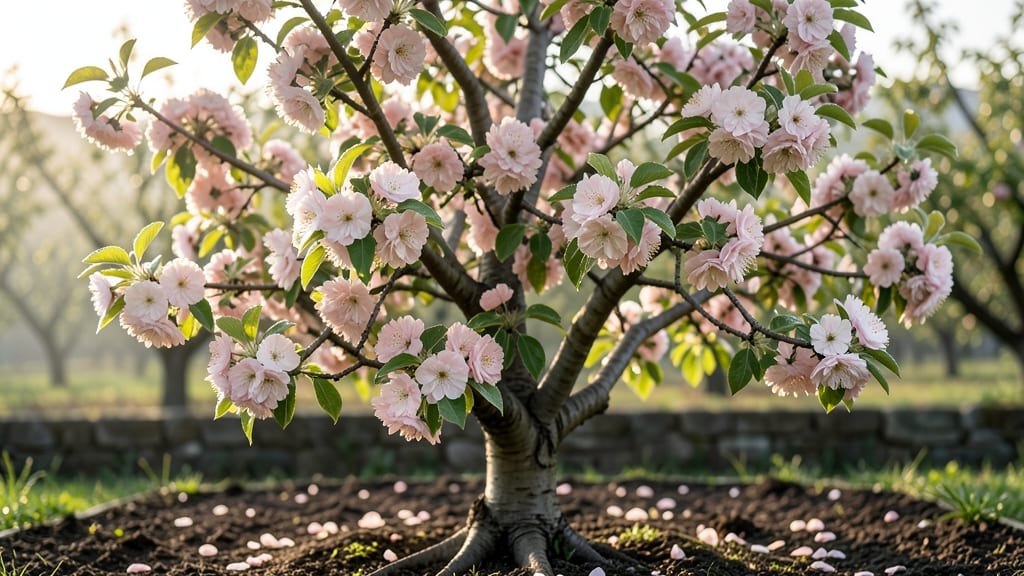
The moment your Asian pear tree bursts into bloom is one of spring’s most intoxicating sights—delicate white flowers perfuming the air like a secret garden. 🌸 I’ve watched mine transform from bare branches to a frothy canopy of blossoms, and the timing is everything: most varieties bloom in late April to early May, though cooler climates push that back by weeks.
The key to seeing this spectacle year after year? Understanding how light, soil, and care work together to coax those flowers into full glory.
Your tree needs full sun (6+ hours daily) and well-draining soil rich in organic matter to set blooms properly. I’ve found that a light application of balanced fertilizer in early spring—just as buds swell—gives mine the energy it needs.
Pruning last year’s growth in late winter (before buds break) also improves airflow, which reduces the risk of fungal issues that can steal your flowers. Regional variations matter too: Pacific Northwest trees bloom earlier than those in the Deep South, where heat can delay the show.
When it’s time, you’ll know—those first blossoms appear as tight clusters, then unfurl into 4-inch-wide stars that fill the air with a honeyed fragrance. The real magic happens when pollinators arrive: bees and butterflies turn your tree into a living confectionery.
With proper care, you’ll see abundant fruit set by summer, but even if you don’t harvest, the blooms alone make it worth the wait. Here’s how to prep your tree for its star turn.
Fair warning: Asian pears are heavy feeders, so don’t skimp on mulch or water during bloom season. A deep watering once a week (more in heatwaves) keeps roots happy, and avoiding late-season pruning prevents stress that could cut next year’s flowers short.
Once you’ve mastered the timing, your tree will reward you with years of fragrant displays—and maybe even a harvest of those crisp, honey-sweet pears. Let’s get yours ready for its close-up.
📚 In This Guide
- What you need
- Instructions
- Tips and common mistakes
- Wrapping up and next steps
What you need
- ● Asian pear tree (Pyrus pyrifolia) – Choose a healthy, disease-resistant variety (e.g., 'Twentieth Century,' 'Hosui,' or 'Korean Giant'). Note: Dwarf varieties (6–10 ft) are ideal for small spaces.
- ● Well-draining soil – Mix 1 part compost with 2 parts native soil (pH 6.0–7.0). Test soil moisture before planting.
- ● Sunlight access – 6+ hours of full sun daily (partial shade in hot climates).
- ● Watering can or hose – 1–2 gallons per watering (deep soak 2–3x/week for new trees).
- ● Pruning shears – Bypass pruners (sharp, 6–8" blades) for shaping and deadwood removal.
- ● Organic mulch – 3–4 inches of wood chips or straw (replenish annually).
- ● Fertilizer – Balanced 10-10-10 or slow-release organic fertilizer (apply in early spring and summer).
- ● Tree supports – Stakes or cages for young trees in windy areas.
- ● Drip irrigation system – Automates watering for consistent moisture.
- ● Pest control – Neem oil or insecticidal soap (prevents aphids/mites).
- ● Bloom-enhancing additives – Epsom salt (1 tbsp/gal water) for phosphorus boost (apply in late winter).
- ● Decorative elements – Landscape fabric or mulch rings to keep beds tidy.
How to encourage a stunning Asian pear tree bloom
Here’s how I’ve coaxed fragrant, abundant blooms from Asian pear trees—season after season.
🌱 Step 1: Prune for Light and Airflow in Late Winter
Start your prep work in late winter, just as buds begin to swell but before they break. Asian pears need full sun—at least 6 hours daily—to set blooms, so remove any crossing or inward-growing branches first. I cut these back to the trunk or a strong outward branch, using clean, sharp pruners to avoid tearing bark.
Next, thin out 10-20% of the canopy to improve airflow. Crowded branches trap moisture, which invites fungal diseases like fire blight. Look for branches that cast shade on others—these are your targets. Step back often to visualize the tree’s shape; you’re sculpting, not just cutting. Aim for an open vase-like form that lets sunlight reach the center.
☀️ Step 2: Apply Balanced Fertilizer in Early Spring
As soon as you see pink buds forming (usually late February to early March in most climates), feed your tree with a balanced fertilizer (10-10-10 or 20-20-20). I scatter ½ cup of granules around the drip line—about 3 feet from the trunk—and water it in deeply. This gives the tree the phosphorus it needs for robust blooms without overloading it with nitrogen, which can delay flowering.
For established trees, a slow-release fertilizer in early spring and a low-nitrogen, high-phosphorus supplement at bloom time works best. Avoid high-nitrogen fertilizers now—you’ll get leafy growth but few flowers. Watch for new shoots emerging from the base; these are a sign the tree is responding well to the fertilizer.
💧 Step 3: Water Deeply During Bud Formation
Consistent moisture is critical when buds are forming. Water deeply once a week—about 1-1.5 inches—until the soil feels damp 6 inches down. Asian pears are drought-tolerant once established, but stress during bloom time (drought or flooding) will drop buds before they open. I check soil moisture by sticking my finger in; if it’s dry at 2 inches deep, it’s time to water.
Mulch the base with 2-3 inches of organic mulch (like wood chips) to retain moisture and regulate soil temperature. Keep the mulch 6 inches away from the trunk to prevent rot. Overwatering now is just as bad as underwatering—you’ll see buds swelling but not opening, or worse, premature leaf drop.
✂️ Step 4: Thin Blooms for Larger Fruit Later
Once 70-80% of the blooms have opened (usually 2-3 weeks after full bloom), it’s time to thin. Remove every other cluster, leaving only the healthiest, largest blooms on each branch. I use my fingers to gently twist off small blooms—no need for pruners here. This might seem counterintuitive, but thinning ensures the tree puts energy into fewer, larger pears with better flavor and size.
Watch for small, misshapen blooms or those growing too close together—these are the first to go. After thinning, give the tree a light application of foliar spray (like seaweed extract) to reduce stress. You’ll know you’ve done it right when you see strong, sturdy branches holding just a few blooms instead of a dense, crowded cluster.
🌿 Step 5: Protect Blooms from Late Frost
Asian pears bloom early, often just as late frosts hit. If frost is forecasted when buds are open, cover the tree with a lightweight frost cloth at dusk. Secure it loosely—you don’t want to smother the branches. I also wrap the trunk with burlap to protect it from temperature swings, which can cause cracking or sunscald. Remove the coverings as soon as temperatures rise above freezing to avoid overheating.
If frost hits after blooms have opened, don’t panic. Asian pears are partially self-fertile, so even a few surviving blooms will produce fruit. However, heavy frost damage (blackened petals, wilted buds) means the tree will need extra care—water deeply and feed lightly to help it recover. You’ll know the blooms survived if you see green calyxes (the leafy part at the base of the flower) still attached to the branches.
Tips & tricks for perfect Asian pear tree blooms
Here's what nobody tells you about getting those showstopping spring blossoms—lessons I learned after years of trial and error.
Pruning Precision: When you're thinning that 10-20% of the canopy in Step 1, focus on removing branches that grow inward or cross each other. These are the real culprits for poor airflow and disease. I've seen trees with perfect pruning jobs still struggle because people missed these critical branches hidden deep in the center. Use a small mirror to check hard-to-see spots—you'll be amazed what you find. Remember, you're creating an open vase shape, not just making the tree look neat.
Fertilizer Timing Secret: That ½ cup of balanced fertilizer in Step 2 should be applied when you first see pink buds, not just any time in spring. The tree needs this phosphorus boost precisely when it's preparing to flower. I've noticed trees that get fertilized too early (before buds form) tend to put all their energy into leaf growth instead. For established trees, consider a second light application of low-nitrogen fertilizer right when blooms first appear—this gives that final energy push without overwhelming the tree.
Watering Wisdom: The 1-1.5 inches of water per week in Step 3 is your target, but how you deliver it matters just as much. I've found that watering in the morning gives the soil all day to absorb moisture before evaporation. Also, use a rain gauge or tuna can to measure—your hose's "light spray" setting might only deliver ½ inch when you think it's more. The goal is consistent moisture at 6 inches deep, not just surface watering that encourages shallow roots.
Bloom Thinning Technique: When you're thinning those blooms in Step 4, don't just grab and pull—gently twist them off with your fingers. This prevents damage to the branch and the remaining blooms. I've learned to look for blooms that are slightly smaller or growing in tight clusters—they're the ones that will compete with your prize blooms for nutrients. After thinning, give the tree a light foliar spray with seaweed extract. It's like giving your tree a spa treatment after all that work!
Pro Tips for Asian Pear Tree Bloom
- Here's what nobody tells you about getting those showstopping spring blossoms—lessons I learned after years of trial and error.
- Pruning Precision: When you're thinning that 10-20% of the canopy in Step 1, focus on removing branches that grow inward or cross each other.
- Fertilizer Timing Secret: That ½ cup of balanced fertilizer in Step 2 should be applied when you first see pink buds, not just any time in spring.
Frequently asked questions
Got questions about Asian pear tree blooms? You’re not alone! Here are some of the most common queries—plus expert answers to help you make the most of this fragrant spring show.
When do Asian pear trees typically bloom?
Asian pear trees (Pyrus pyrifolia) usually burst into bloom in late spring, around April to early May in most U.S. growing zones (5–9). Cooler climates may see blooms slightly later, while warmer regions might experience earlier—or even a second flush of flowers. Timing depends on variety, winter chill hours, and local weather patterns.
How long do the flowers last, and can I extend their beauty?
Asian pear blossoms typically last 7–14 days, but their full glory peaks for about a week. To prolong enjoyment:
- Plant near seating areas or patios to savor the sweet, honey-like fragrance up close.
- Avoid pruning during bloom—wait until after flowering to shape the tree.
- Water deeply before blooming starts to support vibrant flowers.
Are Asian pear tree flowers edible, or are they just for show?
While not toxic, Asian pear blossoms aren’t typically eaten fresh—they’re prized for their aroma and ornamental value. However, they’re a favorite among bees and pollinators! In some Asian cultures, the petals are used in teas or as garnishes (like in yuzu or udon dishes). Always confirm the variety before consuming, as some hybrids may vary.
What should I do if my Asian pear tree isn’t blooming?
Missing flowers? Check these common culprits:
- Age: Young trees (under 3–5 years) may not bloom yet—be patient!
- Pruning timing: Heavy pruning during dormancy can remove next year’s flower buds. Prune after blooming.
- Nutrients: Lack of phosphorus (middle number in fertilizer) can stunt blooms. Use a balanced 10-10-10 fertilizer in early spring.
- Cold requirements: Some varieties need 200–800 chill hours (below 45°F). If your climate is too warm, consider a low-chill cultivar.
Can I grow an Asian pear tree in a container, or does it need a yard?
Yes! Dwarf varieties like ‘Kikusui’ or ‘Hosui’ thrive in large containers (20+ gallons) with well-draining soil. Key tips:
- Use a fast-draining mix (add perlite or sand).
- Place in full sun (6+ hours daily) and move containers indoors if frost threatens.
- Fertilize monthly during bloom season with a low-nitrogen formula (e.g., 5-10-10).
Wrapping up and next steps
The Asian pear tree bloom is more than just a fleeting spring spectacle—it’s a fragrant invitation to connect with nature’s beauty and the promise of fresh, delicious fruit to come. 🌸 Whether you’re a seasoned gardener or a curious beginner, nurturing these trees brings joy, sustainability, and a touch of elegance to your outdoor space.
Now that you’re armed with the how-tos and answers to common questions, why not take the next step? Plant your own Asian pear tree this season—or share your newfound knowledge with fellow gardening enthusiasts. Your garden (and future harvest) will thank you!