
Pruning
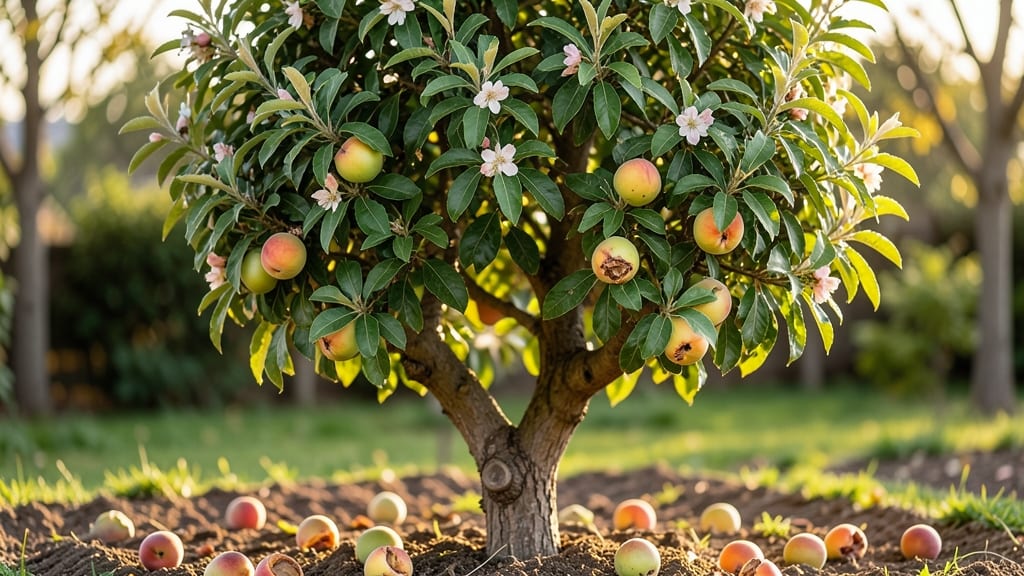
Peach trees dropping fruit before harvest? That heartbreak happens more often than you'd think—until you learn dormant season trimming.
I've watched my own trees go from barren branches to bursting with fruit just by making a few key cuts in winter, and it all starts with understanding why this happens in the first place.
The real culprits are usually hidden: late frosts zapping flower buds, overwatering that drowns roots, or pests like aphids sapping energy before fruit sets. Even poor pollination or last year's pruning mistakes can send your tree into panic mode, dropping fruit before it ripens.
The good news? Most of these issues get fixed with sharp pruners and a winter checklist—not expensive treatments or guesswork.
What you'll end up with is a tree that holds onto fruit longer, produces heavier harvests, and stays healthier year after year. We're talking juicier peaches, fewer empty branches, and a tree that actually looks like it's working for you instead of against you.
The best part? You do this work when the tree is dormant—no messy sap, no disturbing pollinators, just clean cuts that set up next season's success.
Works for both backyard trees and commercial orchards, though home gardeners get the extra bonus of simpler tools and smaller branches.
Here's exactly how to diagnose your tree's specific issues and fix them before spring blooms arrive—so you can enjoy that first taste of summer fruit without the guilt of wasted labor.
Hidden Triggers Behind Fruit Drop
If your peach tree is prematurely shedding fruit—especially during dormancy—it’s rarely a random act. Instead, these losses are often a response to underlying stress or mismanagement. Understanding the root causes helps you intervene before next season’s harvest. Here’s what’s likely triggering the drop, backed by science and actionable fixes.
Peach trees are sensitive to sudden temperature swings, particularly during bloom and early fruit set. Cold snaps (<32°F/0°C) or late frosts can shock flowers, causing them to abort. Even warm winters followed by a hard freeze disrupt the tree’s energy allocation—resources shift from fruit production to survival, leading to premature drop.
- 🔍 What to watch for: Clusters of fruit falling en masse after a freeze, or small, undeveloped fruits detaching.
- ✨ Pro tip: Use frost cloth or overhead sprinklers (activated at 20°F/-7°C) to create a microclimate that protects blooms.
- 📊 Data point: Research from Journal of Horticultural Science shows peach trees exposed to 3+ freeze-thaw cycles in early spring can lose 40–60% of fruit.
Peach trees need consistent moisture—especially during dormancy and fruit development. Too little water causes osmotic stress, while overwatering leads to root suffocation and nutrient dilution. Both scenarios trigger the tree to shed fruit to conserve energy.
| Issue | Signs | Fix |
|---|---|---|
| Drought Stress | Fruit shrivels, leaves curl, soil pulls away from edges. | Apply 1–1.5 inches of water weekly (deep soak, not surface sprinkle). Use drip irrigation for precision. |
| Overwatering | Yellowing leaves, soggy soil, fungal growth at the base. | Let top 2–3 inches of soil dry between waterings. Improve drainage with compost or sand amendments. |
💡 Key insight: Peach trees are deep-rooted—watering shallowly stresses them. Aim for moisture at 12–18 inches deep.
Pathogens like Monilinia (brown rot) or Xanthomonas (bacterial spot) weaken trees, causing fruit to drop before ripening. These diseases thrive in wet, humid conditions and often hibernate in mummified fruit or cankers.
- 🔍 Red flags:
- Fruit with dark, mushy spots or oozing lesions.
- Premature drop after a rainy spell.
- Blackened cankers on branches.
- 🛡️ Prevention:
- Prune in dry weather (remove infected branches 6+ inches below the canker).
- Apply copper fungicide at dormancy and bacterial spot sprays pre-bloom.
- Clean up fallen fruit and debris to starve pathogens.
📊 Stat alert: Trees with Monilinia can lose up to 80% of fruit if left untreated (USDA ARS).
Peach trees are heavy feeders, and deficiencies—especially boron, zinc, or nitrogen—directly impact fruit retention. For example:
- ⚠️ Boron deficiency: Causes blossom end rot (fruit drops with brown, leathery spots). Common in sandy or high-pH soils.
- ⚠️ Nitrogen shortage: Leads to small, sparse fruit and early drop. Yellowing leaves (especially older ones) signal this.
- ⚠️ Potassium excess: Can lock out magnesium, causing fruit to abort.
💡 Fix it:
- Test soil annually (aim for pH 6.0–6.5).
- Apply boron (1–2 lbs/100 sq ft) at dormancy if soil tests low.
- Use a balanced fertilizer (10-10-10) in early spring, followed by compost for slow-release nutrients.
Dormant-season pruning is critical, but aggressive cuts or improper timing can shock the tree into dropping fruit. Here’s how:
- ✂️ Over-pruning: Removing >25% of canopy in one season forces the tree to prioritize regrowth over fruit.
- 🌿 Wrong cuts: Heading back (cutting into old wood) instead of thinning (removing entire branches) creates dense growth that competes for resources.
- 🕰️ Late pruning: Trimming after bud swell (late winter/early spring) can damage flower buds.
🔧 Correct approach:
- Prune dormant trees (Dec–Feb) to open the canopy and improve airflow.
- Remove water sprouts, dead wood, and crossing branches first.
- Thin branches to sunlight the center—peaches need 6+ hours of light for fruit set.
Fix Your Tree’s Fruit Loss
When your peach tree starts dropping fruit prematurely, it’s often a sign of stress or improper care. The good news? Most issues can be resolved with targeted fixes—whether it’s adjusting pruning habits, improving soil health, or managing pests.
Below are practical solutions tailored to the most common causes, along with prevention tips to keep your tree thriving.
If you’ve trimmed too aggressively (especially in late winter or early spring), your tree may be struggling to support fruit. Peach trees need balanced pruning to maintain energy for both growth and fruit production.
How to Fix It: ✅ 🔪 Prune at the Right Time
- Best time: Late winter (just before buds swell) or early spring (after last frost but before bloom).
- Avoid heavy pruning in dormant season—this weakens the tree when it’s already conserving energy.
✅ 🌱 Follow the "Open Center" Method
- Remove dead, diseased, or crossing branches first.
- Thin out overcrowded limbs to improve airflow (aim for 6-8 main scaffold branches).
- Cut back suckers (shoots growing from the base) to redirect energy upward.
✅ 🍑 Lighten the Load
- If fruit is already set, thin excess fruit (leave 6-8 inches between peaches on branches).
- Use sharp pruning shears and make clean cuts just above a bud or side branch.
💡 Prevention Tip:
- Space trees 15-20 feet apart to reduce competition for sunlight and nutrients.
- Avoid topping the tree (cutting the top flat)—this encourages weak growth.
Peach trees are sensitive to late frosts, heatwaves, or drought. Sudden temperature swings can cause fruit drop as the tree prioritizes survival over fruit production.
How to Fix It: ✅ 💧 Water Deeply & Consistently
- Drought stress? Water deeply 1-2 times per week (1-2 inches per session).
- Use drip irrigation or soaker hoses to keep roots moist without wetting foliage (which attracts disease).
✅ 🌞 Protect from Heat & Frost
- Frost damage? Cover young trees with frost cloth on cold nights.
- Heat stress? Provide afternoon shade (especially in hot climates) with lightweight shade cloth.
- Mulch heavily (3-4 inches of wood chips) to regulate soil temperature.
✅ 🍃 Adjust Fertilizer for Recovery
- If the tree is stressed, reduce nitrogen (too much promotes leafy growth over fruit).
- Switch to a balanced fertilizer (10-10-10) or compost tea to rebuild strength.
💡 Prevention Tip:
- Plant in a microclimate (e.g., near a south-facing wall for warmth in winter).
- Choose cold-hardy varieties (e.g., ‘Relenta’ or ‘Contender’) if you live in a short season.
Pests like aphids, peach tree borers, or fungal diseases (e.g., brown rot) can weaken the tree, leading to premature fruit drop.
How to Fix It: ✅ 🔍 Identify & Treat Pests
- Aphids/mites? Spray with neem oil or insecticidal soap (early morning for best results).
- Peach tree borers? Apply beneficial nematodes or borer traps in early spring.
- Brown rot? Remove infected fruit and spray with copper fungicide before bloom.
✅ 🌿 Boost Tree Immunity
- Prune out infected branches (sterilize tools with rubbing alcohol between cuts).
- Apply compost or worm castings to improve soil microbial health.
💡 Prevention Tip:
- Monitor trees weekly for early signs of pests (e.g., chewed leaves, sawdust-like frass).
- Encourage natural predators (ladybugs, lacewings) with dill or fennel plants nearby.
Peach trees need balanced nutrients—especially potassium, calcium, and boron—to retain fruit. If the soil is too acidic, compacted, or lacking organic matter, the tree may drop fruit.
How to Fix It: ✅ 📊 Test Soil & Amend as Needed
- pH too low (<6.0)? Add lime (follow package rates).
- Compacted soil? Mix in compost or coconut coir to improve drainage.
- Boron deficiency? Apply borax (1 tsp per gallon of water) as a foliar spray (use sparingly).
✅ 🍄 Feed for Fruit Retention
- Spring: Use a low-nitrogen, high-potassium fertilizer (e.g., 5-10-10).
- Summer: Side-dress with well-rotted manure or banana peels (rich in potassium).
- Fall: Add wood ash (for calcium) or kelp meal (for micronutrients).
💡 Prevention Tip:
- Mulch annually with aged compost to maintain soil fertility.
- Avoid over-fertilizing—peach trees prefer moderate nutrients over heavy feeding.
To prevent future fruit drop, follow this quick maintenance plan:
- Prune in late winter/early spring (never in dormant season).
- Water deeply 1-2x per week (adjust for rain).
- Monitor for pests/diseases weekly in growing season.
- Test soil every 2-3 years and amend as needed.
- Thin fruit early to reduce branch stress.
With these fixes, your peach tree should retain more fruit, grow stronger, and produce sweeter peaches next season! 🍑✨
Frequently asked questions
Why does my peach tree drop fruit even when it looks healthy?
Even healthy trees drop fruit due to natural thinning mechanisms—they prioritize quality over quantity. Common triggers include late frosts damaging flower buds, nutrient imbalances (like boron deficiency), or overcrowded branches competing for resources. Check for small, undeveloped fruit or clusters falling after cold snaps—these are key signs.
Can I save fruit that’s already dropped? Or should I focus on preventing future loss?
Once fruit hits the ground, it’s usually too late to salvage it—but you can repurpose the tree’s energy. Focus on preventing future drops by improving soil health (test for pH/nutrients), pruning to open the canopy, and protecting blooms from frost. Mulch heavily and water deeply to reduce stress.
Is it normal for young peach trees to drop more fruit than mature ones?
Yes! Young trees (under 5 years old) often drop 50–70% of fruit as they establish roots and branches. This is normal—they’re conserving energy for growth. Mature trees (5+ years) should retain most fruit if healthy. To help young trees, thin fruit early (leave 6–8 inches between peaches) and avoid heavy pruning.
How do I tell if my tree is dropping fruit because of pests vs. environmental stress?
Pest-related drops show physical signs: look for chewed leaves (borers), sticky residue (aphids), or dark spots (fungal diseases). Environmental stress (drought, frost) causes mass fruit drop without visible damage. Check the soil moisture and recent weather—sudden temperature swings are a red flag.
Will pruning in winter really help my tree keep more fruit next year?
Dormant-season pruning (Dec–Feb) boosts fruit retention by improving airflow, removing diseased wood, and redirecting energy to healthy branches. Focus on thinning crowded limbs (not just cutting back) and avoid removing >25% of the canopy. Clean cuts just above a bud signal the tree to grow stronger, fruit-bearing branches.