
Pruning
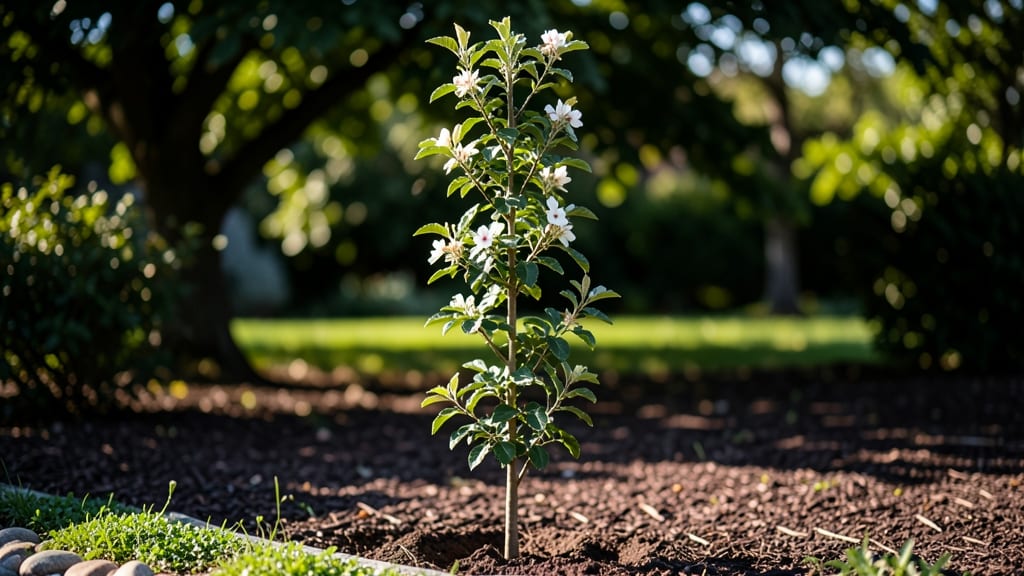
Dormant season trimming turns your apple tree shrub into a spring blooming powerhouse. ✂️ I’ve pruned these compact trees for years, and the right cuts in winter mean fewer dead branches and more fruit come summer.
The key is timing—wait until the plant is fully asleep but before buds swell, usually between late winter and early spring. You’ll need sharp pruners, rubbing alcohol for sterilizing, and a clear day to see the structure.
Start by removing dead or crossing branches first, then shape the shrub to let light reach the center. Most dwarf varieties like ‘Columnar’ or ‘Semi-Dwarf’ respond well to this approach, and you’ll see new growth within 4-6 weeks of trimming.
The payoff is a tree that’s easier to maintain, produces more fruit, and looks fuller by spring. You’ll also spot pests or disease early, giving you time to treat before blooms appear. This method works for both in-ground shrubs and container-grown trees.
For small spaces, keep the height under 6 feet—just enough to enjoy the harvest without sacrificing your patio. And if you’re growing just one tree, choose a self-pollinating variety like ‘Gold Rush’ to simplify things.
📚 In This Guide
- What you need
- Instructions
- Tips and common mistakes
- Wrapping up and next steps
What you need
- ● Pruning shears – Bypass shears (sharp, clean cut) for branches ½ inch thick or smaller.
- ● Loppers – Bypass or anvil type for branches ½ to 2 inches thick.
- ● Pruning saw – For branches thicker than 2 inches (look for a curved blade for precision).
- ● Disinfectant (70% isopropyl alcohol or bleach solution) – To sterilize tools between cuts and prevent disease.
- ● Heavy-duty gloves – Garden or pruning gloves (thick, cut-resistant material recommended).
- ● Safety glasses – Protect your eyes from debris (especially when sawing thick branches!).
- ● Rag or paper towels – For wiping down tools and hands.
- ○ Pruning sealant (optional) – Tree wound dressing (like Tanglefoot Tree Wound Pruning Seal) for large cuts.
- ● Dormant season timing – Trim late winter or early spring (before buds swell) for best results.
- ● Weather check – Choose a dry, calm day (no rain forecast for 24 hours).
- ● Safety first! – Ensure the area around the tree is clear of pets, kids, and bystanders.
- ● Cleanup supplies – Garden bags or bucket for collecting pruned branches (recycle or compost later!).
- ● 🔥 Sharpen your tools! Dull blades tear wood, inviting disease—hone shears and saws beforehand.
- ● ✨ Mark your cuts with chalk or tape to visualize the ideal shape before snipping.
- ● 🌡️ Work in layers—start with large branches, then move to smaller ones to avoid overloading your tools.
Step-by-step guide to trimming an apple tree shrub in dormant season
Here's how I prepare mine for vibrant spring blooms—no guesswork, just clean cuts and stronger growth.
✂️ Step 1: Remove Dead, Diseased, or Crossing Branches First
Start by scanning the entire shrub for branches that are brown, brittle, or hollow—these are dead and must go. Use sharp pruners to make clean cuts just outside the branch collar (that little bump where the branch meets the trunk). You'll see new growth emerge from that collar in spring.
Next, look for branches rubbing against each other. These create wounds where disease can enter. Cut the smaller of the two branches at its base. I always prune these first—they're the easiest to spot and remove, and they won't affect the shrub's overall shape.
✂️ Step 2: Thin Out the Center for Better Airflow
Dormant season is the perfect time to open up the shrub's center. Aim for a vase-like shape with branches spaced 6-12 inches apart. Start at the bottom and work upward, removing branches that grow inward or downward. These are the ones that block sunlight and air circulation.
Watch for branches that form a "V" shape with others. The weaker branch (usually the smaller one) should be removed. You'll know you're doing it right when you can see light filtering through the center of the shrub. This ensures every part gets sunlight and reduces disease risk.
✂️ Step 3: Prune for Shape and Size Control
Now focus on shaping the shrub. Use your hands to visualize the final form—think of an open, rounded shape that allows sunlight to reach all leaves. Cut back branches that grow too close together, leaving the strongest one. For lateral branches, trim back to just above an outward-facing bud.
If your shrub is too tall, shorten the main branches by one-third at most. Never cut back more than that—you'll stimulate too much new growth, which weakens the shrub. Step back often to check your progress. The goal is a balanced, natural look, not a geometric shape.
✂️ Step 4: Clean Up and Sterilize Tools
After pruning, rake up all the fallen branches and debris. This removes hiding spots for pests and reduces disease spread. I always burn or bag the clippings—never leave them on the ground. If you notice sawdust-like residue on your tools, it's a sign of disease. Sterilize your pruners with rubbing alcohol between cuts if needed.
Finally, sharpen your tools and store them in a dry place. Dull blades tear branches, creating larger wounds that take longer to heal. A quick wipe-down with a damp cloth removes sap buildup, keeping tools ready for next season. Your shrub will thank you with stronger, healthier growth come spring.
Tips & tricks for perfect apple tree shrub trimming
Here's what nobody tells you about trimming that actually makes a difference for your shrub's health.
Tool Prep is Non-Negotiable: Sterilize your pruners with rubbing alcohol before you start—it's the single best way to prevent disease spread between cuts. I learned this the hard way after my last pruning session left a few branches looking sad. Also, sharpen your blades so they cut cleanly rather than tear, which creates smaller wounds that heal faster. A quick wipe-down with a damp cloth after each use keeps them ready for next season.
Visualize the Final Shape First: Before making any cuts, step back and imagine your ideal shrub shape—think open and rounded, not tight and bushy. This mental picture helps guide your decisions about which branches to remove. In Step 2, when you're thinning the center, use your hands to trace the vase-like shape you're aiming for. You'll notice you make more confident cuts when you have that visual reference.
Work from the Bottom Up: Start your pruning at the base of the shrub and work upward. This prevents you from accidentally cutting branches that should be kept. When you're removing crossing branches in Step 1, always cut the smaller branch at its base—this maintains the shrub's natural structure while eliminating potential weak points. I always mark my progress with a small flag so I don't accidentally revisit the same branches.
Timing is Everything: Dormant season is your window for serious pruning, but don't wait until the last minute. Late winter to early spring (before buds swell) gives your shrub time to heal before the growing season. If you must prune later, do it gradually—never remove more than one-third of the shrub's foliage at once. This prevents shock and ensures strong spring growth.
Pro Tips for Apple Tree Shrub
- Here's what nobody tells you about trimming that actually makes a difference for your shrub's health.
- Tool Prep is Non-Negotiable: Sterilize your pruners with rubbing alcohol before you start—it's the single best way to prevent disease spread between cuts.
- Visualize the Final Shape First: Before making any cuts, step back and imagine your ideal shrub shape—think open and rounded, not tight and bushy.
Frequently asked questions
Got questions about pruning your apple tree shrub? You’re not alone! Here are some of the most common concerns—and straightforward answers—to help you trim with confidence.
When is the best time to prune an apple tree shrub?
The ideal time is late winter or early spring, before buds swell but after the worst cold snaps. This dormant-season trim promotes vigorous spring growth and stronger blooms. Avoid pruning in fall—it can leave cuts vulnerable to disease.
How much can I trim off my apple tree shrub?
Remove no more than 25-30% of the total canopy in one season. Focus on dead, crossing, or overcrowded branches first. For young shrubs, light pruning (10-15%) encourages bushier growth. Over-pruning stresses the plant and reduces fruit production.
Will pruning affect next year’s fruit?
Pruning during dormancy won’t harm fruit production—it actually improves it! Removing excess branches increases airflow, reducing disease and pests. Just avoid heavy cuts in fruit-bearing years, as it may temporarily lower yield. Balance is key!
What if my apple tree shrub isn’t blooming after pruning?
Several factors could be at play:
- Age: Young shrubs (under 3 years) may need patience.
- Light: Ensure it gets 6+ hours of sunlight daily.
- Fertilizer: A balanced, low-nitrogen fertilizer in early spring can help.
- Pollination: Apple shrubs often need cross-pollination—plant a second variety nearby.
Can I prune an apple tree shrub into a hedge shape?
Yes! Use hand pruners or hedge shears to shape it into a hedge, but avoid cutting more than 1/3 of the foliage at a time. Prune in stages over 2–3 years for a neat, uniform look. Just remember: Apple shrubs thrive with an open center—don’t seal them too tightly!
Wrapping up and next steps
Trimming your apple tree shrub during dormancy isn’t just about shaping—it’s about setting the stage for vibrant spring blooms and a healthier harvest. By mastering the right cuts, timing, and tools, you’re giving your tree the best chance to thrive.
Now that you’re armed with knowledge, grab those pruners and get to work! 🌿✂️
Ready to take it further? Experiment with different pruning techniques each season, observe your tree’s growth, and adjust as needed. Happy pruning—your future fruit will thank you!