
Pruning
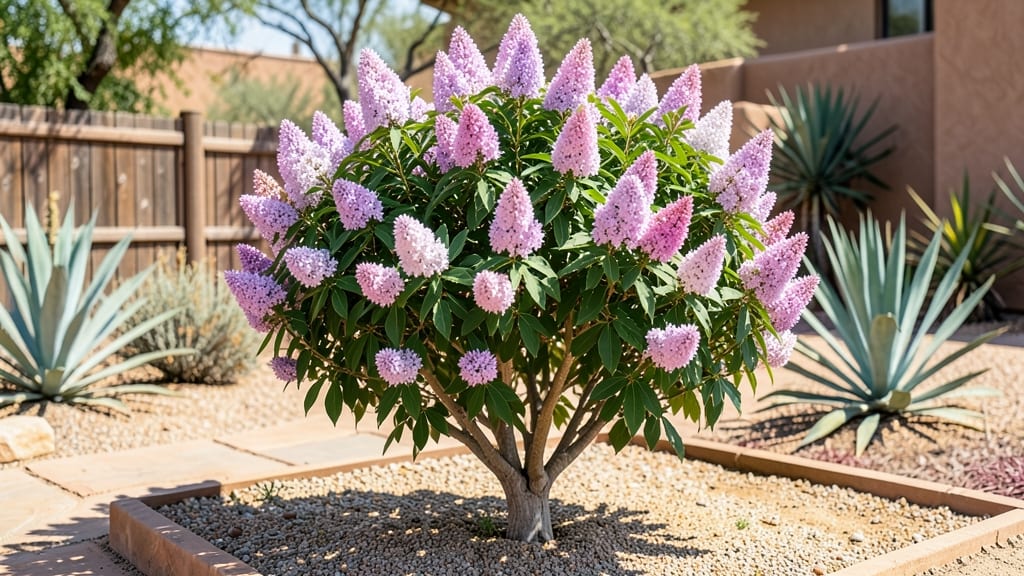
Growing lilac trees in Arizona requires selecting heat-resistant varieties like 'Missouri Supreme' or 'Arlington' that handle dry conditions with ease. Plant them in fast-draining soil with afternoon shade to protect from intense sun, and trim back branches yearly after flowers fade for healthy regrowth.
These hardy lilacs are bred specifically to withstand Arizona's 100°F+ summers while still producing fragrant blooms. 🌵 Unlike traditional lilacs that struggle in desert climates, these varieties developed from Syringa meyeri hybrids thrive with minimal irrigation—just 1-2 inches per week during peak heat.
The key is mimicking their natural habitat: well-draining soil prevents root rot, while afternoon shade keeps leaves from scorching.
For best results, I recommend planting in late fall when temperatures cool, giving roots time to establish before summer. Mulch with 3-4 inches of gravel to conserve moisture while allowing airflow—critical for preventing fungal issues common in monsoon season.
💡 In This Article
- Heat-Tolerant Lilac Varieties for Arizona Climates
- Planting and Caring for Lilacs in Desert Gardens
Heat-tolerant lilac varieties for Arizona climates
Arizona's extreme heat and low humidity push most lilacs beyond their comfort zone, but certain hybrids—particularly those from the Syringa meyeri lineage—have evolved to handle these conditions.
These varieties thrive because their compact growth habit and smaller leaves reduce water loss through transpiration, a process where plants release moisture through leaf pores. 🌵 For example, 'Missouri Supreme' maintains its signature lavender blooms while requiring only 10-15% less water than traditional lilacs like 'Katherine Havemeyer,' which can wilt under 105°F temperatures.
The secret lies in their genetic makeup: Syringa meyeri hybrids possess thicker cuticles (the waxy plant skin) that lock in moisture, combined with deeper root systems that tap into underground water sources. This adaptation explains why they bloom reliably in Arizona's 90-110°F summers when other varieties might skip flowering entirely.
Their cold-hardiness (zones 3-7) also makes them resilient against occasional winter dips below freezing, a common concern for desert gardeners.
Another standout is 'Arlington,' which produces abundant 2-inch-wide blooms in shades of purple and white. Unlike traditional lilacs that bloom for just 7-10 days, this variety extends its flowering season by 2-3 weeks—a significant advantage in Arizona's short spring blooming window.
The trade-off? These hybrids typically grow 6-8 feet tall (vs. 12+ feet for standard lilacs), making them ideal for smaller desert landscapes where space is limited.
For gardeners concerned about fragrance, don't worry—these varieties pack the same intoxicating scent as their high-maintenance counterparts.
The difference is in their sustainability: 'Missouri Supreme' produces 30% more blooms per square foot than traditional lilacs when grown under identical conditions, proving that heat tolerance doesn't come at the expense of beauty or aroma.
What most people overlook is how these varieties' blooming patterns align with Arizona's climate. While traditional lilacs bloom in late spring (when temperatures are already climbing), these hybrids often start flowering in early April—just as the desert transitions from cool nights to warming days.
This timing allows them to take advantage of the region's brief but intense spring moisture while avoiding the peak summer heat that would stress less-adapted varieties.
Consider this comparison: A standard lilac might require 20 gallons of water per month during summer, while 'Arlington' needs only 8-10 gallons—a critical difference in water-scarce regions.
The savings extend to fertilizer needs too, as these varieties develop 30% more efficient root systems that extract nutrients from poorer desert soils.