
Pruning
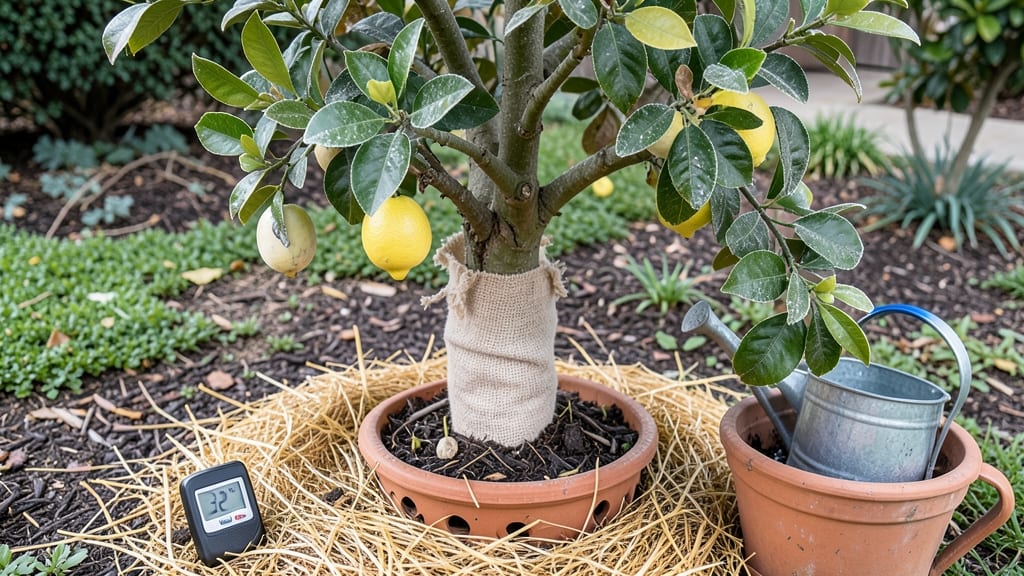
Understanding lemon tree low temperature limits reveals they can withstand brief chills down to 20–25°F (-6 to -4°C), but sustained cold below 30°F (-1°C) damages leaves, and temperatures under 15°F (-9°C) are fatal. Hardy varieties like 'Meyer' or 'Eureka' endure cooler zones with protection, while tropical types require winter relocation or shelter.
Cold stress affects lemon trees by disrupting their delicate cell structures, especially in evergreen leaves that lack protective dormancy. 🌱 The roots, however, can tolerate slightly colder ground temperatures if insulated properly.
For instance, 'Meyer' lemons handle 28°F (-2°C) better than standard varieties, but even they need protective measures during prolonged freezes. I've seen gardeners use thick mulch or frost blankets to create a 5°F (3°C) buffer around the base, which can mean the difference between survival and damage.
Potted lemon trees face even greater risks because their roots have less insulation. Moving them indoors before temperatures drop below 40°F (4°C) is often the safest option. If that's not possible, wrapping the container in bubble wrap and placing it against a south-facing wall can help retain warmth.
Always check for brown, crispy leaves after cold snaps—this is your first sign of frost damage that needs immediate attention.
💡 In This Article
- Lemon Tree Cold Hardiness Zones and Temperature Science
- Winter Protection Strategies for Lemon Trees in Cold Climates
Lemon tree cold hardiness zones and temperature science
Lemon trees, native to tropical and subtropical climates, lack the natural cold resistance of temperate plants. Their evergreen leaves contain high moisture content, which expands when frozen, causing cell walls to rupture—a process called freeze-thaw injury.
This is why even brief exposure to 28°F (-2°C) can trigger leaf browning, while temperatures below 20°F (-6°C) risk killing the entire plant. The roots, however, are slightly more resilient due to their deeper soil insulation, but they still suffer when ground temperatures drop below 32°F (0°C) for extended periods.
Variety plays a critical role in cold tolerance. The 'Meyer' lemon, a hybrid between true lemons and mandarins, can handle 25–28°F (-4 to -2°C) with protection, while standard 'Eureka' lemons struggle below 30°F (-1°C).
This difference stems from genetic adaptations: 'Meyer' lemons have thicker leaf cuticles and slightly more frost-resistant enzymes. For comparison, a grapefruit tree (another citrus) can survive 20°F (-6°C) without damage, showing how citrus hardiness varies even within the same family.
The key to understanding survival thresholds lies in the distinction between frost tolerance and survival limits. A lemon tree might briefly endure 20°F (-6°C) without dying, but its leaves will likely brown or drop.
Prolonged exposure below 15°F (-9°C), however, kills the plant by freezing water in the vascular system, blocking nutrient flow. This is why gardeners in USDA Zone 9 (where winters rarely drop below 20°F (-6°C)) can grow lemons outdoors, while those in Zone 8 need winter protection.
Root insulation is the secret to extending cold tolerance. A 4-inch layer of mulch (like straw or wood chips) can create a 5°F (3°C) buffer around the root zone, delaying frost penetration. For potted trees, wrapping the container in bubble wrap or insulation foam mimics this effect.
Without protection, roots exposed to 25°F (-4°C) for more than 2 hours risk damage, as the soil's water content freezes and expands, disrupting root function.
Evergreen leaves are particularly vulnerable because they lack the protective dormancy of deciduous plants. When temperatures drop, the leaves continue transpiring (releasing moisture) but can't absorb water from frozen roots. This imbalance causes desiccation stress, where leaves lose turgor pressure and turn brown.
In contrast, citrus trees in their natural habitats rarely face such extreme cold, so their evolutionary adaptations focus on heat and drought resistance rather than frost survival.
Consider this real-world example: In Los Angeles (Zone 10), lemon trees thrive year-round, while in Atlanta (Zone 7b), even 'Meyer' lemons need winter shelter. The difference isn't just temperature—it's duration.
A 30°F (-1°C) night in Atlanta might kill unprotected leaves, whereas the same temperature in L.A. is harmless. This highlights why microclimates matter: a south-facing wall can add 5–10°F (3–6°C) of warmth, making the difference between survival and damage.