
Trees
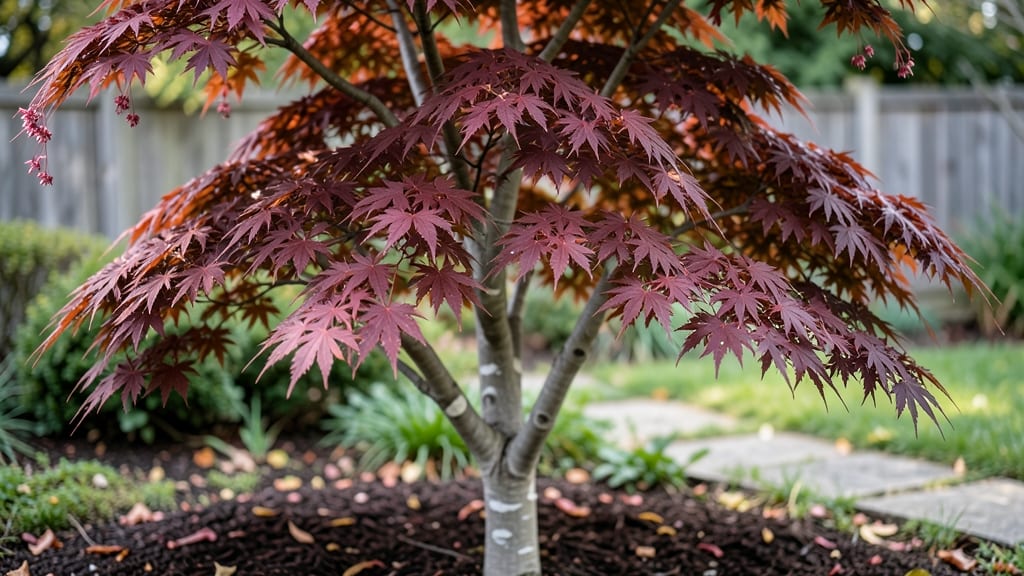
The Japanese red maple tree’s growth rate varies dramatically by variety and climate, with some cultivars reaching 10 feet in just three years while others take a decade to mature.
If you're dreaming of a stunning Japanese red maple (Acer palmatum) that transforms your garden into a vibrant autumn masterpiece, understanding its growth rate is key to planning your landscape with precision—and patience.
From the fastest-growing 'Bloodgood' to the slow-but-steady 'Autumn Moon,' each variety follows its own timeline, influenced by sunlight, soil, and even your USDA zone.
Below, I break down yearly height jumps by cultivar, climate adjustments to speed up growth, and the 5 pro tips that can add 20-30% more height without stressing your tree.


Japanese red maple growth rates by variety: fastest vs slowest climbers
Japanese red maples (Acer palmatum) are prized for their stunning foliage and compact forms, but their growth rates vary dramatically by variety. Some varieties like 'Emperor I' shoot up quickly, while others like 'Higashi-yama' take decades to reach their full potential.
Understanding these differences helps you plan your garden layout and manage expectations for yearly height gains.
Most Japanese red maples experience their fastest growth in the first 5-7 years, with spurts of 2-4 feet annually under ideal conditions. After reaching maturity (typically 10-15 years), growth slows to just 6-12 inches per year.
However, the variety you choose determines how quickly you'll enjoy that vibrant autumn color and structural beauty.
The 'Emperor I' variety is the fastest climber, often reaching 10 feet in just 3 years with proper care. This makes it ideal for gardeners eager to establish a dramatic focal point quickly.
In contrast, 'Higashi-yama' grows at a glacial pace, taking 15-20 years to reach its mature height of 8-12 feet. This variety is perfect for those who prefer a slow-growing, bonsai-like specimen.
Most varieties experience their most dramatic growth spurts between years 2 and 5. For example, 'Bloodgood' can grow 4-6 feet annually during this period, while 'Autumn Moon' typically gains only 1-2 feet per year.
Understanding these patterns helps you time pruning and fertilizing for maximum impact during these critical growth windows.
After the first decade, all varieties slow significantly. Even the fastest growers like 'Emperor I' may only add 6-12 inches annually once mature. This is why many gardeners choose dwarf varieties or smaller cultivars like 'Higashi-yama' for container gardening or small yards where space is limited.
One surprising factor in growth rates is the root system development. Varieties with more aggressive root growth, like 'Emperor I', often show faster above-ground growth because they can access more nutrients and water.
If you're planting in containers or urban settings, choose varieties with shallower root systems like 'Autumn Moon' to avoid root-bound issues.
For gardeners in warmer climates (USDA zones 7-9), growth rates can be 20-30% faster than in cooler zones. The extended growing season allows for more vegetative growth before winter dormancy. In colder zones (5-6), expect slower early-year growth as the tree establishes itself before reaching its full potential.
When selecting a Japanese red maple, consider not just the final height but also the growth rate that fits your timeline. If you want quick results, 'Emperor I'
How climate zones affect Japanese red maple growth speed
Your Japanese red maple (Acer palmatum) thrives in USDA zones 5-9, but its growth speed varies dramatically depending on where you live. In warmer zones (7-9), expect faster spring growth, while cooler zones (5-6) may see delayed spurts due to seasonal dormancy.
Understanding these differences helps you set realistic expectations and adjust care to maximize height gains.
In zone 5, your tree will spend more time in dormancy during winter, slowing early-season growth. Meanwhile, zone 9 plants enjoy longer growing seasons, allowing for 12-18 inches of height gain annually in ideal conditions. The key difference? Cold-hardiness in northern zones vs. heat tolerance in southern climates.
In cooler zones (5-6), focus on spring soil warming to jumpstart growth. Use black plastic mulch or straw around the base to raise soil temperatures by 5-10°F, encouraging earlier bud break.
For warmer zones (7-9), prioritize root zone moisture—deep watering every 5-7 days prevents stress during summer heat.
Seasonal dormancy is your tree's natural growth regulator. In zone 5, expect 6-8 months of dormancy, while zone 9 trees may only rest for 2-3 months.
This means southern trees can grow nearly year-round with proper care. To accelerate growth in slower zones, prune in late winter to remove dead wood and stimulate new shoots.
Never assume your Japanese red maple will grow at the same pace as neighbors—microclimates matter. A zone 6 tree in a sheltered yard may grow faster than one in an exposed location.
Monitor your tree's response to your local climate and adjust watering or mulching accordingly. With the right care, even slower zones can produce stunning mature trees.
🌳