
How To
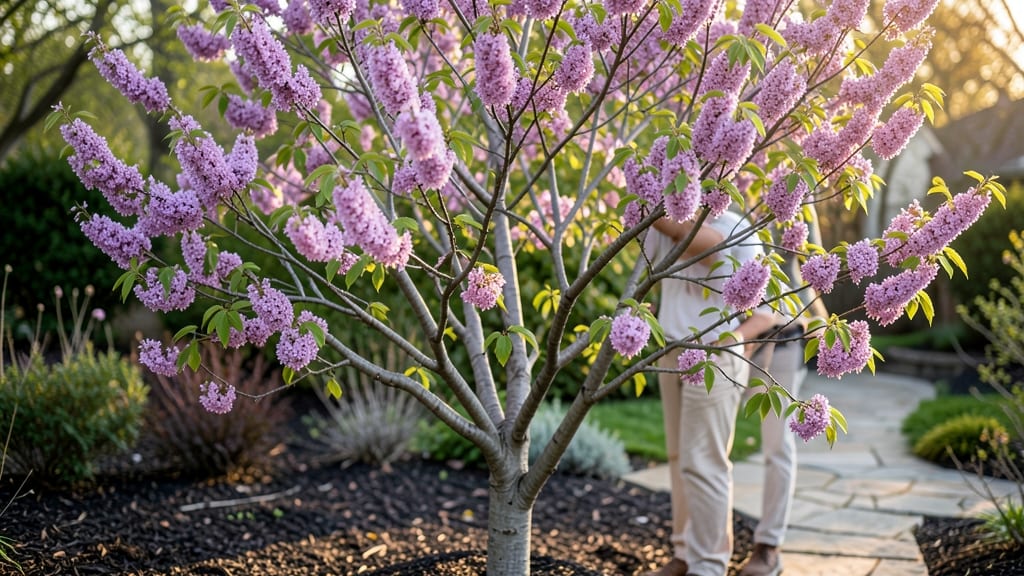
Redbud tree height by cultivar: fastest-growing varieties and their mature sizes
When planning your landscape, knowing how tall a redbud tree grows helps you choose the perfect cultivar for your space. While the standard Eastern redbud (Cercis canadensis) typically reaches 15-30 feet, some varieties grow 30% faster and can top 25 feet in ideal conditions.
If you're after a dramatic spring display without sacrificing height, these fastest-growing redbud cultivars deliver.
Fast growth isn't just about height—it also means quicker blooms and fuller canopies. For example, the 'Lavender Twist' cultivar not only grows taller but also produces lavender-pink flowers that stand out in any garden. Understanding these growth patterns lets you plan for vertical impact while keeping maintenance manageable.
🌳 Comparison Table: Fastest-Growing Redbud Cultivars
The 'Lavender Twist' cultivar is one of the fastest growers, often reaching 22-25 feet with an impressive 1.8-2.2 feet per year growth rate. This makes it ideal for gardeners who want a taller redbud tree with unique foliage and striking flowers.
Its twisted branches also add architectural interest, making it a standout in any landscape.
If you're comparing standard Eastern redbuds to these cultivars, you'll notice a clear difference in growth speed. While standard redbuds average 1-1.5 feet per year, the 'Forest Pansy' and 'Rubra' can nearly double that rate.
This means you'll see noticeable height gains in just a few years, especially in USDA zones 6-9 where they thrive.
For those with smaller yards but still want a tall redbud, the 'Whitewater' cultivar offers a great balance. It grows 18-22 feet but with a slightly slower rate of 1.2-1.8 feet per year.
Its white bark and disease resistance make it a low-maintenance choice for faster height without overwhelming your space.
When planting any of these fast-growing redbud cultivars, prioritize well-draining soil and full sun exposure to maximize their growth potential. A south-facing location with 6+ hours of sunlight will help them reach their mature height more quickly.
Avoid planting in low-lying areas where frost or poor drainage could stunt their growth.
One common mistake is assuming all redbuds grow at the same rate. The 'Eve' cultivar, for example, matures at 15-20 feet but grows more slowly (1-1.5 feet per year). If you're impatient for height, it’s better to choose 'Lavender Twist' or 'Forest Pansy' for a quicker vertical impact.
For gardeners in urban settings or with limited space, these taller cultivars can still work if planted near fences or property lines. Just be mindful of their mature size—25 feet is taller than most mailboxes—so you don’t block views or encroach on neighbors' spaces.
Always check local HOA regulations before planting.
Finally, if you're aiming for a privacy screen or shade tree, the fastest-growing redbuds can deliver both beauty and function. Their rapid growth means you’ll enjoy spring blooms sooner and a full canopy in just a few years.
Pair them with complementary shrubs like hydrangeas or azaleas to create a layered, dynamic garden.
How to maximize redbud tree growth: pruning, soil, and sunlight tips for faster height increase
Want your Eastern redbud (Cercis canadensis) to reach its full mature height faster? The secret lies in strategic care—starting with sunlight exposure and pruning techniques that encourage vertical growth.
Unlike many ornamental trees, redbuds respond well to targeted pruning when done correctly, but mistakes like over-pruning or poor soil prep can stunt their height for years. Let’s break down the key factors that turn a slow-growing sapling into a towering spring beauty.
First, focus on planting location. Redbuds thrive in full sun to partial shade, but for maximum height, prioritize 6+ hours of direct sunlight daily. A spot with morning sun and afternoon shade works best in hot climates, while cooler regions can handle full sun all day.
Avoid low-lying areas where cold air settles, as frost can damage young branches and slow growth. If your yard lacks ideal sunlight, consider a south-facing border or a raised bed for better drainage and warmth.
⚠️ callout-tip
Standard Eastern redbuds reach 15-30 feet at maturity, but growth rate varies by cultivar. For example, the 'Rubra' variety tops out at 20-25 feet, while 'Forest Pansy' can hit 25-30 feet with optimal care. Dwarf types like 'Oklahoma' stay under 10 feet. Pruning and soil health can accelerate growth by 20-30% in ideal conditions.
Pro Tip: Mulch with 2-3 inches of compost to boost nutrient uptake and reduce water stress.
Next, let’s talk soil preparation. Redbuds prefer well-draining, slightly acidic soil (pH 6.0-7.0), but they’re adaptable. Before planting, amend your soil with compost or aged manure to improve fertility.
A balanced fertilizer (10-10-10) applied in early spring can give young trees a growth boost, but avoid over-fertilizing—too much nitrogen promotes leafy growth at the expense of height. Test your soil first to check for deficiencies in phosphorus or potassium, which are critical for root and stem development.
When it comes to pruning for height, timing is everything. Prune your redbud in late winter or early spring, just before new growth begins. Remove dead, crossing, or inward-growing branches first, then selectively thin the canopy to improve airflow.
To encourage upward growth, avoid cutting back the central leader (main vertical stem). Instead, focus on removing lateral branches that compete with the main trunk. Use clean, sharp pruners to make cuts at a 45-degree angle just above a bud or branch collar.
Avoid these common pruning mistakes that stunt growth: topping the tree (cutting the top flat), pruning in fall or winter (encourages disease), or removing too many branches at once (shocks the tree).
Over-pruning can also lead to suckering, where the tree sends out multiple weak stems instead of one strong central leader. If you notice excessive suckers, prune them back to the main trunk to redirect energy upward.
Finally, watering habits play a surprising role in height. Young redbuds need deep, infrequent watering—about 1-2 gallons per week—to develop deep roots. Once established, they’re drought-tolerant, but consistent moisture in the first 2-3 years ensures robust vertical growth.
Mulch around the base with wood chips or straw to retain moisture and regulate soil temperature. In containers, redbuds grow slower, so upgrade to a 15-gallon pot if you want faster height increases.
With the right sunlight, soil, and pruning, your redbud can reach its full mature height in half the time. Start with a sunny, well-drained spot, amend the soil, and prune strategically—then step back and watch it flourish.
In just a few years, you’ll have a towering spring spectacle that’s the envy of the neighborhood. 🌱