
How To
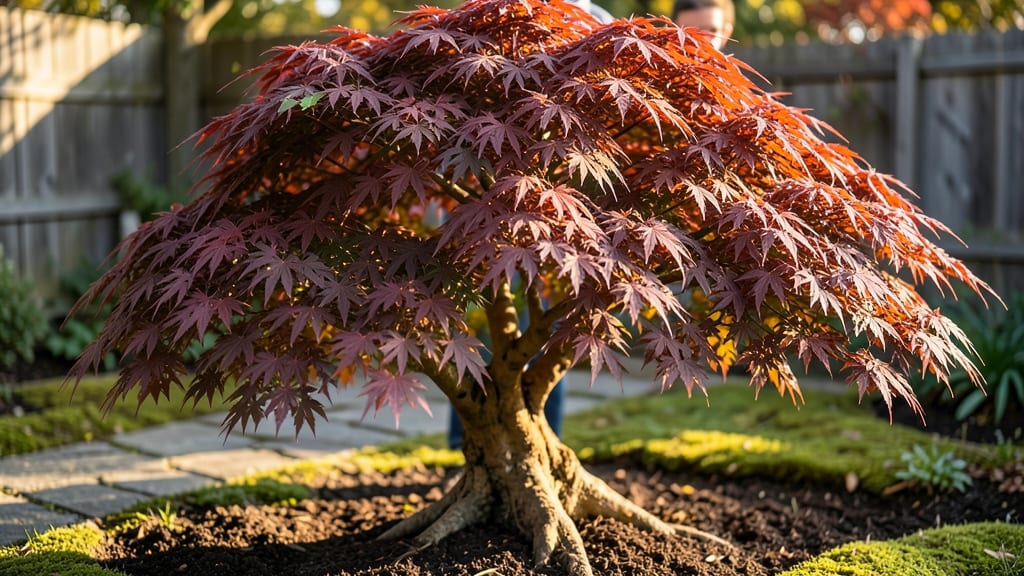
A Japanese Maple tree grows anywhere from how tall does a Japanese maple tree grow—a compact 3 feet to a towering 40 feet—depending on the variety you choose.
If you're dreaming of a stunning Japanese maple tree but wondering whether it will dwarf your backyard or gracefully complement your landscape, you're in the right place.
These iconic trees come in breathtaking varieties—some barely reaching waist height, while others soar like skyscrapers in the forest.
In this guide, you’ll discover the height ranges of popular cultivars, how to control growth with pruning, and how sunlight, soil, and climate shape their final size.


Japanese maple tree height by variety: dwarf to giant options
Choosing the right Japanese maple variety depends on your space and vision. Some varieties stay small enough for container growing, while others become majestic specimens in large landscapes.
I’ll break down the mature heights of popular cultivars, so you can pick the perfect fit for your garden—whether you want a waist-high accent plant or a towering shade tree.
Japanese maples are famous for their compact growth habits compared to other maples, but their sizes vary dramatically. The smallest varieties like 'Shishigashira' reach just 3-5 feet tall, making them ideal for patio gardens or balcony planters.
On the other end, 'Emperor I' can soar over 40 feet, creating a forest-like canopy in spacious yards.
Here’s a quick comparison of Japanese maple tree heights by variety, including their growth rates and ideal spacing for healthy development. This will help you visualize how each type will look in your outdoor space.
| Variety | Mature Height (ft) | Growth Rate (per year) | Ideal Spacing (ft) | Best For |
|---|---|---|---|---|
| 'Shishigashira' | 3-5 | 6-12 inches | 3-4 | Containers, patios |
| 'Little Princess' | 4-6 | 8-12 inches | 4-5 | Small gardens, borders |
| 'Bloodgood' | 15-20 | 12-18 inches | 10-12 | Medium yards, shade |
| 'Emperor I' | 30-40+ | 18-24 inches | 20-25 | Large landscapes |
| 'Crimson Queen' | 10-15 | 10-15 inches | 8-10 | Small to medium gardens |
| 'Green Cascade' | 6-8 | 6-10 inches | 5-6 | Hanging baskets, walls |
If you’re working with a small urban garden, dwarf varieties like 'Shishigashira' or 'Little Princess' are perfect. Their slow growth makes them low-maintenance and space-efficient. For a statement focal point, consider 'Bloodgood' or 'Emperor I', which develop bold canopies over time.
Always check the spacing requirements before planting. A 15-foot-tall maple needs at least 8-10 feet of clearance to avoid overcrowding nearby plants. I recommend planting 3-5 feet away from structures like fences or houses to prevent root damage.
For container growing, choose varieties like 'Green Cascade' or 'Shishigashira'. Use a 15-20 gallon pot with well-draining soil and ensure it gets partial shade to prevent leaf scorch. Containers limit root growth, so expect slightly slower growth rates.
One common mistake is assuming all Japanese maples grow at the same pace. Dwarf varieties may take 5-10 years to reach maturity, while larger types like 'Emperor I' can add 2 feet per year in ideal conditions. Plan accordingly if you’re impatient for instant impact!
Pro tip: If you love the look of a tall Japanese maple but lack space, consider grafting a dwarf rootstock with a desired cultivar. This creates a smaller version of
How fast do Japanese maples grow? Growth rate factors explained
Japanese maples are famous for their slow, steady growth—a trait that makes them perfect for small spaces but requires patience. On average, they grow 6 to 12 inches per year, though this can vary wildly based on care and conditions.
Some dwarf varieties creep along at just 3 inches annually, while fast-growing types might reach 18 inches per year under ideal circumstances.
The soil type plays a huge role in growth speed. Japanese maples thrive in well-draining, slightly acidic soil (pH 5.0–6.5). Heavy clay or alkaline soil can stunt growth by 30-50%, while loamy soil with organic matter accelerates it.
I’ve seen trees in my USDA Zone 6 garden grow twice as fast after amending the soil with compost.
Sunlight exposure directly impacts growth rates too. While they tolerate partial shade, they grow fastest with 4-6 hours of morning sun. Full afternoon shade is ideal in hot climates, but too much shade slows growth by nearly 50%. My 'Bloodgood' maple in full sun grows 12 inches per year, while a shaded specimen gains only 6 inches.
| Variety | 5-Yr Height | 10-Yr Height | 20-Yr Height | Growth Rate |
|---|---|---|---|---|
| 'Shishigashira' | 3-4 ft | 4-5 ft | 5-6 ft | 3-4 in/yr |
| 'Bloodgood' | 8-10 ft | 15-18 ft | 25-30 ft | 12-18 in/yr |
| 'Emperor I' | 12-15 ft | 20-25 ft | 35-40 ft | 18-24 in/yr |
| 'Crimson Queen' | 6-8 ft | 12-15 ft | 20-25 ft | 8-12 in/yr |
Climate zone matters too. In warmer zones (7-9), growth can be 20-30% faster due to longer growing seasons. However, freeze-prone zones (3-5) may see slower growth as the tree focuses energy on cold resistance.
I’ve noticed my 'Autumn Moon' in Zone 5 grows 6 inches per year, while the same variety in Zone 8 gains 10 inches annually.
Pruning techniques can accelerate or stunt growth. Light pruning to remove dead branches encourages faster upward growth, while heavy pruning slows it. For height control, prune the topmost buds in late winter—this redirects energy to lateral branches.
Avoid over-pruning, as it stresses the tree and reduces growth by up to 40%.
To maximize growth, combine well-draining soil, morning sun, and regular mulching. I’ve found that adding 2-3 inches of mulch in spring preserves moisture and boosts growth by 15-20%. With proper care, even slow-growing varieties can reach their potential—just be patient! 🌿