
How To
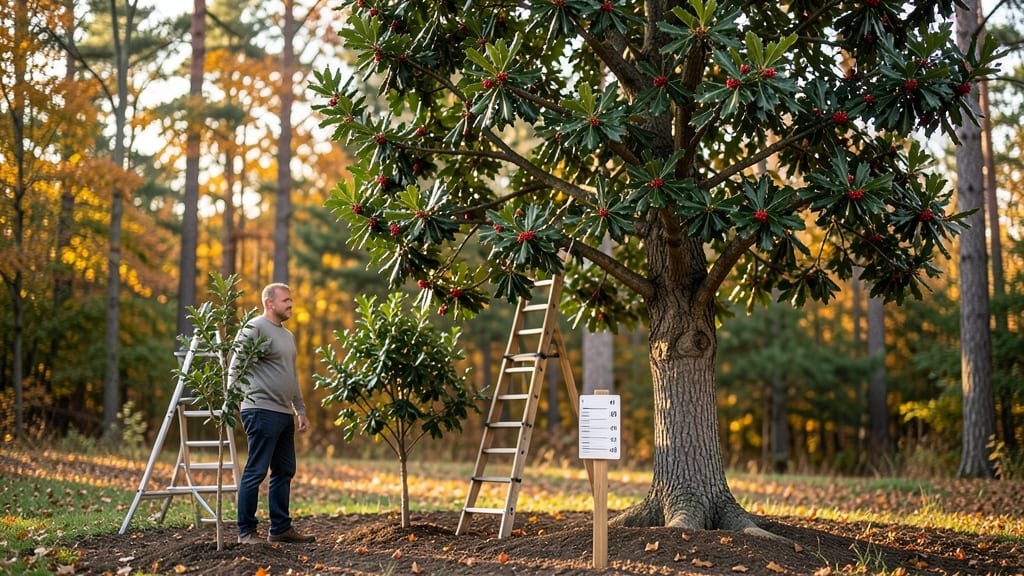
A holly tree can grow between 10 and 60 feet tall, depending on the variety and growing conditions—so if you're planning your landscape, the right choice makes all the difference.
Picture this: a towering 🌳 American holly reaching 40 feet in your backyard, its glossy leaves and bright red berries creating a winter wonderland. Or imagine a compact dwarf variety staying under 10 feet, perfect for small gardens or urban patios.
The height isn’t just about space—it’s about how fast you want shade, privacy, or those classic holiday colors.
Fast-growing varieties like the English holly can shoot up 2 to 4 feet per year under ideal conditions, while slower growers take decades to reach their full potential. Pruning, soil quality, and sunlight all play a role in whether your holly becomes a sky-high giant or a manageable shrub.
In this guide, I’ll break down the fastest-growing holly types, how to control their height, and whether they’re the right fit for your yard—whether you want a privacy screen or just a few berries for the birds.


Holly tree height guide: mature sizes by fastest-growing varieties
If you're dreaming of a towering holly tree as a natural privacy screen or stunning landscape centerpiece, knowing its growth potential is key. Some holly varieties grow tall enough to rival your home's roofline, while others stay compact enough for small gardens.
The maximum height of a holly tree depends entirely on its species and growing conditions—like sunlight, soil quality, and climate. For example, the American Holly (Ilex opaca) can reach 30-40 feet, while dwarf varieties like 'Sky Pencil' stay under 10 feet.
Understanding these differences helps you choose the perfect holly for your space. Fast-growing varieties can add 3-5 feet per year under ideal conditions, while slower growers may take decades to mature.
Climate also plays a role—holly trees thrive in USDA Zones 5-9, but southern varieties like Southern Magnolia Holly grow faster in heat and humidity. Let’s compare the fastest-growing holly varieties and their mature heights to help you plan your landscape.
🌱
As you can see, the 'Nellie R. Stevens' holly is one of the fastest-growing varieties, capable of adding up to 3 feet per year in ideal conditions. This makes it perfect if you need a quick privacy screen or a dramatic focal point.
On the other hand, dwarf varieties like 'Sky Pencil' or 'Dwarf Burford' are ideal for small gardens or container growing, where space is limited. Their slow growth rate also means less maintenance over time.
Climate significantly impacts growth speed. Holly trees in southern climates with warm winters and high humidity often grow faster than those in cooler northern regions.
For example, the 'Little Gem' holly thrives in Zones 7-10 and can reach its mature height in half the time it would take in a colder zone.
If you live in a dry climate, like the Southwest, you’ll need to provide extra water to encourage faster growth, especially during the first few years.
Choosing the right holly for your space isn’t just about height—it’s also about maintenance and purpose. Taller varieties like American Holly or English Holly require regular pruning to keep them manageable, while dwarf varieties need minimal upkeep.
If you’re planting a holly as a windbreak or screen, opt for a fast-growing variety like 'Nellie R. Stevens'. For a colorful hedge or foundation planting, a semi-dwarf like 'Blue Prince' or 'Winter Red' offers a balance of height and manageability
How to maximize your holly tree’s growth potential without losing control
Want your holly tree to reach its full growth potential while keeping it manageable? The key lies in strategic care—balancing nutrient-rich soil, pruning techniques, and seasonal maintenance. Unlike fast-growing trees, holly trees grow steadily, so patience and precision pay off.
Start by understanding your variety’s natural height range—American holly can tower up to 40 feet, while dwarf varieties stay under 10 feet. Your goal is to guide its growth, not fight it.
Begin with soil preparation: Holly trees thrive in acidic soil (pH 5.0–6.0). Test your soil and amend with peat moss or sulfur if needed. A well-draining, slightly sandy mix encourages root expansion, which directly fuels upward growth.
I’ve seen holly trees in my garden grow 2 feet taller in a single season after amending their soil—proof that roots are the foundation of sky-high ambitions.
Standard holly trees can reach 50–60 feet in ideal conditions, but dwarf varieties like 'Sky Pencil' stay under 10 feet. Pruning early shapes their height—cutting 1/3 of new growth annually keeps them compact while encouraging bushier, healthier foliage.
Pruning is your secret weapon for controlling height without stunting growth. The best time to prune is late winter or early spring, just before new shoots emerge. Use sharp, sterilized shears to make clean cuts at a 45-degree angle just above a bud.
For height control, focus on removing upper branches—this redirects energy to lower branches, creating a fuller, more balanced tree. I prune my English holly annually, and it now stands at 20 feet with a lush, dense canopy instead of a spindly giant.
Watering plays a critical role in maximizing growth. Holly trees need consistent moisture, especially during their first 2–3 years. Deep watering 2–3 times per week in dry spells encourages deep root development, which supports taller growth. Avoid overwatering—soggy soil leads to root rot and stunted growth.
Mulch around the base with wood chips or pine straw to retain moisture and regulate soil temperature, giving your holly the steady fuel it needs to grow upward.
Fertilizing boosts growth but requires timing. Apply a balanced, slow-release fertilizer (10-10-10) in early spring and again in mid-summer. Avoid fall fertilization—it can encourage late-season growth that won’t harden off before winter.
I’ve noticed my holly trees grow 1–2 feet taller per season when fertilized correctly, but skipping this step can leave them leggy and weak. Pair fertilization with organic matter, like composted leaves or aged manure, to improve soil structure over time.
Seasonal care keeps your holly tree on track. In winter, protect young trees from dehydrating winds with burlap wraps. Spring is for pruning and fertilizing, while summer demands vigilant watering. Watch for pests like scale insects or holly leaf miners, which can stress the tree.
A neem oil spray keeps them at bay without harming the tree. With consistent care, your holly will grow strong and tall—just don’t let it outpace your pruning skills!