
How To
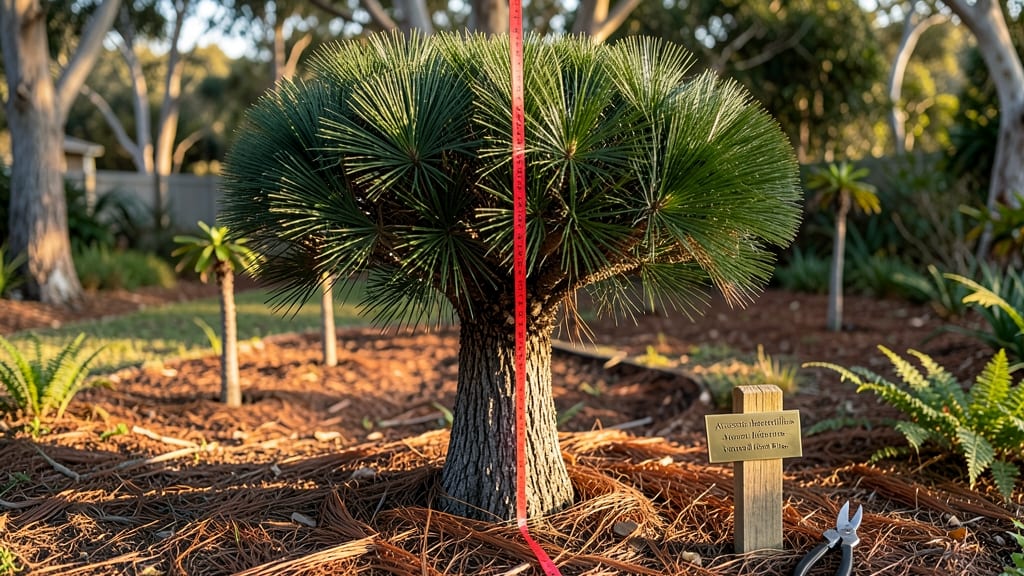
A Christmas tree 🎄 can grow anywhere from 3 feet to over 70 feet tall, depending on the species and growing conditions.
Picture this: a towering Douglas fir reaching higher than your two-story house, or a compact Fraser fir that fits neatly in a suburban yard. The difference isn’t just in genetics—it’s in sunlight, soil, and even your local climate zone.
If you’re dreaming of a backyard tree that’ll be the talk of the neighborhood, you’ll want to know which varieties stay small and which ones shoot for the sky.
Some species mature in decades, while others grow 3 feet per year—so choosing the right one for your space is key.
Below, I break down the height ranges for popular Christmas trees, how to predict their growth, and the best spots to plant them for maximum height—or to keep them in check.


Christmas tree height guide: species-specific growth charts by zone
Selecting the right Christmas tree for your yard isn’t just about aesthetics—it’s about matching the species to your space and climate zone. A Douglas fir planted in Zone 5 could reach 100 feet tall, while a dwarf Alberta spruce in Zone 7 might only grow to 10 feet.
Understanding these differences helps you avoid planting a giant tree where it’ll outgrow your property or block power lines.
Most Christmas trees fall into three height categories: dwarf (3-6 ft), semi-dwarf (6-12 ft), and standard (15-70 ft). Your USDA hardiness zone also plays a role—some species thrive in colder zones but struggle in warmer climates.
Below, I’ve broken down the mature heights and growth rates for the most popular varieties, so you can plan accordingly.
| Species | Mature Height (ft) | Growth Rate (ft/year) | Best Zones | Notes |
|---|---|---|---|---|
| Douglas Fir | 60-100 | 1.5-2.5 | 4-8 | Fast-growing, needs space |
| Fraser Fir | 40-60 | 1-1.5 | 5-7 | Popular for cut trees, cold-hardy |
| Scotch Pine | 50-70 | 1.2-2 | 3-8 | Drought-tolerant, rugged |
| Balsam Fir | 40-50 | 0.8-1.2 | 3-6 | Classic Christmas scent |
| Dwarf Alberta Spruce | 3-6 | 0.2-0.4 | 4-8 | Perfect for small yards |
| Nordmann Fir | 50-70 | 1.5-2 | 5-8 | Needle retention, disease-resistant |
A Douglas fir is one of the fastest-growing Christmas trees, adding 1.5-2.5 feet annually in ideal conditions. If you’re in Zone 6 or higher, this species can become a backyard giant within 30-40 years.
Meanwhile, a Fraser fir grows more slowly (1-1.5 feet/year) but stays within 40-60 feet, making it a better fit for suburban yards in Zones 5-7.
For small spaces, dwarf varieties like the Alberta spruce are ideal—they top out at 3-6 feet and grow just 0.2-0.4 feet/year. These are perfect for container gardening or urban patios where space is limited.
Even in Zone 8, dwarf trees thrive as long as they get full sun and well-draining soil.
How to choose the right Christmas tree height for your yard
Selecting the perfect Christmas tree for your yard isn't just about holiday aesthetics—it's about long-term planning. A 70-foot Douglas fir planted today could dwarf your house in 30 years, while a 6-foot dwarf Alberta spruce fits cozy patios beautifully.
The key is matching your yard dimensions to the tree's mature height and growth rate.
Before buying, measure your yard's available space and check local power line clearance regulations. Most utilities require 10-15 feet of clearance for mature trees. Also consider your root system—some varieties like Fraser firs develop shallow roots, while Scotch pines have deep taproots that need room to spread.
- 📏 Mature Height: Check species charts—Douglas firs reach 70+ ft, while dwarf varieties max at 6 ft. Use USDA zone guides for accurate projections.
- 🌲 Growth Rate: Fast growers like Leyland cypress add 3-5 ft/year, while Fraser firs grow 1-2 ft/year. Estimate 10 years of growth before planting.
- 📐 Spacing Rules: Plant trees 10-15 ft apart for standard varieties, 5-8 ft for dwarf/semi-dwarf types. Follow the "3x mature height" rule for spacing.
- 🌳 Power Lines: Measure from ground to lowest wire—most utilities require 10-15 ft clearance. Prune annually if needed.
- 🌱 Root Spread: Deep-rooted species (like Scotch pine) need 2-3x their height in soil depth, while shallow-rooted trees (like Fraser fir) spread widely but shallowly.
- 📅 Future Planning: Use sapling height as a growth predictor—1 ft sapling = ~10 ft mature tree for most evergreens. Adjust for your climate zone.
- 🏡 House Proximity: Plant 15-20 ft from structures to avoid foundation issues. Use windbreak calculations if near open areas.
For suburban yards, semi-dwarf varieties (6-12 ft tall) are ideal—they fit under power lines and still make a statement. Measure your ceiling height if you plan to harvest the tree indoors; most homes can't accommodate trees taller than 8-10 feet without clearance issues.
Pro tip: Buy from local nurseries that provide mature height guarantees. Ask about pruning schedules—regular pruning can reduce height by 20-30% if needed. For example, a 15-foot Fraser fir pruned annually might stay at 10-12 feet over 10 years.
If you're unsure, start with a potted tree—you can move it as it grows. Just remember: container size matters. A 5-gallon pot limits roots, while a 15-gallon pot allows for 3-5 feet of growth per year in ideal conditions.
Finally, consult your local extension office for species recommendations tailored to your soil type and microclimate. Some areas thrive with Norway spruces (50-70 ft), while others do better with dwarf Alberta spruces (3-6 ft). The right choice ensures your tree grows healthy and happy for decades.