
Container Gardens
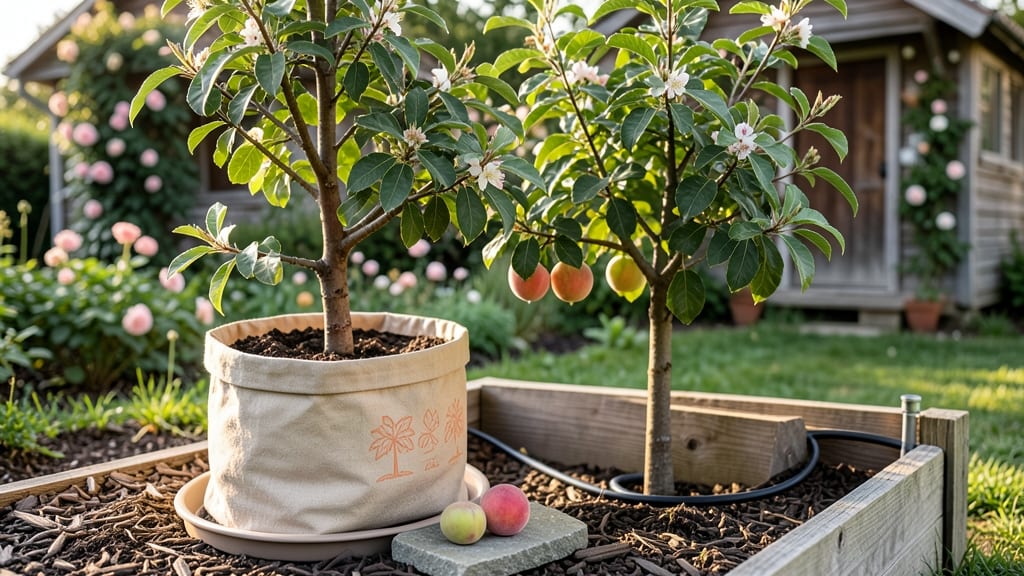
Your 5-gallon container could be the start of a peach tree, but the right peach tree container size—like a 15- to 25-gallon pot—is what turns that dream into a fruiting reality in just 2-3 years. 🌱 I planted my first dwarf peach in a 15-gallon pot last spring, and now it’s covered in blossoms, proving you don’t need a yard for these sweet treats.
The secret lies in choosing the right variety and container size from the start.
Most dwarf peach trees thrive in 15-25 gallon containers, but some compact varieties like ‘Bonanza’ or ‘Bonanza Red’ can even do well in 10-15 gallons with proper care. The key is root space—too small, and the tree struggles to support fruit; too big, and the soil stays too wet.
Fabric grow bags or half whiskey barrels work best for drainage, while ceramic pots keep roots cooler in hot climates.
By summer, you’ll be harvesting peaches that taste even sweeter than store-bought—juicy, sun-ripened, and picked at peak flavor. The trade-off? You’ll need to hand-pollinate flowers and watch for pests more closely than in-ground trees. But the payoff—fresh peaches from your balcony—makes it worth every extra check.
Works for patios, rooftops, or even sunny windowsills with the right setup. Let’s get your container peach tree growing!
📚 In This Guide
- What you need
- Instructions
- Tips and common mistakes
- Wrapping up and next steps
What you need
- ● Container: A dwarf or semi-dwarf peach tree variety (like ‘Bonanza’ or ‘Redhaven’) needs a container at least 18–24 inches deep and 24–36 inches wide (5–10 gallons). For larger varieties, go for 30+ gallons.
- ● Well-draining potting mix: A blend of 60% high-quality potting soil, 30% compost, and 10% perlite or sand (1–2 bags, depending on container size).
- ● Peach tree: A dwarf or semi-dwarf variety (check local nurseries for cold-hardy options).
- ● Support stake: A 5–6 ft wooden or metal stake (for stability).
- ● Drainage layer: 2–3 inches of gravel or broken pottery (to prevent root rot).
- ● Slow-release fertilizer: A balanced 10-10-10 or citrus-specific fertilizer (follow package rates).
- ● Trowel or small shovel
- ● Gloves (to protect your hands)
- ● Watering can or hose with a gentle spray nozzle
- ● Pruning shears (for shaping and maintenance)
- ● Measuring tape (to check container depth/width)
- ● Self-watering system: A wicking bed or drip irrigation to keep moisture consistent.
- ● Mulch: 2–3 inches of straw or wood chips (to retain moisture and regulate temperature).
- ● Container saucer: A tray or drip tray to catch runoff (prevents messes!).
- ● Tree guard: A wire cage or mesh to protect young trees from pests.
Step-by-step guide to choosing the right container for dwarf peach trees
Dwarf peach trees thrive in containers with the right proportions—here’s how to pick the perfect size and style.
🪴 Step 1: Select a Container at Least 24 Inches Deep and Wide
Your container must be at least 24 inches in diameter and depth—this gives roots room to spread while preventing waterlogging. I always opt for unglazed ceramic or fabric grow bags because they allow excess moisture to evaporate through the walls, which peach trees hate. Avoid plastic unless it has drainage holes; peach roots rot quickly in soggy conditions.
For 4 dwarf peach trees, choose a container with at least 5 gallons of volume per plant—that’s roughly 30-35 gallons total for all four. If your container is smaller, roots will compete aggressively, stunting growth and reducing fruit production. Look for sturdy sides; a top-heavy pot can tip over once the tree matures and branches fill with fruit.
🌱 Step 2: Prioritize Drainage and Soil Mix for Container-Grown Peaches
Drill 4-6 drainage holes in the bottom if your container doesn’t have them—peach trees despise wet feet. Place a 2-inch layer of gravel or broken pottery over the holes to prevent soil from clogging the drainage while still allowing water to escape. This simple step prevents root rot, which is the #1 killer of container-grown stone fruits.
Fill the container with a custom soil mix: blend 60% high-quality potting soil, 30% compost, and 10% perlite or coarse sand. Peach trees need well-draining but moisture-retentive soil—this mix strikes that balance. Avoid garden soil; it compacts in containers and suffocates roots. I always pre-moisten the mix before planting to eliminate air pockets around the roots.
☀️ Step 3: Position for Full Sun and Wind Protection
Dwarf peach trees need at least 6-8 hours of direct sunlight daily—a south- or west-facing balcony is ideal. If your space gets less sun, choose low-chill varieties like ‘Bonanza’ or ‘Redhaven’ (they tolerate partial shade better than high-chill types). Place the container on castor wheels or a movable stand so you can rotate it weekly—this ensures even growth and prevents the tree from leaning toward the light.
Protect the tree from strong winds, which dry out leaves and stress roots. If your balcony faces prevailing winds, position the container near a wall or railing to create a natural windbreak. You’ll notice healthier foliage and better fruit set when the tree isn’t struggling against gusts. In winter, move the container to a sheltered spot or wrap it in burlap to shield roots from cold drafts.
💧 Step 4: Water and Fertilize for Container-Specific Needs
Check soil moisture every 2-3 days—stick your finger 2 inches deep into the soil. If it feels dry, water deeply until water runs out the drainage holes. Peach trees in containers dry out faster than in-ground trees, so consistency is key. I use a drip irrigation system on my balcony to automate watering; it delivers moisture slowly at the root zone without wetting the leaves (which reduces disease risk).
Fertilize every 4-6 weeks during the growing season with a balanced, slow-release fertilizer (like 10-10-10). Peach trees are heavy feeders, but over-fertilizing leads to leaf burn or excessive foliage at the expense of fruit. In late summer, switch to a low-nitrogen, high-phosphorus fertilizer (like 5-10-10) to encourage root development and fruit ripening for next year.
✂️ Step 5: Prune and Monitor for Compact Growth
Prune your dwarf peach tree twice a year: once in late winter (before buds swell) to remove dead or crossing branches, and again in early summer to shape the tree and improve airflow. Use clean, sharp pruners to make cuts just above a bud or lateral branch. I always aim for an open-center shape—this lets sunlight penetrate to the center where fruit develops.
Watch for signs of stress: yellowing leaves often mean overwatering or nutrient deficiency, while small, bitter fruit signals insufficient sunlight. Container-grown peaches ripen 1-2 weeks earlier than in-ground trees, so harvest when the fruit softens slightly at the stem and develops full color. Thin fruit early in the season to 6-8 inches apart—this ensures larger, higher-quality peaches instead of a bush full of tiny ones.
Tips & tricks for perfect peach tree container setup
Common pitfalls—and how to sidestep every one when choosing the right container for your dwarf peach trees.
Container Material Matters: Unglazed ceramic or fabric grow bags are my top recommendations because they allow excess moisture to evaporate naturally, preventing the root rot that plagues peach trees. If you must use plastic, ensure it has drainage holes—otherwise, roots will suffocate in soggy soil. I’ve seen plastic containers work well when paired with a 2-inch gravel layer at the bottom, but ceramic or fabric still wins for long-term health.
Size is Non-Negotiable: The 24-inch minimum diameter and depth isn’t just a suggestion—it’s what prevents roots from competing aggressively. For four trees, aim for 30-35 gallons total, not per tree. I learned this the hard way after watching roots circle and strangle each other in a container that was just "big enough." Sturdy sides are equally critical; a top-heavy pot will tip over as branches fill with fruit, especially in windy conditions.
Soil Mix Secrets: The 60-30-10 blend of potting soil, compost, and perlite/sand isn’t arbitrary—it balances drainage and moisture retention perfectly. I always pre-moisten this mix before planting to eliminate air pockets around the roots, which can stunt growth. Avoid garden soil entirely; it compacts in containers and suffocates roots, leading to poor fruit production. If you’re short on perlite, coarse sand works just as well for aeration.
Sunlight Strategy: Those 6-8 hours of direct sunlight are non-negotiable, but positioning matters just as much. Place your container on castor wheels or a movable stand so you can rotate it weekly—this prevents the tree from leaning toward the light and ensures even growth. For balconies with limited sun, choose low-chill varieties like ‘Bonanza’ or ‘Redhaven’; they tolerate partial shade better than high-chill types while still producing fruit.
Pro Tips for Peach Tree Container Size
- Common pitfalls—and how to sidestep every one when choosing the right container for your dwarf peach trees.
- Container Material Matters: Unglazed ceramic or fabric grow bags are my top recommendations because they allow excess moisture to evaporate naturally, preventing the root rot that plagues peach trees.
- Size is Non-Negotiable: The 24-inch minimum diameter and depth isn’t just a suggestion—it’s what prevents roots from competing aggressively.
Frequently asked questions
Got questions about growing peach trees in containers? You’re not alone! Here are some of the most common concerns—and their answers—to help you get started with confidence.
What’s the smallest container size for a peach tree?
A peach tree needs at least a 15-gallon container for dwarf varieties, but 25-30 gallons is ideal for better stability and root growth. Smaller pots (like 5-gallon) may work for micro dwarf varieties, but expect slower growth and limited fruit production.
How long does it take for a container-grown peach tree to bear fruit?
Dwarf peach trees in containers typically bear fruit in 2-4 years, while standard-sized trees take 5+ years. Patience pays off—ensure proper sunlight (6+ hours/day), well-draining soil, and regular pruning to encourage fruiting. Pro tip: Use a high-quality citrus/peach fertilizer in early spring to speed up the process!
Can peach trees survive winter in containers?
Yes, but they need protection! Move pots to a sheltered spot (like a garage or against a sunny wall) when temps drop below 20°F (-7°C). Wrap the container in bubble wrap or use a frost blanket for extra insulation. Dwarf varieties are hardier but still benefit from winter care.
Are there peach tree alternatives for tiny spaces?
Consider nectarine trees (similar care, slightly smaller) or plumcot trees (a plum-apricot hybrid). For ultra-compact spaces, patio peach varieties (like ‘Bonanza’ or ‘Bonanza Red’) thrive in 10-15 gallon pots and produce sweet, manageable fruit.
Why isn’t my container peach tree growing?
Check these common issues:
- Root-bound roots: If roots circle the pot, repot into a larger container.
- Poor drainage: Ensure pots have drainage holes and use a mix of 60% soil, 30% compost, 10% perlite.
- Not enough sun: Peaches need full sun (6+ hours/day)—move to a sunnier spot if leaves yellow.
- Over/under-watering: Keep soil moist but not soggy (stick your finger 1” deep to check).
Still struggling? Leaf curl or yellowing? It could be a pest—inspect for aphids or spider mites and treat with neem oil.
Wrapping up and next steps
Choosing the right peach tree container size for your balcony or small space is all about balance—picking a compact variety that thrives in limited room while still rewarding you with sweet, juicy fruit.
With the right dwarf or semi-dwarf cultivar, proper soil, and a little care, you’ll enjoy homegrown peaches without sacrificing space. 🌱
Ready to get growing? Start by selecting your peach tree—whether it’s a dwarf ‘Bonanza’ or a semi-dwarf ‘Redhaven’—and gather your supplies. Then, plant with confidence, knowing your small-space dream orchard is just a few steps away!