
Light Requirements
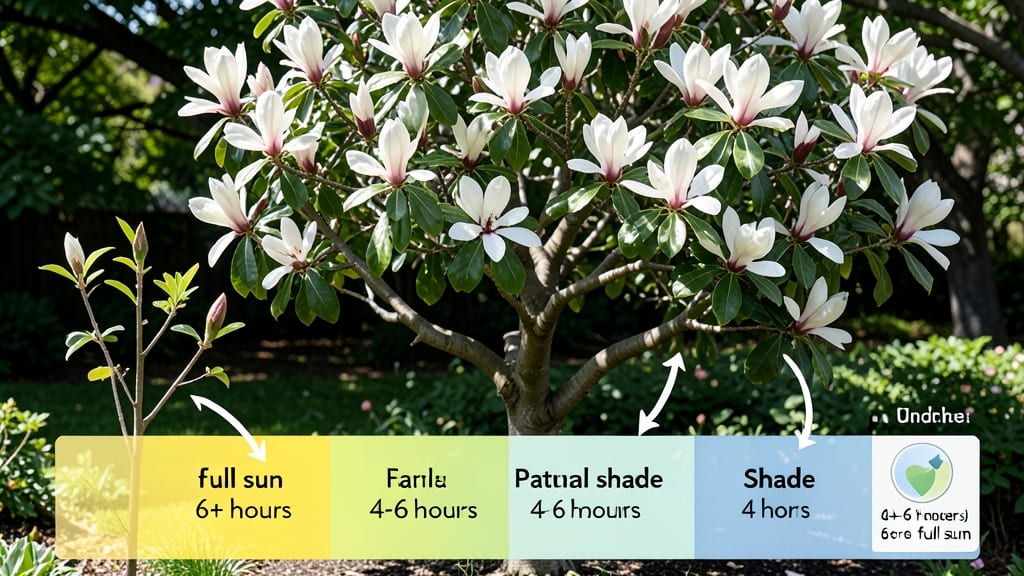
A magnolia tree needs how much sun does a magnolia tree need—4 to 8 hours of sunlight daily for thriving blooms 🌸 — but too much scorching heat can ruin those delicate flowers.
Picture this: you’ve spent years waiting for your magnolia to burst into color, only for the leaves to crisp at the edges or the buds to drop before they open. That’s often a sign the sun balance is off, and it’s easier to fix than you think.
Most magnolias prefer morning sun and afternoon shade, especially in hotter climates like USDA Zone 6a. Southern magnolias, for example, can handle partial shade, while Star magnolias crave more direct light. The key is matching the variety to your yard’s light conditions.
In this guide, I’ll break down the ideal sunlight ranges for different types, how to spot over- or under-exposure, and simple adjustments to keep your tree blooming like a pro.


Optimal sunlight requirements for magnolia trees by variety
Magnolia trees are prized for their fragrant blooms and lush foliage, but their sunlight needs vary dramatically by variety. Some thrive in bright, indirect light, while others demand full sun exposure to produce vibrant flowers. Understanding these differences ensures your magnolia stays healthy and blooms abundantly each season.
As a gardener, I’ve learned that Southern magnolias and Saucer magnolias often prefer dappled shade, especially in hot climates, while Star magnolias and Cucumbertree magnolias crave more sunlight. Getting this balance right can mean the difference between a tree bursting with flowers and one struggling to survive.
| Variety | Sunlight Needs | Best Placement | Notes |
|---|---|---|---|
| Southern Magnolia | 4–6 hours | Morning sun, afternoon shade | Tolerates shade but blooms best with filtered light |
| Saucer Magnolia | 6–8 hours | Partial shade to full sun | Needs afternoon shade in hot zones |
| Star Magnolia | 6–8 hours | Full sun with afternoon shade | Early bloomer; needs sunlight for winter buds |
| Cucumbertree Magnolia | Full sun | Open, sunny location | Most sun-tolerant; thrives in urban areas |
| Evergreen Magnolia | 4–6 hours | Morning sun, afternoon shade | Heat-sensitive; avoid harsh afternoon sun |
For Southern magnolias, I’ve found that 4–6 hours of sunlight is ideal, especially when paired with afternoon shade. These trees often grow in wooded areas, so they’re adapted to dappled light. If planted in full sun, they may develop leaf scorch during hot summers.
On the other hand, Star magnolias are early bloomers that need 6–8 hours of sunlight to set buds for winter. Without enough light, they’ll produce fewer flowers or none at all.
I’ve seen Star magnolias in my garden struggle when placed under dense canopies, so I always ensure they get morning sun and afternoon shade.
If you’re growing Cucumbertree magnolias, they’re the most sun-loving variety and can handle full sun exposure. These trees are perfect for urban landscapes where shade is limited. However, even they benefit from a little afternoon relief in extreme heat to prevent leaf burn.
For Evergreen magnolias, which are popular in warmer climates, 4–6 hours of sunlight is crucial. Too much direct sun can stress the leaves, especially in zones with high humidity. I’ve noticed that providing morning sun and afternoon shade helps maintain their glossy foliage year-round.
One common mistake I see is assuming all magnolias thrive in full sun. While some varieties like the Cucumbertree can handle it, others—like the Saucer magnolia—will suffer if exposed to harsh afternoon rays. Always check your specific variety’s needs before planting.
When in doubt, observe your magnolia’s leaves. If they’re turning yellow or brown at the edges, it’s a sign of too much sun. If the tree looks leggy with sparse blooms, it likely needs more sunlight.
Adjusting placement or using shade cloth can help fine-tune the light balance for optimal growth.
Remember, magnolias are long-lived trees, so getting their sunlight right from the start pays off in years of stunning blooms. With the right exposure, your magnolia will reward you with fragrant flowers and lush foliage for decades to come. 🌸
Signs your magnolia tree isn’t getting enough (or too much) sun
Your magnolia tree might be silently screaming for help if its leaves are telling a different story than its location suggests. Leaf scorch along the edges or yellowing leaves are classic signs of sunlight stress, but they’re not the only clues.
Even sparse blooms or weak, leggy stems can point to sunlight issues—either too much harsh sun or not enough light to thrive.
Magnolias are finicky about sunlight, and their growth patterns change dramatically based on exposure. Too little sun leads to pale, weak foliage, while too much can cause leaf burn or even stunted flower production.
The key is finding that sweet spot where your magnolia gets 4–6 hours of morning sun with afternoon shade, especially in hotter climates.
⚠️ How Much Sun Does a Magnolia Tree Need?
Ideal: 4–6 hours of morning sunlight + afternoon shade (partial shade). Most magnolias thrive with 60% sunlight exposure but avoid intense afternoon sun, which can scorch leaves.
Too Little: Pale leaves, fewer blooms, weak stems. Fix: Relocate to a sunnier spot or supplement with grow lights.
Too Much: Brown leaf edges, leaf scorch, drooping. Fix: Prune nearby branches or add shade cloth (30–50%).
Start by inspecting your magnolia’s leaves for discoloration. If you notice yellowing between veins, it’s often a sign of too much sun or underwatering. Conversely, pale green or yellow leaves with no brown edges suggest insufficient light.
Check the undersides of leaves too—if they’re covered in spider mites, harsh sun may be weakening the tree’s defenses.
Another red flag? Sparse or no blooms despite the tree looking healthy otherwise. Magnolias need adequate sunlight to trigger flowering, and if they’re not getting enough, they’ll focus energy on leaf growth instead.
Try moving your tree to a sunnier spot or prune nearby trees to let in more dappled light. If relocating isn’t an option, consider supplemental lighting with a grow bulb during winter months.
Weak, leggy stems or thin branches are another clue your magnolia is stretching for light. This happens when the tree isn’t getting enough direct sunlight and grows tall and spindly to reach it.
To fix this, prune back the top growth to encourage bushier growth, then gradually move the tree to a sunnier location over a few weeks to avoid shocking the roots.
For established magnolias, mulching around the base can help regulate soil temperature and retain moisture, which indirectly supports healthier sunlight exposure. Use organic mulch like wood chips or pine straw, keeping it 2–3 inches deep and 3–4 inches away from the trunk to prevent rot.
Pair this with deep watering once a week to keep the roots hydrated during dry spells.