
Pruning
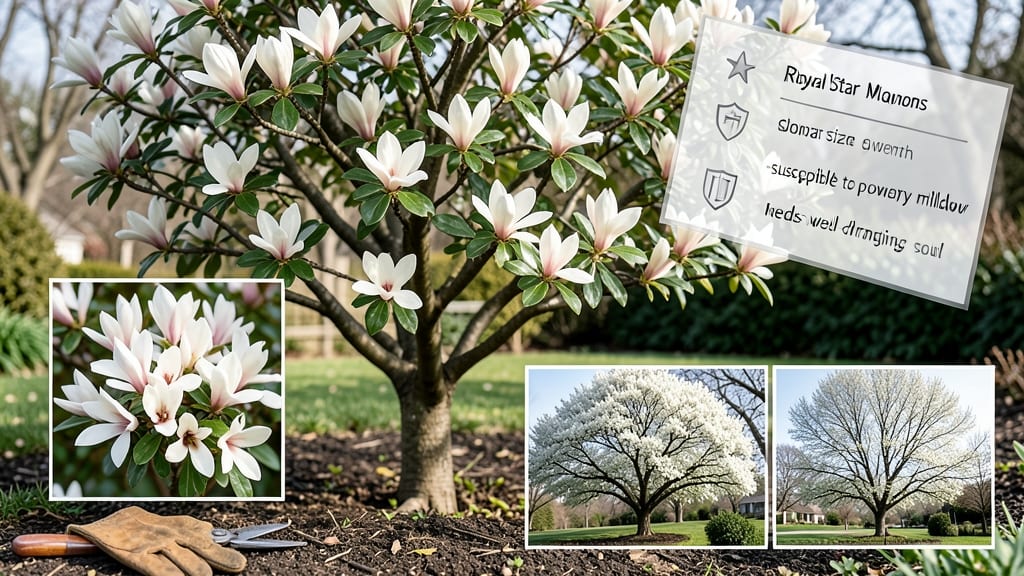
The Royal Star magnolia tree presents a striking balance of pros and cons—its dramatic spring blooms and compact form shine in small spaces, but its care requires precision in drainage, shade, and pruning to preserve its health and signature shape.
The Royal Star magnolia tree stands out for its slow, controlled growth—typically reaching just 15-20 feet tall—which makes it ideal for urban gardens where space is limited. 🌸 The fragrant white blooms appear earlier than many magnolias, often in late winter or early spring, creating a showstopping display.
However, their delicate blooms mean they need protection from late frosts, and the tree’s semi-evergreen foliage can scorch in hot, direct sunlight. While generally pest-resistant, Royal Stars occasionally attract scale insects if stressed by improper watering or poor soil conditions.
Compared to other magnolias like the Little Gem (which blooms later) or Annabelle (with glossier leaves), Royal Star’s disease resistance is one of its biggest advantages—but this comes with a trade-off.
Their dense branching requires careful pruning after flowering to avoid weakening the tree, and over-pruning can reduce next year’s bloom count. For best results, I recommend planting in well-amended soil and avoiding heavy clay, which can suffocate roots.
💡 In This Article
- Royal Star Magnolia Tree Growth Habits and Care Requirements
- Best Varieties of Royal Star Magnolia and Common Challenges
Royal Star magnolia tree growth habits and care requirements
The Royal Star magnolia's slow growth rate—about 12 inches per year—is both its charm and a practical advantage. This controlled expansion makes it perfect for small yards or urban landscapes where space is limited.
The tree typically matures between 15-20 feet tall with a spread of 10-15 feet, creating a balanced, rounded canopy. This growth habit contrasts sharply with faster-growing varieties like the Little Gem, which can reach 20-25 feet in similar timeframes.
Thriving in USDA hardiness zones 5-9, Royal Stars prefer partial shade (3-6 hours of sunlight daily) to protect their delicate blooms from afternoon sunburn. The soil must be well-draining and slightly acidic (pH 5.0-6.5), as waterlogged roots lead to root rot—a common issue in heavy clay soils.
Mulching with 2-3 inches of organic matter helps retain moisture while preventing soil compaction. Unlike drought-tolerant varieties, Royal Stars need consistent moisture, especially during their first 2-3 years of establishment.
One of the tree's standout features is its early spring blooms, which appear 2-3 weeks before most magnolias thanks to its hybrid genetics (a cross between Magnolia × soulangeana and Magnolia stellata). These 6-inch-wide white flowers are highly fragrant, attracting pollinators while creating a dramatic visual impact.
However, the blooms are frost-sensitive—late spring frosts (28°F or lower) can damage them, so planting near a south-facing wall or using frost cloths can help mitigate this risk.
The tree's semi-evergreen foliage adds year-round interest, though it may drop some leaves in harsh winters (zones 5-6). This adaptation makes it more resilient than fully evergreen varieties like Annabelle, which can suffer from winter desiccation.
For optimal bloom production, avoid heavy fertilization—Royal Stars prefer balanced, slow-release fertilizer applied in early spring (10-10-10 ratio) rather than high-nitrogen formulations that encourage leafy growth over flowers.
When it comes to sunlight tolerance, Royal Stars exhibit a fascinating trade-off: while they need partial shade to protect blooms, they also require at least 3 hours of direct sunlight daily to photosynthesize effectively. In full shade, the foliage becomes sparse, and bloom production declines.
The ideal spot balances these needs—think morning sun with afternoon shade, such as under a deciduous tree that provides summer shade but allows winter sunlight.
For those in hotter climates (zones 8-9), afternoon shade becomes critical to prevent leaf scorch. I've seen Royal Stars in full sun in cooler zones (5-6) thrive, but in zones 7+, they often struggle without protection.
This adaptability makes them versatile, but it also means gardeners must tailor their planting strategy to their specific microclimate.