
Planting
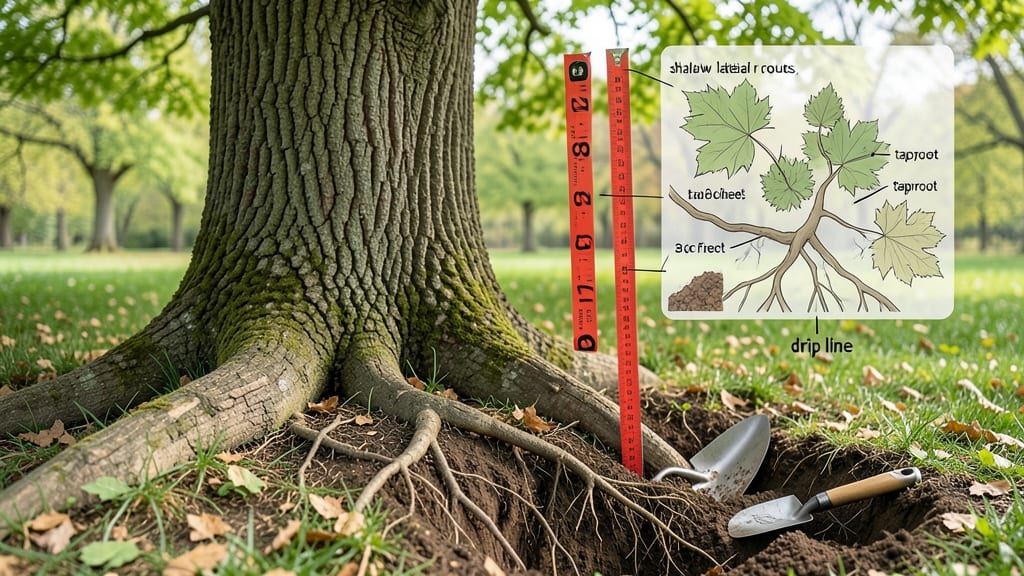
Maple tree roots grow 3 to 5 feet deep on average, but their true power lies in how far they spread sideways—often 2 to 3 times the tree’s canopy width.
Picture this: you’ve just planted your 🌳 Maple Tree in that perfect spot, only to discover years later that its roots are creeping under your driveway or competing with nearby shrubs. That’s why understanding their growth patterns isn’t just gardening trivia—it’s the key to avoiding costly mistakes.
Whether you’re designing a landscape, avoiding root conflicts with structures, or simply curious about how these trees anchor themselves, the depth and spread of maple roots play a huge role.
Below, I’ll break down what science says about their growth, how to plant safely, and what signs to watch for if roots start causing trouble.
You’ll learn how to space your maple tree for long-term health, which plants make good neighbors (and which to avoid), and how to spot early warnings of root stress before they become major problems. Let’s dig in!
Maple tree root depth and spread: what science reveals about growth patterns
Understanding maple tree root depth is essential for any gardener or landscaper planning to plant these majestic trees. While their stunning foliage and towering canopies steal the show, the root system determines long-term health and stability.
Most maple species develop roots that extend 3 to 5 feet deep but can spread laterally far beyond their canopy width. This balance ensures stability while competing for nutrients and water.
Scientific studies reveal fascinating differences between species. For example, sugar maples (Acer saccharum) tend to have deeper, more concentrated root systems compared to silver maples (Acer saccharinum), which develop broader but shallower roots.
These variations impact planting decisions, especially in urban landscapes where space is limited. Knowing these patterns helps prevent damage to sidewalks, driveways, and underground utilities.
Age plays a critical role in root development. Young maple trees focus energy on vertical growth, with roots extending downward quickly. As they mature—typically after 10 to 15 years—roots spread laterally, creating a wide network that can reach 2 to 3 times the canopy's width.
This lateral expansion is why mature maples often lift pavement or compete aggressively with nearby plants for resources.
Here’s a quick comparison of root characteristics between common maple species to help you plan your landscape with confidence:
| Species | Root Depth | Lateral Spread | Key Notes |
|---|---|---|---|
| Sugar Maple | 3–5 ft | 2–3x canopy width | Deep, fibrous roots; stable for mature trees |
| Silver Maple | 2–4 ft | 3–4x canopy width | Shallower roots; faster spread but less stable |
| Red Maple | 3–5 ft | 2–3x canopy width | Balanced depth/spread; adaptable to urban areas |
| Norway Maple | 4–6 ft | 2–2.5x canopy width | Deep taproot; aggressive spread in moist soils |
Soil type significantly influences root depth. In well-draining, loamy soils, maple roots penetrate deeper to access moisture and nutrients. Conversely, clay-heavy or compacted soils force roots to spread laterally near the surface, increasing the risk of damage to hardscapes.
If you’re planting in urban areas, consider amending the soil with organic matter to encourage deeper root growth and reduce surface competition.
Young maple trees, especially those under 5 years old, are most vulnerable to root damage during planting. Their root systems are still developing, and improper handling can stunt growth for years.
Always dig a planting hole twice as wide as the root ball but no deeper to avoid burying the trunk. This ensures roots can expand naturally without suffocating.
Another critical factor is the taproot myth. While many trees develop a dominant central root, maple trees—particularly mature ones—rely more on a fibrous root system. This network spreads outward in all directions, making them less stable in high-wind areas unless properly staked.
If you’re planting near structures, prioritize species like sugar maples with deeper roots for added stability.
Monitoring root health is just as important as initial planting. Signs of root stress—like yellowing leaves, stunted growth, or mushroom growth at the base—often indicate fungal issues or soil compaction.
Mulching with 3–4 inches of organic mulch (like wood chips) helps regulate soil temperature and retain moisture, reducing stress on developing roots.
For landscapers or homeowners with limited space, dwarf or semi-dwarf maple varieties (like 'Autumn Blaze' or 'Emerald King') are excellent choices. These cultivars mature at 15–30 feet tall and develop proportionally smaller root systems, making them ideal for smaller yards or container growing.
Always check the cultivar’s growth habits before planting to avoid surprises.
In summary, maple tree roots are a marvel of nature’s engineering—balancing depth for stability with lateral spread for resource access. By understanding these patterns, you can plant with confidence, avoid costly damage, and ensure your maples thrive for generations.
Whether you’re a seasoned gardener or a first-time tree planter, these insights will help you make informed decisions for a healthier landscape.
How close can you plant near maple tree roots? Safe distances for structures and other plants
When planning your landscape around a maple tree, spacing is everything. Maple roots spread aggressively, often reaching 2-3 times the tree’s canopy width horizontally. For a mature maple with a 50-foot canopy, that means roots can extend 100-150 feet outward—though most root mass concentrates within the dripline.
Vertical roots typically extend 3-5 feet deep, but some aggressive varieties like silver maple can penetrate deeper.
Your first priority should be protecting structures and utilities. Sidewalks, driveways, and foundations can crack under the pressure of expanding roots. The minimum safe distance from a maple trunk to any structure is 15-20 feet, but larger varieties may require 25+ feet of clearance.
Always call 811 before digging near your tree to locate underground utilities like septic systems or pipes.
⚠️ WARNING: Maple Roots Can Cause Serious Damage
For companion plants, choose species that thrive in maple shade but won’t compete for nutrients. Ferns, hostas, and wildflowers like trillium or bloodroot do well in the dappled light beneath maples. Avoid shallow-rooted plants like grasses or bulbs, which can get choked out by maple’s aggressive lateral roots.
Mulch heavily (3-4 inches) around the base, but keep it 6 inches away from the trunk to prevent rot.
If you’re planting a new maple tree, give it room to grow. A sugar maple planted today will need at least 40 feet of clearance in all directions by maturity.
For urban settings, consider dwarf varieties like ‘Autumn Fantasy’, which stay under 20 feet tall but still require 15 feet of space. Always test soil moisture before planting—maples hate soggy roots but also can’t tolerate drought.
Watch for root-related stress signs like yellowing leaves or stunted growth, which may indicate roots are hitting obstacles. If you must plant near an existing maple, dig a trench around the root zone to guide roots downward.
For septic systems, use root barriers (buried 2-3 feet deep) to deflect roots away from pipes. Regular deep watering (1-2 inches per week) encourages roots to grow deeper rather than spreading laterally.
Remember, maples are long-lived—some exceed 200 years. Proper spacing now saves thousands in repairs later. When in doubt, consult an arborist to assess your tree’s root system before breaking ground. With the right planning, your maple can coexist beautifully with your landscape—without the headaches.