
Size
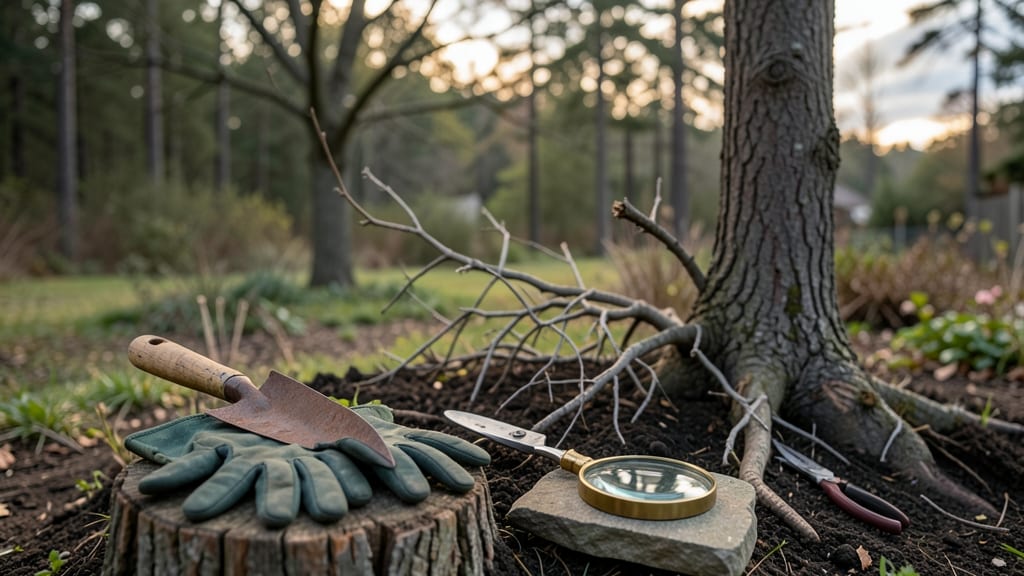
That moment when you stare at a tree and wonder: how can you tell when a tree is dead? The answer isn’t always obvious—especially when bark looks intact and branches still cling to the trunk.
I’ve learned the hard way that skipping these 5 visual checks can lead to wasted time (and even safety risks) trying to revive a hopeless tree.
Start with the bark test: scrape a small section with your fingernail or knife. Healthy trees have a thin, green cambium layer beneath the bark—dead ones reveal only dry, brown wood.
Next, check for branches that snap like twigs when bent (not the slight bend of living wood) or peeling bark that cracks away in sheets. Even in winter, a dead tree won’t bleed sap when cut—just a dull, dry surface.
You’ll also spot no new growth (even in spring) and mushrooms or insects at the base—nature’s way of saying, “This tree’s done.” The good news? These clues let you act fast, whether that means removal or replanting something with better staying power. No guesswork, just clear answers.
Common mistakes? Assuming a leafless tree is dead (some just sleep through winter) or ignoring root rot that hides underground. Grab a knife, take 10 minutes, and you’ll know for sure—no digging required. Here’s how to tell the difference between hope and hopelessness.
Root Causes Of Tree Death
Understanding why trees die helps you spot the warning signs before it’s too late. Trees don’t just wither away—they succumb to specific stressors, often silently. Here’s a breakdown of the most common culprits and the science behind them.
Trees are just like humans—they can get sick. Fungal pathogens, bacteria, and viruses weaken a tree’s vascular system, blocking its ability to transport water and nutrients. Some of the most destructive offenders include:
- Heart Rot Fungi (e.g., Fomes fomentarius) – These fungi invade the tree’s core, hollowing it out from the inside. As the wood decays, the tree loses structural integrity, making it prone to snapping in storms.
Look for concentric rings of decay in cross-sections of fallen branches. - Dutch Elm Disease (Ophiostoma ulmi) – Spread by bark beetles, this fungus clogs a tree’s water-conducting vessels, causing yellowing leaves (chlorosis) and wilting even when soil moisture is high.
Infected trees often die within 1-2 years. - Anthracnose (Colletotrichum spp.) – Common in wet springs, this fungal disease causes dark, sunken lesions on leaves and twigs, leading to premature leaf drop. If left unchecked, the tree’s energy reserves deplete, accelerating decline.
Pro Tip: 💡 If you notice mushrooms growing at the base of the tree, that’s a red flag—it’s often a sign of advanced root or heart rot.
Insects and borers don’t just nibble—they can systematically dismantle a tree’s life support. Some pests target specific tree species, while others are generalists that weaken any tree over time.
- Emerald Ash Borer (Agrilus planipennis) – This invasive beetle lays eggs in ash trees, and its larvae tunnel under the bark, disrupting nutrient flow.
Infested trees develop D-shaped exit holes and epicormic sprouts (shoots growing from the trunk). - Sirex Woodwasp (Sirex noctilio) – Targets stressed pine trees, injecting a toxic mucus that kills cambium (the tree’s growth layer).
Infested pines often show yellowing needles and sawdust-like frass at the base. - Gypsy Moth Caterpillars (Lymantria dispar) – While they don’t kill trees outright, their voracious appetite defoliates oaks, maples, and birches, starving the tree. Repeated defoliation over 2-3 years can be fatal.
Warning Sign: 🚨 If you see sawdust-like frass near the trunk or unusual holes in the bark, the tree may already be compromised.
Trees need water to survive, but imbalance—whether drought or waterlogging—can be just as deadly.
- Drought Stress – Prolonged dry spells force trees to close stomata (pores on leaves) to conserve water, halting photosynthesis.
Without energy, the tree’s cambium layer stops producing new cells, leading to thin, brittle bark and premature leaf drop. - Root Rot (Phytophthora spp.) – Overwatering or poor drainage creates anaerobic conditions in the soil, inviting fungi like Phytophthora to infect roots.
Infected roots turn black and mushy, unable to absorb water or nutrients. Look for mushrooms sprouting from the soil near the base. - Frost Cracking – Sudden temperature swings (e.g., warm days followed by freezing nights) cause moisture inside the tree to expand and contract, splitting the bark.
While not always fatal, severe cracks can invite pests and diseases, accelerating decline.
Quick Check: 🌡️ Stick a screwdriver into the soil near the tree—if it comes out dry and crumbly, the tree may be thirsty. If the soil smells sour or rotten, it’s waterlogged.
Sometimes, death isn’t gradual—it’s a sudden, traumatic event that leaves no time for recovery.
- Storm Or Wind Throw – High winds uproot trees or snap trunks, severing the root system.
Even if the tree survives initially, exposed roots dry out quickly, and the tree struggles to regenerate. - Mechanical Injury (e.g., Lawnmowers, Chainsaws) – Deep gashes in the trunk or girdling roots (roots that wrap around the trunk) strangle the tree by cutting off its vascular system.
Girdled trees often show wilted leaves on one side while the rest stays green. - Herbicide Drift Or Soil Contamination – Accidental exposure to glyphosate or other systemic herbicides can disrupt the tree’s cellular processes, leading to yellowing leaves, stunted growth, and eventual death.
Even petroleum spills can coat roots, preventing oxygen absorption.
Pro Tip: ✨ If a tree was recently damaged by a storm or construction, monitor it closely—new sprouts at the base can be a sign of survival, but no leaf regrowth in spring is a death knell.
A tree’s health starts below ground. If the soil lacks essential nutrients or is physically hostile, the tree can’t thrive.
- Compacted Soil – Heavy foot traffic, construction, or clay-heavy soil restricts root growth, limiting the tree’s ability to access water and nutrients.
Compacted roots often grow in a shallow, circular pattern, making the tree top-heavy and prone to falling. - Nutrient Deficiencies (e.g., Iron, Nitrogen, Potassium) – - Iron deficiency (chlorosis) → Yellow leaves with green veins. - Nitrogen deficiency → Pale, yellowing leaves (especially older ones). - Potassium deficiency → Brown leaf edges and weak stems. - Soil pH Imbalance – Most trees prefer slightly acidic soil (pH 6.0-7.0).
If the soil is too alkaline (high pH), essential nutrients like iron and manganese become unavailable, leading to stunted growth and leaf discoloration.
Soil Test Tip: 📊 Grab a soil sample from 4-6 inches deep and send it to a local extension office—they’ll tell you exactly what’s missing!
Revive or Remove Dead Trees
If you’ve identified a dead or dying tree on your property, don’t panic—there are still steps you can take to either nurse it back to health or safely remove it. The right approach depends on the root cause of its decline. Below, we’ll break down practical solutions for common issues, along with prevention tips to keep your trees thriving for years to come.
If your tree is struggling due to root rot or fungal diseases, act fast before the problem spreads to other plants.
- 🔥 Prune infected branches: Use sterilized pruning shears to remove and dispose of any dead, discolored, or mushroom-covered branches. Do not compost them!
- 🍳 Improve drainage: If the soil is waterlogged, amend it with organic matter like compost or sand to enhance aeration. Consider installing a French drain if water pooling is severe.
- 👨🍳 Apply fungicide: For fungal infections, use a copper-based or phosphite fungicide (like Copper Sulfate) as directed on the label. Reapply every 2–4 weeks during wet conditions.
- ⏰ Monitor long-term: Even after treatment, keep an eye on the tree. If it fails to recover within a year, removal may be the safest option.
💡 Prevention Tip: Avoid overwatering, and ensure proper spacing between trees to reduce humidity and fungal spores.
Pests like bark beetles, borers, or aphids can weaken a tree to the point of death. Here’s how to combat them:
- 🔪 Target the pests:
- For borers, inject systemic insecticides (like Imidacloprid) into the trunk.
- For aphids or scale insects, spray with horticultural oil or insecticidal soap.
- For bark beetles, wrap the trunk with Tanglefoot or sticky bands to trap them.
- 🌡️ Strengthen the tree: Fertilize with a balanced, slow-release fertilizer (like 10-10-10) to boost its immune system.
- 🎯 Call in reinforcements: Introduce natural predators like ladybugs (for aphids) or parasitic wasps (for borers) if the infestation is mild.
💡 Prevention Tip: Regularly inspect trees for early signs of pest activity, especially after drought or stress. Healthy trees are less vulnerable!
If a tree is dead or dying due to storm damage, broken branches, or girdling roots, it may need structural support—or removal.
- 🔧 Assess structural integrity: If large branches are hanging but not yet dead, consult an arborist to determine if cabling or bracing can stabilize the tree.
- 🪓 Remove hazardous sections: Use a chainsaw to safely remove dead or broken limbs, following proper techniques to avoid injury or further damage.
- ⚠️ Know when to cut it down: If the tree is leaning precariously, has extensive decay, or is a liability (e.g., near power lines), removal is the safest option. Hire a professional if the tree is large.
💡 Prevention Tip: Prune trees regularly to remove weak branches, and avoid planting large trees too close to structures or power lines.
Drought, soil depletion, or extreme weather can kill trees over time. Here’s how to revive or replace them:
- 💧 Rehydrate the roots: Deep-water the tree slowly over several hours (not just a quick sprinkle) to encourage root growth. Use a soaker hose for efficiency.
- 🌱 Amend the soil: Conduct a soil test to check pH and nutrient levels. Add compost, peat moss, or organic matter to improve fertility.
- 🌳 Consider replacement: If the tree is beyond saving, choose a native species better suited to your climate and soil conditions for future plantings.
💡 Prevention Tip: Mulch around the base of trees (but keep it 6 inches away from the trunk) to retain moisture and regulate soil temperature.
Some situations require expert help. Seek an arborist if:
- The tree is over 30 feet tall or located near a house, road, or power lines.
- You suspect aggressive fungal diseases (like Dutch elm disease) or severe pest infestations.
- The tree is leaning dangerously or has large hollow sections.
Professionals can perform cabling, bracing, or safe removal while minimizing risks to your property and safety.
Frequently asked questions
Can a tree still be alive if it has no leaves?
Not always! Many trees naturally lose leaves in winter or during drought, but if it's outside its normal shedding season, check for other signs. A dormant tree will usually regrow leaves in spring. If branches snap easily and bark looks dry, it's likely dead. Evergreens should never lose all their needles unless diseased or dying.
What does the "knife test" for tree health really involve?
Scrape a small section of bark with a sharp knife or your fingernail. Healthy trees reveal a thin green layer (the cambium) beneath the bark. Dead trees show only dry, brown wood. For conifers, cut a small branch cross-section - if it's solid brown inside with no green, the tree is dead. Always test multiple spots for accuracy.
How can I tell if a tree is dead but still standing?
Look for these key indicators: branches that break like dry twigs, bark that peels away easily, and no sap when cut. Tap the trunk - a hollow sound means decay. Also check for insects or mushrooms at the base, which often appear after a tree dies. Even in winter, a dead tree won't show any signs of new growth in spring.
Is it safe to keep a dead tree standing?
Only if it poses no safety risk. Dead trees become structural hazards, especially during storms. Check for cracks, leaning, or hollow sections. If it's near buildings, power lines, or frequently used areas, removal is safest. Small, stable dead trees can be left for wildlife habitat, but monitor them regularly for signs of further decay.
What's the difference between a dead tree and a dying tree?
A dying tree shows partial signs of life like some green leaves or sap when cut, while a dead tree exhibits no life at all. Dying trees may have some green foliage but also show other death signs like peeling bark or brittle branches. The transition can take months or years, so check regularly. If you're unsure, the knife test is most reliable.