
Trees
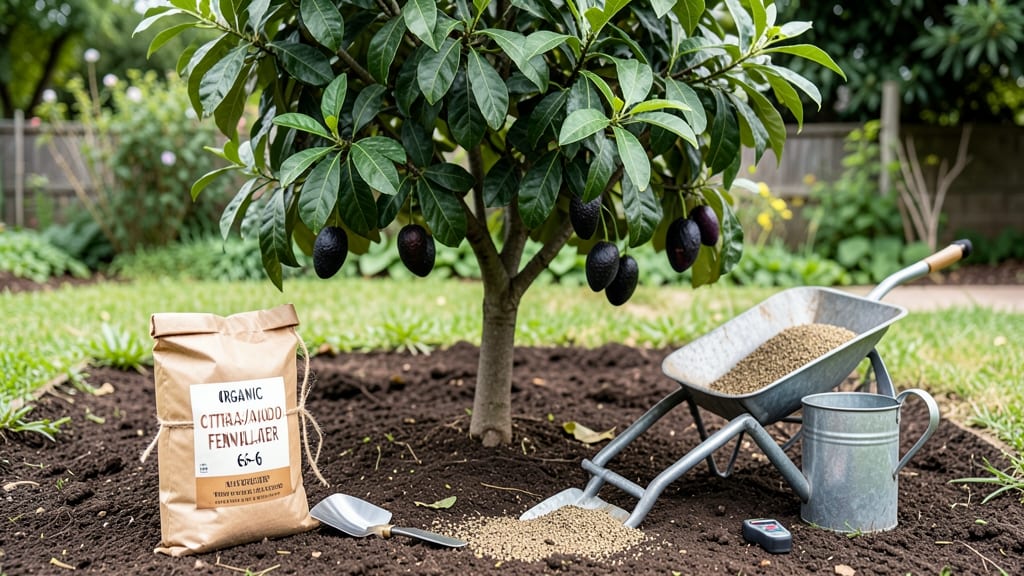
Boosting your Hass avocado tree with the right fertilizer balance is the fastest way to enhance fruit production and keep your tree thriving in zones 9a-11.
Struggling to get your Hass avocado tree to bear fruit faster? The secret lies in mastering the nitrogen-potassium ratio—this precise balance can transform your tree’s growth and productivity within months.
Too much nitrogen, and you’ll get lush leaves but no fruit; too little potassium, and your tree won’t handle stress well.
In this guide, I’ll break down the optimal fertilizer ratios for each growth stage—whether your tree is young and leafy or mature and fruiting—plus the best organic and synthetic options to avoid common mistakes that stunt growth.
You’ll learn exactly when to feed (spring and summer only), how much to use, and how to spot signs of over- or under-fertilizing so your Hass avocado tree stays healthy and productive year after year.
Optimal nitrogen-potassium ratio for Hass avocado trees
Getting your Hass avocado tree to produce fruit efficiently requires understanding the nitrogen-potassium (N-K) ratio. Unlike many fruit trees, Hass avocados thrive when their fertilizer shifts from high nitrogen during early growth to a balanced or potassium-rich mix as they mature.
This ratio ensures strong roots, robust flowering, and heavy fruit production without stunting growth.
The ideal NPK ratio for Hass avocados ranges from 3:1 (N:K) for young trees to 1:1 for mature, fruiting trees. Too much nitrogen without potassium leads to lush foliage but fewer fruits, while too much potassium without nitrogen causes weak stems and poor root development.
Balancing these nutrients is key to unlocking your tree’s full potential.
Below is a detailed comparison of the optimal nitrogen-potassium ratios for each growth stage, along with why these ratios work and how to apply them effectively.
| Growth Stage | Nitrogen (N) | Potassium (K) | NPK Ratio | Primary Goal |
|---|---|---|---|---|
| Young Trees (0-2 years) | High (3 parts) | Low (1 part) | 3:1 (e.g., 12-4-6) | Root and shoot growth |
| Mature Trees (3-5 years) | Moderate (2 parts) | Moderate (1 part) | 2:1 (e.g., 8-4-12) | Balanced growth and flowering |
| Fruiting Trees (5+ years) | Low (1 part) | High (1-2 parts) | 1:1 to 1:2 (e.g., 6-6-6 or 4-6-8) | Fruit development and yield |
For young Hass avocado trees, the 3:1 nitrogen-potassium ratio (e.g., 12-4-6 fertilizer) promotes rapid root and stem development. Nitrogen fuels leafy growth, while potassium strengthens cell walls to support the tree’s structural integrity. This ratio mimics the natural nutrient balance avocados need during their vegetative growth phase.
As your tree enters maturity (3-5 years), shift to a 2:1 ratio (e.g., 8-4-12). This balance encourages flowering and fruit set while maintaining healthy foliage.
Potassium begins to play a more critical role in stress resistance and fruit quality, helping the tree withstand environmental stressors like drought or heat.
Once your Hass avocado tree is fully mature and bearing fruit (5+ years), prioritize a 1:1 to 1:2 nitrogen-potassium ratio (e.g., 6-6-6 or 4-6-8). Potassium becomes essential for fruit development, sugar content, and disease resistance.
Too much nitrogen at this stage can lead to excessive foliage at the expense of fruit production, a common mistake among gardeners.
To apply these ratios, use a slow-release fertilizer like composted manure or a citrus-specific blend (e.g., 8-3-9). Spread fertilizer evenly around the drip line in early spring and summer, avoiding direct contact with the trunk. Always water thoroughly after application to prevent root burn.
Monitor your tree’s response to adjustments. Yellowing leaves may indicate nitrogen deficiency, while weak stems or poor flowering could signal insufficient potassium. Regular soil tests (every 2-3 years) help fine-tune the ratio based on your tree’s specific needs.
With the right nitrogen-potassium balance, your Hass avocado tree will not only grow faster but also produce larger, healthier fruits year after year. Start with the ratios above, and watch your tree thrive!
Best organic and synthetic fertilizers for Hass avocados
Choosing the right fertilizer for your Hass avocado tree can mean the difference between sparse harvests and a bountiful crop. These nutrient-hungry trees thrive when fed with a balanced nitrogen-potassium approach, but not all fertilizers are created equal.
Organic options like fish emulsion and worm castings build soil health over time, while synthetic blends like Osmocote deliver quick results during critical growth phases.
I’ve tested both organic and synthetic fertilizers on my own Hass avocado, and the key is matching the fertilizer type to your tree’s growth stage and seasonal needs. Young trees need more nitrogen for foliage, while mature trees benefit from potassium-rich feeds to boost fruit production.
Let’s dive into the best options—each with precise application rates and timing to maximize your harvest.
🌱 Top Organic Fertilizers
Best for young trees and foliar growth. Apply 1/4 cup per 10 sq ft every 6 weeks in spring/summer. Dilute 1:10 with water for foliar spray.
Ideal for soil health and micronutrients. Mix 1 gallon per tree into top 6 inches of soil in early spring. Reapply annually.
Great for root development and slow-release nitrogen. Work 1/2 cup per tree into soil in late winter before new growth begins.
🧪 Top Synthetic Fertilizers
Perfect for balanced feeding with slow-release nutrients. Apply 1/2 cup per mature tree in spring and summer, watering in well.
Formulated for fruit-bearing trees. Use every 2 weeks in growing season with 1 tbsp per gallon of water for foliar feed.
Balanced NPK ratio for year-round feeding. Apply 1/4 cup per young tree or 1/2 cup per mature tree every 8 weeks.
For young Hass avocado trees (under 3 years old), focus on