
Pests and Diseases
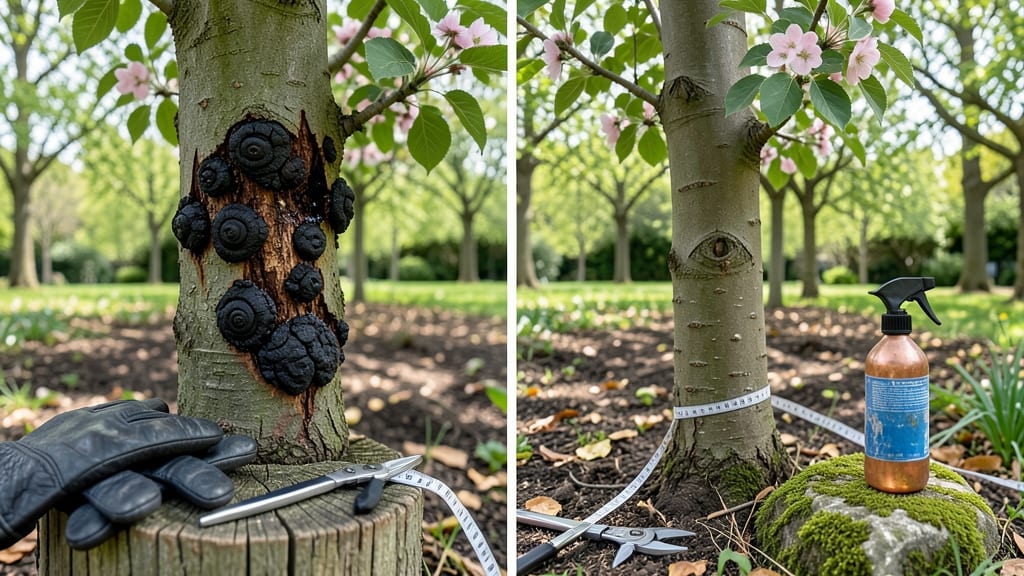
Your apple tree’s trunk covered in black streaks or fuzzy growth isn’t just unsightly—it’s a fungal infection that can weaken or even kill your tree if ignored. 🌿 I’ve seen silver leaf fungus, canker, and other trunk diseases turn a once-vibrant tree into a shadow of itself, but the good news is that organic treatments can save it—if you act fast.
Fungal trunk infections like canker or silver leaf thrive when trees are stressed, often from wounds, poor pruning, or wet conditions. The first signs—sunken cracks, oozing sap, or silvery leaves—mean the fungus has already taken hold.
Without treatment, it spreads deeper into the wood, making recovery harder. The key is catching it early and using the right organic methods to starve the fungus while protecting your tree’s health.
You’ll learn how to prune infected areas properly, apply copper-based sprays, and use natural remedies like neem oil to stop the spread. Within weeks, you’ll see fresh growth where the fungus once ruled, and your tree will bounce back stronger than before.
The secret is consistency—treating once won’t cut it, but a season-long plan will restore that healthy wood.
This works for home orchards, backyard apple trees, and even young saplings. Whether your tree is young or mature, the same principles apply—just adjust the scale. Let’s get that trunk looking clean and strong again.
Root Causes of Tree Trunk Fungus
Fungus growing on an apple tree trunk isn’t just an eyesore—it’s often a sign of underlying stress or damage. Understanding the why behind this issue is the first step toward prevention and treatment. Below, we break down the most common causes, backed by science and actionable insights.
Fungi thrive in damp, humid conditions, making moisture the #1 culprit behind trunk infections. Here’s how it happens:
- Overwatering or poor soil drainage: If the soil around your tree stays soggy for extended periods, excess moisture seeps into the bark, creating the perfect breeding ground for fungal spores. Tip: Test your soil’s drainage—if water pools after rain, amend with compost or sand.
- Frequent rain or overhead irrigation: Apple trees with dense canopies trap moisture on the trunk, especially if water droplets linger. Pro tip: Use drip irrigation or soaker hoses to keep foliage dry.
- Condensation from mulch: Thick mulch piles (especially organic types like wood chips) can hold moisture against the trunk, promoting fungal growth. 💡 Keep mulch 3–4 inches away from the trunk and no deeper than 2–3 inches.
Fungal spores exploit any entry points into the tree’s defenses. Common sources of damage include:
- Mechanical injuries: Lawnmowers, string trimmers, or even rough pruning can strip bark, leaving wounds where fungi like Valsa (canker) or Nectria can invade.
- Sun scald or frost cracks: Sudden temperature swings (e.g., winter sun on frozen bark) cause splits, creating gateways for infection.
- Animal or insect activity: Squirrels gnawing bark or bark beetles tunneling weaken the tree’s natural barriers.
Action step: Inspect the trunk annually for wounds and seal minor damage with pruning paint or tree wound dressing (only on fresh cuts, not old wounds).
A weakened apple tree is more susceptible to fungal attacks. Stress factors include:
| Cause | How It Leads to Fungus |
|---|---|
| Nutrient deficiencies (e.g., nitrogen, potassium) | Weakened cells can’t fight off pathogens. Yellowing leaves or stunted growth are red flags. |
| Root damage (from construction, compacted soil, or girdling roots) | Reduces water/nutrient uptake, stressing the tree and lowering resistance. |
| Improper pruning (cutting too late in the season or removing too much wood) | Slows healing and invites disease entry. |
| Pests (e.g., aphids, scale insects) | Their honeydew attracts sooty mold, which blocks sunlight and stresses the tree. |
🎯 Fix it: Conduct a soil test, fertilize appropriately, and prune in dormant season (late winter/early spring) to minimize stress.
Fungal spores are everywhere—but they spread when introduced to a vulnerable tree. Common vectors:
- Unsterilized pruning tools: Spores from infected branches can hitchhike to healthy parts of the tree.
- Infected mulch or compost: Old wood chips or yard waste may harbor Armillaria (root rot) or other pathogens.
- Adjacent infected plants: Fungi like Botryosphaeria can jump from nearby roses, shrubs, or even lawn grass.
Prevent it: Sterilize tools with 70% rubbing alcohol or bleach solution (1 part bleach to 9 parts water) between uses. Remove mulch from under the tree and replace with fresh, disease-free material.
🔥 Key takeaway: Most trunk fungus issues stem from a mix of moisture, injury, and stress. Addressing these root causes—along with proper organic treatments—will restore your apple tree’s health and prevent future outbreaks.
Fixing Fungus on Your Apple Tree
Fungus on your apple tree trunk isn’t just unsightly—it can weaken the tree, reduce fruit yield, and even kill it if left unchecked. The good news? With the right approach, you can reverse the damage and prevent future outbreaks using organic, practical methods.
Below, we break down the most common causes of fungal growth on apple tree trunks and the step-by-step fixes tailored to each issue.
Fungi thrive in moisture-rich, cracked, or wounded bark. If your tree’s trunk has peeling paint, deep scratches, or old pruning wounds, spores latch on like hitchhikers on a road trip.
🔥 How to Fix It:
👨🍳 Step 1: Prune Properly (No Jagged Edges!)
- Use sterilized pruning shears (wipe with rubbing alcohol between cuts).
- Make cuts at a 45-degree angle, just outside the branch collar (the swollen base of the branch).
- Seal larger wounds (over ½ inch) with pruning sealant (organic options like Tanglefoot Tree Wound Pruning Seal work well).
🥘 Step 2: Remove Debris & Improve Airflow
- Clear away mulch, leaves, or grass touching the trunk (keep it 3–4 inches away).
- Thin out dense branches to let sunlight and air circulate.
🌡️ Step 3: Apply a Fungicide Spray (Organic Options)
- Mix 1 tbsp baking soda + 1 quart water + a few drops of dish soap (spray on trunk and lower branches).
- For stubborn cases, try copper fungicide (like Bonide Copper Fungicide)—safe for organic gardens.
✨ Prevention Tip:
- Paint the trunk with white latex paint (diluted 50/50 with water) to reflect sunlight and reduce moisture buildup.
- Water at the base (not overhead) to keep bark dry.
If your tree sits in soggy soil or gets frequent overhead watering, the trunk stays damp—fungi’s dream come true. Root rot and trunk rot (like Armillaria mellea) often follow.
🔥 How to Fix It: 💡 Step 1: Check Your Soil Drainage - Dig a 6-inch hole near the tree.
If water pools after 30 minutes, amend the soil with: - Compost (to improve structure) - Perlite or coarse sand (to break up clay) - Wood chips (for mulch, but keep away from the trunk!)
🍳 Step 2: Adjust Your Watering Habits
- Water deeply but infrequently (1–2 inches per week, depending on climate).
- Avoid sprinklers—use a soaker hose at the base.
- Install a French drain if water pools around the trunk.
🔪 Step 3: Remove Infected Wood (If Necessary)
- If the fungus has killed bark tissue, carefully scrape away dead areas with a sterilized knife.
- Apply hydrogen peroxide (3%) to the wound to kill spores.
🎯 Prevention Tip:
- Plant grasses or clover around the tree (not mulch) to absorb excess moisture.
- Test your soil’s pH (fungi love acidic soil—aim for 6.0–7.0).
Bugs like borers, bark beetles, or aphids create entry points for fungi. Their tunnels weaken the tree, making it vulnerable to infections like Nectria canker.
🔥 How to Fix It:
👨🍳 Step 1: Identify & Trap Pests
- Look for sawdust-like frass (insect poop) or small holes in the bark.
- Set up pheromone traps for borers (like Orchard Monitor traps).
- Introduce beneficial insects (ladybugs, lacewings) to control aphids.
🥘 Step 2: Treat with Organic Insecticides
- Spray neem oil (mix 2 tbsp per gallon of water) to smother eggs and larvae.
- For severe infestations, use kaolin clay (like Surround WP) as a physical barrier.
🌡️ Step 3: Strengthen the Tree’s Defenses
- Fertilize with compost tea (rich in beneficial microbes).
- Apply seaweed extract (boosts cellulose production in bark).
✨ Prevention Tip:
- Inspect trees annually (spring and fall) for early signs of borers.
- Encourage natural predators by planting dill, fennel, or yarrow nearby.
Stressed trees can’t fight off fungi as effectively. Nitrogen deficiency, drought, or compacted soil make them prime targets for Valsa canker or silver leaf disease.
🔥 How to Fix It:
💡 Step 1: Feed the Tree Properly
- Test your soil (home kits work!) and amend with:
- Kelp meal (for micronutrients)
- Bone meal (for phosphorus, strengthens roots)
- Composted manure (slow-release nitrogen)
🍳 Step 2: Mulch Correctly (But Not Too Close!)
- Spread 3–4 inches of wood chips or straw 6 inches from the trunk.
- Avoid plastic mulch—it traps moisture and heat.
🔪 Step 3: Deep Water During Droughts
- Water slowly over 2–3 hours (deep soak, not surface splash).
- Use a moisture meter to check soil depth (aim for 40–60% moisture).
🎯 Prevention Tip:
- Avoid heavy pruning in late summer (stresses the tree).
- Plant companion plants like garlic or chives to repel pests naturally.
If you see: ✅ Large black, oozing cankers ✅ Mushrooms growing at the base ✅ Wilted leaves + dieback in multiple branches
Your tree may need:
- Professional pruning (to remove infected wood)
- Soil fumigation (for deep root rot)
- Replacement (if the fungus is Armillaria or honey fungus)
Final Pro Tip: 🌿 Monitor your tree every 2 weeks—catching fungus early means less work and more apples next season! 🍏💚
Frequently asked questions
What are the first signs my apple tree trunk has fungus?
Look for black streaks, sunken cracks, or fuzzy growth on the bark—these are classic symptoms. You may also notice oozing sap or silvery leaves (a sign of silver leaf fungus). Check the base of the trunk and lower branches first, as moisture collects there.
Can I save my apple tree if the fungus has spread deep into the wood?
Early action is key! If you catch it before the fungus girdles the trunk (completely encircles it), organic treatments like copper fungicide or neem oil can help. For severe cases, consult an arborist—they may recommend pruning infected areas or even replacing the tree if root rot is present.
How often should I spray my apple tree to prevent fungus?
Apply organic fungicides like baking soda spray or copper solution every 2-4 weeks during the growing season (spring to fall). For high-risk areas, increase to monthly applications. Always spray in the early morning so the solution dries before evening dew forms.
Is white latex paint really effective for preventing trunk fungus?
Yes! Diluted white paint (50/50 with water) reflects sunlight and reduces moisture buildup on the bark. Just avoid thick applications—keep it thin and even. Reapply every 1-2 years or when the paint peels, especially after winter when bark is most vulnerable.
What’s the difference between canker and silver leaf fungus?
Canker appears as sunken, cracked areas with oozing sap, while silver leaf fungus causes leaves to turn silvery-gray and brittle. Canker attacks the bark directly, while silver leaf spreads through the vascular system. Both require different treatments—canker needs pruning and fungicide, while silver leaf may require systemic solutions.