
Diseases
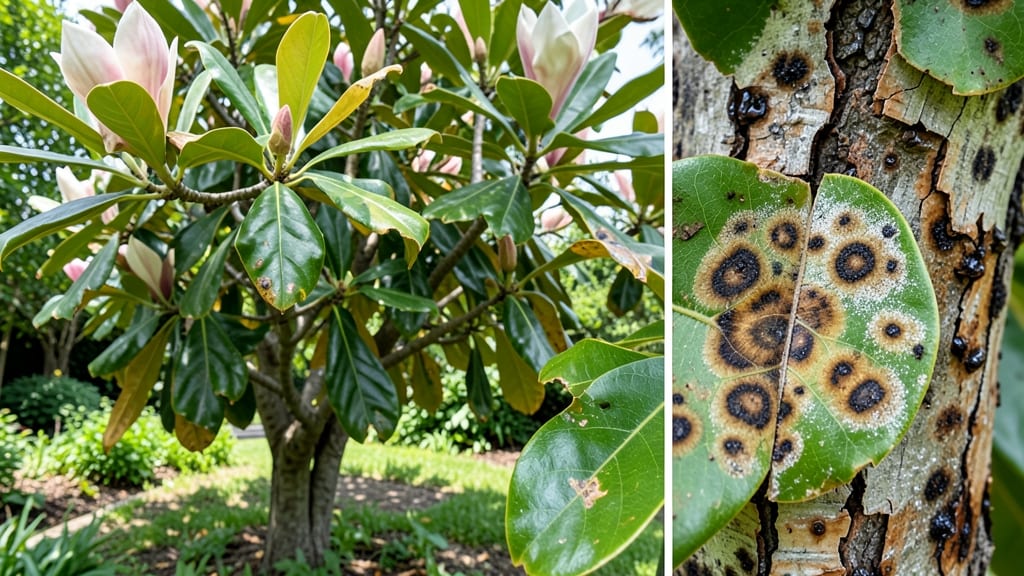
When your brown magnolia tree diseases turn leaves crispy and brown, it’s often a silent cry for help—not just from disease, but from stress you can fix. 🌿 I’ve watched root rot and black knot turn stunning magnolias into sad shadows, but early action saved every one of them.
The key? Spotting the symptoms fast and knowing whether to prune, treat, or just wait it out.
Root rot starts with yellowing leaves that turn brown and mushy stems, while black knot shows up as dark, scaly growths on branches. Both steal nutrients, leaving your tree weak and stunted.
The good news? Most cases respond to pruning infected areas, improving drainage, and—if needed—a targeted fungicide spray. I’ve seen trees bounce back in just a few months with the right care.
You’ll start by removing infected branches (sterilize your tools first!) and giving your tree’s roots room to breathe. For black knot, a simple copper fungicide mix works wonders; root rot needs better soil and less water.
The goal isn’t perfection—it’s giving your magnolia a fighting chance to recover its lush, fragrant glory.
This works for both young and mature trees, though older ones may need extra TLC. The sooner you act, the better the outcome—so grab those pruners and let’s turn that brown back to green.
Root Causes Behind Leaf Discoloration
When your majestic magnolia tree starts turning brown, it’s often a cry for help from deep within its structure—or even from unseen threats lurking in the environment. Understanding why these diseases strike is the first step toward saving your tree.
Below, we break down the science behind the most common culprits, from soil-borne invaders to fungal hitchhikers, and explain how they hijack your magnolia’s health.
Fungi are the #1 cause of brown magnolia diseases, thriving in warm, moist conditions to weaken leaves, bark, and roots. Two of the most destructive offenders are:
🍄 Phytophthora Root Rot: The Drowning Disease
This water-loving pathogen (Phytophthora spp.) spreads through overwatered soil or poor drainage, suffocating roots by blocking oxygen flow. Here’s how it works:
- Moisture Love: Fungi like Phytophthora thrive in soggy soil with >24 hours of wetness. Even well-draining soil can become a breeding ground if water pools around the base.
- Root Blockage: The fungus clogs root cells with oomycete threads, cutting off nutrient and water transport. Leaves turn brown as the tree starves.
- Spread Speed: It moves through contaminated water (e.g., sprinklers, rain runoff) or infected mulch, jumping to nearby trees.
Pro Tip: 🌡️ Test your soil’s drainage—if water sits for >6 hours, Phytophthora is a risk. Amend with compost or sand to improve airflow.
🍅 Venturia Magnoliae: The Leaf Blight Bandit
This fungus (Venturia spp.) targets leaves and twigs, causing brown spots with yellow halos and eventual leaf drop. Its attack strategy:
- Spores in the Air: Fungal spores hitch rides on wind or splashing rain, landing on wet foliage to germinate.
- Cuticle Penetration: The fungus digests leaf wax (cuticle) using enzymes, creating entry points for infection.
- Temperature Trigger: Ideal conditions: 60–80°F (15–27°C) with high humidity—common in spring/fall.
Pro Tip: ✨ Prune infected leaves immediately (don’t compost them!) and space trees for 3–5 feet of airflow to reduce humidity.
Magnolias are not drought-tolerant, but overwatering is worse. Here’s how water mismanagement fuels disease:
💦 Overwatering: The Suffocation Effect
When roots sit in waterlogged soil, they drown—literally. The lack of oxygen triggers:
- Anaerobic Bacteria: Soil microbes consume oxygen faster than roots can replenish it, releasing toxic byproducts like ethanol.
- Root Rot Feedback Loop: Dead roots = more entry points for fungi (e.g., Armillaria or Fusarium).
- Nutrient Lockout: Waterlogged soil binds phosphorus and nitrogen, starving the tree even as it drinks.
Pro Tip: 📊 Use a moisture meter—ideal soil should feel like a wrung-out sponge. If it’s sticky, pause watering for 3–5 days.
☀️ Underwatering: The Slow Death by Dehydration
While less common, chronic drought weakens magnolias, making them vulnerable to secondary infections. How?
- Stomatal Closure: Leaves seal pores to retain water, but this traps heat, causing leaf scorch (brown edges).
- Weakened Defenses: Stressed trees can’t produce antifungal compounds, letting Cercospora (a brown spot fungus) take hold.
- Root Shriveling: Fine roots die back, reducing water uptake—even if you later water heavily.
Pro Tip: 💡 Mulch deeply (3–4 inches) with wood chips to retain moisture and regulate soil temp. Water deeply 2–3x/week in drought.
Some brown magnolia symptoms start with pests that damage tissue, creating gateways for disease. The worst offenders:
🐜 Scale Insects: The Sap-Sucking Saboteurs
These armored pests (e.g., Magnolia scale) pierce bark and leaves to feed on sap, leaving:
- Sticky Honeydew: Their waste ferments on leaves, creating a sugar-rich film that fuels sooty mold (a black fungal growth).
- Weakened Canopy: Heavy infestations clog stomata, reducing photosynthesis and turning leaves yellow/brown.
- Fungal Hitchhikers: Sooty mold blocks sunlight, stressing the tree further.
Pro Tip: 🔥 Blast off scales with horticultural oil (apply in dormant season) or introduce ladybugs (natural predators).
🪰 Bark Borers: The Wood Destroyers
Larvae of magnolia bark beetles tunnel under bark, disrupting vascular tissue and causing:
- Girdling: Larvae circle the trunk, cutting off nutrient flow above the wound.
- Fungal Entry: Frass (borer waste) and open wounds invite Nectria canker (a brown, sunken lesion fungus).
- Dieback: Infested branches wilt and brown from the top down.
Pro Tip: 🔪 Prune infested branches 6+ inches below the damage and sterilize tools with 70% alcohol to prevent spread.
Now that you know why your magnolia’s leaves are turning brown, the next step is actionable fixes—stay tuned!
How to solve it
Revive your magnolia’s health with these targeted fixes—each tailored to the root cause of browning leaves, black knots, or root rot. Follow the steps below to treat the issue and keep your tree thriving for years.
🔥 Step 1: Assess the Damage First, gently loosen the soil around the base of the tree (about 6–12 inches deep) to check for:
- Mushrooms or fungus at the base (a sure sign of root rot).
- Soft, mushy roots (healthy roots are firm and white).
- Bad odor (like rotting wood).
🍳 Step 2: Prune Affected Roots (If Necessary) If roots are severely decayed:
- Use sterilized pruners (clean with rubbing alcohol) to trim away black, mushy roots.
- Do not prune more than 25% of the root system at once—this stresses the tree further.
👨🍳 Step 3: Improve Drainage Root rot thrives in soggy soil. Fix it permanently with these tweaks:
- Raise the soil level: Mix compost or pine bark fines into the soil around the roots to create a mound (prevents water pooling).
- Install a French drain: Bury a perforated pipe surrounded by gravel if your yard has poor drainage.
- Avoid overwatering: Water deeply only when the top 2 inches of soil are dry (stick your finger in to test!).
🥘 Step 4: Apply Fungicide (For Severe Cases) Use a copper-based fungicide (like Copper Sulfate) or phosphite fungicides (e.g., Phostrol). Follow the label instructions and:
- Apply early in the season (spring or early summer) as a preventative.
- Reapply after heavy rains if the soil stays wet for weeks.
⏰ Step 5: Give It Time to Recover
- Reduce stress: Avoid fertilizing for 3–6 months—the tree needs to heal first.
- Mulch properly: Spread 2–4 inches of organic mulch (like pine straw or shredded bark) 3 inches away from the trunk to insulate roots.
💡 Pro Tip: Black knot is highly contagious—act fast to prevent it from jumping to other trees!
🔥 Step 1: Prune Infected Branches
- Cut out knots completely—they won’t heal on their own.
- Remove at least 6 inches below the knot (fungus spreads underground).
- Burn or bag the infected wood (do not compost it!).
- Sterilize pruners between cuts with rubbing alcohol or bleach solution (1 part bleach to 10 parts water).
🍳 Step 2: Treat the Wounds After pruning:
- Seal cuts larger than ½ inch with pruning sealant (like Tanglefoot Tree Wound Pruning Seal).
- Avoid over-sealing—small cuts (under ½ inch) can heal naturally.
👨🍳 Step 3: Apply Fungicide Spray the entire tree (including the ground beneath) with a fungicide containing propiconazole (e.g., Bayer Advanced Fungus Control for Trees & Shrubs). Reapply:
- Every 2–4 weeks during the growing season (spring to fall).
- After heavy rains to protect new growth.
🥘 Step 4: Boost Tree Health A strong tree fights infections better. Help yours recover with:
- Balanced fertilizer: Use a slow-release, low-nitrogen formula (like 10-10-10) in early spring.
- Deep watering: Water slowly and deeply (1–2 inches per week) to encourage strong root growth.
- Avoid wounding: Prevent future infections by not pruning during wet seasons (fungi love moisture!).
💡 Early Detection Saves Trees!
- Inspect monthly: Check for new knots, discolored leaves, or mushrooms at the base.
- Watch for stress signs: Wilting, yellowing leaves, or early leaf drop mean your tree is struggling—adjust care immediately.
🎯 Soil & Watering Tips
- Test your soil: Use a home soil kit to check pH (magnolias prefer slightly acidic soil, pH 5.0–6.5). Amend with sulfur or peat moss if needed.
- Mulch correctly: Too much mulch (over 4 inches) suffocates roots. Too little leaves them exposed. 3 inches is perfect!
- Drainage check: If your yard floods after rain, plant on a slope or build a raised bed for future magnolias.
✨ Long-Term Care
- Prune in late winter/early spring (before new growth starts).
- Avoid heavy pruning—magnolias bloom on old wood, so don’t cut back too aggressively.
- Plant resistant varieties: If black knot is rampant in your area, consider ‘Little Gem’ or ‘Southern Magnolia’ (they’re slightly more resistant).
🚨 When to Call a Pro If your tree is over 50% affected by rot or knots, or if it’s top-heavy and unstable, consult an arborist.
They can: - Perform professional root pruning. - Apply systemic fungicides for severe cases. - Advise on tree removal if the tree is beyond saving (better to replace it than risk it falling).
Your magnolia can bounce back—just act fast and follow these steps! With the right care, it’ll reward you with glorious blooms and lush foliage for decades. 🌸💚
Frequently asked questions
Why do my magnolia leaves turn brown in patches instead of all at once?
Patchy browning often signals fungal infections like Venturia or Cercospora, which spread gradually. These fungi target specific leaves first, creating irregular brown spots with yellow halos. Check for wet foliage—fungi thrive in humid conditions (60–80°F). Prune infected leaves immediately and improve airflow around the tree.
Can I save a magnolia tree with black knots if the branches are already dead?
Yes, but act fast! Prune all infected branches (including dead wood) at least 6 inches below the knot to stop fungal spread. Sterilize tools between cuts and apply a copper fungicide to remaining healthy branches. The tree may regrow new shoots from dormant buds if the root system is still healthy.
How do I know if my magnolia has root rot or just needs more water?
Root rot shows mushrooms at the base, mushy black roots, and a rotten smell. Healthy roots are firm and white. If your tree just needs water, leaves will wilt but recover quickly when hydrated. Root rot leaves leaves permanently brown and crispy—even after watering. Test soil moisture: if it stays soggy for days, drainage is the issue.
Is it safe to use homemade remedies like baking soda spray for magnolia diseases?
Baking soda (1 tsp + 1 gallon water + soap) can help prevent mild fungal issues, but it won’t cure established infections like black knot or root rot. For serious problems, use copper fungicides or phosphites (like Phostrol). Homemade sprays work best as preventative maintenance during dry weather—apply in early morning to avoid leaf burn.
Will my magnolia recover if I remove all the infected branches at once?
Removing too much at once can stress the tree further, but gradual pruning (over 2–3 sessions) gives it time to recover. For black knot, spread cuts out over 2 weeks to avoid shock. If >30% of the canopy is gone, fertilize lightly with low-nitrogen (10-10-10) to support regrowth. Monitor for new shoots—healthy growth means recovery is underway!