
Light Requirements
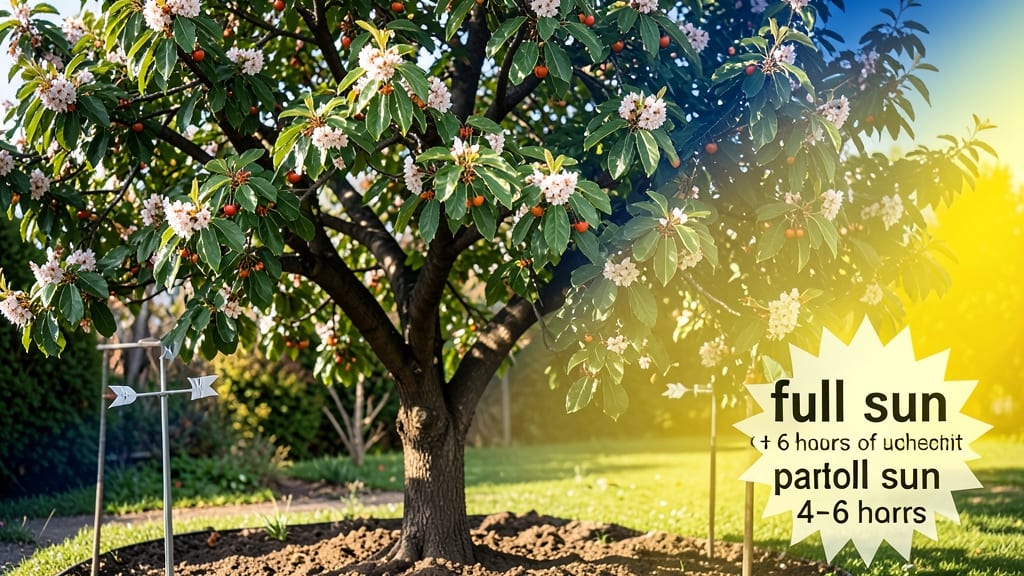
Understanding the cherry tree sun requirements is key to growing sweet, flavorful fruit—many gardeners mistakenly assume partial shade will suffice, only to see their trees struggle with poor yields. Picture this: you’ve spent months nurturing your sapling, only to watch it produce sparse blooms or tiny, tart cherries.
That’s often the sun talking—or, more accurately, the lack of it. Without enough light, your tree’s energy goes into leaf growth instead of fruit development, leaving you with a lush canopy but a disappointing harvest.
But here’s the good news: with the right placement and a few smart adjustments, you can turn that into a bounty of ripening cherries by summer.
I’ll walk you through how much sun different varieties need, how to spot sunlight deficiencies early, and the best spots to plant for maximum productivity—whether you’re in a sunny backyard or a slightly shadier urban lot.
You’ll also discover how to fine-tune care based on your climate, from protecting young trees in intense afternoon heat to extending the growing season in cooler regions. Let’s get your cherry tree the light it craves—and the harvest you’ve been dreaming of.


How many hours of sun do cherry trees need for optimal fruit production?
Cherry trees are sun-worshippers, and their fruit production hinges on 6+ hours of direct sunlight daily. Without enough light, photosynthesis slows, sugar development stalls, and your harvest shrinks.
Sweet cherries like Bing and Rainier demand the most sun, while tart varieties like Montmorency tolerate slightly less—but never compromise below 5 hours or risk poor fruit set. The key lies in balancing light exposure with your climate and tree variety.
Sunlight triggers critical processes: chlorophyll production (for energy), flowering cues, and sugar accumulation in the fruit. A study from the USDA found that cherries grown with full sun exposure developed 20% more sugar than those in partial shade.
This means sweeter, more flavorful fruit—and fewer tart, mealy cherries. If your tree is struggling, it’s likely a light deficiency.
Here’s how sunlight needs break down by variety and stage:
| Variety | Sun Requirement | Fruit Quality Impact | Seasonal Adjustment |
|---|---|---|---|
| Sweet Cherries (Bing, Rainier, Stella) | 6–8+ hours | Large, sweet, high sugar | Prune for open canopy in summer |
| Tart Cherries (Montmorency, Meteor) | 5–7 hours | Firm, tart, smaller fruit | Tolerates light afternoon shade |
| Dwarf Varieties (Black Tartarian) | 6 hours (compact but still needs light) | Slower growth, smaller harvest | Use reflective mulch to boost light |
| Young Trees (1–3 years) | 4–6 hours (gradual increase) | Stunted growth, poor flowering | Avoid deep shade; use dappled light |
| Mature Trees (5+ years) | 8+ hours (peak production) | Max sugar, large fruit, heavy yield | Thin canopy for light penetration |
Seasonal adjustments are critical. In summer, cherry trees thrive with morning sun and afternoon shade in hot climates (e.g., Zone 9+) to prevent sunburn. However, afternoon shade alone (e.g., from a building) can reduce fruit quality by up to 30%.
For tart cherries, a few hours of afternoon shade helps retain acidity, but sweet cherries need unfiltered sun for optimal ripening.
Partial shade—like 3–5 hours of direct sun—can still work for tart cherries but results in smaller fruit and lower sugar content. If your tree is in partial shade, prioritize south-facing exposure (in the Northern Hemisphere) to maximize light.
Avoid north-facing spots entirely, as they provide little direct sunlight. Even dappled shade (e.g., from nearby trees) can limit photosynthesis, leading to spindly growth and fewer blossoms the following spring.
Monitor your tree’s canopy for signs of uneven light. If branches on the north side (in the Northern Hemisphere) look pale or sparse, prune to open the center for better light penetration. Use a sunlight meter or observe shadows at solar noon (when shadows are shortest) to gauge exposure accurately.
Most gardeners overestimate sunlight—measure don’t guess! A simple trick: Place a white board near your tree for a week. If it’s dry by noon, your tree gets enough sun.
Climate plays a role too. In cooler regions (e.g., Pacific Northwest), cherry trees can handle full sun year-round without stress. But in hot, dry climates (e.g., Southwest U.S.), afternoon shade becomes essential to prevent leaf scorch.
Mulch with straw or wood chips to retain moisture and reduce heat stress. For container-grown cherries, choose dwarf varieties and place pots in south-facing spots where they can follow the sun’s arc.
One common mistake? Assuming bright, indirect light counts as full sun. It doesn’t. Cherry trees need direct rays for photosynthesis. If your tree is under artificial grow lights, supplement with 12–14 hours of light daily to mimic summer conditions.
For outdoor trees, rotate pruning to ensure all branches get sunlight—otherwise, you’ll end up with one-sided fruit production and weak wood.
Pro tip: Pollination boosts with more sun! Bees are more active in sunny conditions, increasing fruit set. If your tree is in shade, hand-pollinate with a soft brush to transfer pollen between blossoms. Pair sweet and tart varieties 15–20 feet apart for cross-pollination, but ensure both get adequate light.
Best locations for planting cherry trees based on sunlight and climate zones
Choosing the right spot for your cherry tree isn’t just about sunlight—it’s about balancing microclimates, wind protection, and regional climate. In USDA zones 5-8, most varieties need 6-8 hours of direct sun daily, but placement varies dramatically between urban backyards and rural orchards.
I’ll show you how to adapt for extreme heat, short growing seasons, or tight spaces while maximizing fruit production.
Urban gardeners often face challenges like reflective heat from pavement or partial shade from buildings. Rural areas might contend with harsh winds or intense afternoon sun. The key is identifying microclimates—small areas with unique conditions—that can extend your tree’s growing season or protect it from stress.
For example, a south-facing wall can add 2-3 extra degrees of warmth in winter, while a windbreak hedge reduces drying winds by 50%.
| Location Type | Sunlight Conditions | Climate Adaptations | Best Varieties |
|---|---|---|---|
| Open Rural Orchard | 8+ hours full sun | Windbreaks, drip irrigation | Stella®, Bing, Rainier |
| Urban Backyard (South Side) | 6-7 hours direct sun | Reflective mulch, afternoon shade cloth | Montmorency (tart), Lapins |
| North-Facing Yard | 4-5 hours sun (supplemental light) | Grow lights, dwarf varieties | Skeena® (dwarf), Meteor |
| High Desert (Zones 6-7) | 7+ hours with afternoon shade | Windbreaks, deep mulch | Sweetheart, Chelan |
In regions with intense summer sun (like USDA zone 9+), afternoon shade becomes critical. I recommend planting your cherry tree near a deciduous tree or installing a 30% shade cloth during peak heat (1 PM–4 PM).
This prevents sunburn on leaves and fruit cracking, while still allowing morning sunlight for photosynthesis. For short growing seasons (zones 3-4), choose early-blooming varieties like Montmorency and plant near a south-facing wall to capture extra warmth.
Wind protection is often overlooked but vital for fruit set. Strong winds can pollinate poorly or damage blossoms, leading to sparse harvests. If your yard is exposed, create a windbreak using evergreen shrubs or a lattice fence on the prevailing wind side.
Even a single row of trees can reduce wind speed by 40%, improving both pollination and fruit development.
For urban gardeners with limited space, dwarf varieties like Skeena® or Stella® thrive in containers with 6+ hours of sun. Place them on patios or balconies with south or west exposure, and use reflective mulch (like white gravel) to maximize light.
Avoid north-facing spots entirely—these areas rarely get enough sunlight for cherry tree fruit production.
Always test your spot for 6 hours of direct sun before planting. Use a sunlight tracker app or mark the area with stakes to track sunlight patterns for a week.
If your yard falls short, consider supplemental grow lights during early growth stages or relocate to a sunnier area. The right placement can double your harvest—so choose wisely! 🌳