
Pruning
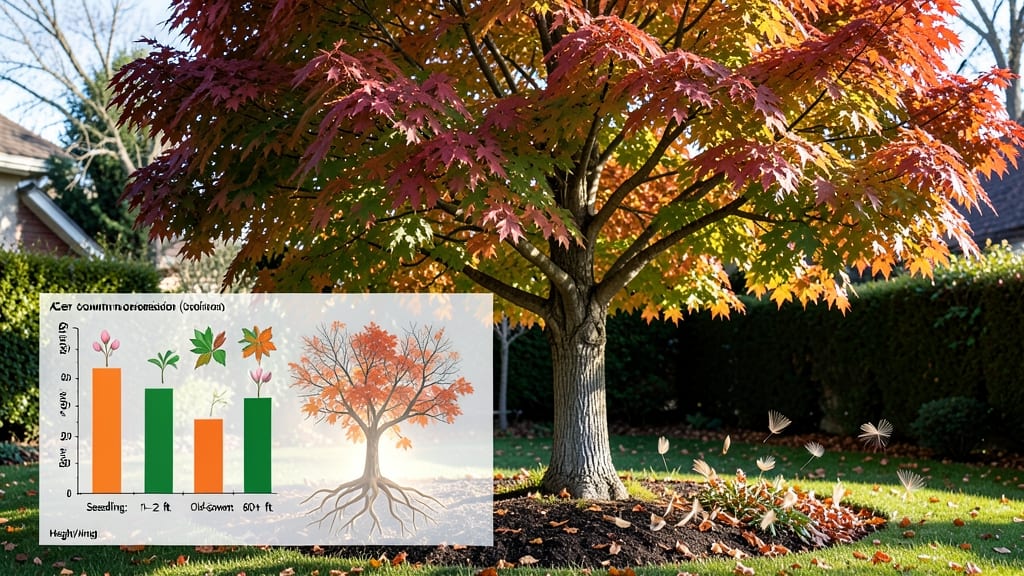
Understanding the maple tree growth stages 🌳 is like unlocking a time-lapse of nature’s patience—each year brings dramatic changes, from a fragile seedling to a towering giant.
Watching a maple tree grow from a tiny seedling to a towering shade provider is one of nature’s most rewarding processes—but how long does it take, and what should you expect each year?
In just three years, your sapling could shoot up from a 2-foot sprout to a 12-foot specimen, though the real magic happens over decades. By year 20, it might already be taller than your house.
Here’s what to watch for at every stage—height milestones, leaf patterns, and the environmental factors that can speed up or slow down growth.


Maple tree growth stages by age: height, trunk & leaf development timeline
Planting a maple tree seedling is like starting a decades-long journey—one that transforms a fragile 1-foot sapling into a 100-foot monarch of your landscape. Understanding each growth stage helps you provide the right care at the right time.
From delicate first leaves to towering branches, here’s what to expect year by year.
The first 5 years are critical for root and trunk development. Young maples grow slowly but steadily, while mature trees (over 20 years) can add 12-24 inches annually.
Leaf shape, color, and size also evolve dramatically, reflecting the tree’s age and health. Let’s break down the timeline so you can track progress like a pro.
🌱 Key Milestones: Seedling (0-2 yrs), Sapling (3-10 yrs), Mature (11-30 yrs), Old-Growth (30+ yrs). Each stage brings distinct height gains, bark changes, and foliage transformations.
| Age (Years) | Height Range | Trunk Diameter | Leaf Characteristics | Seasonal Notes |
|---|---|---|---|---|
| 0-1 | 1-2 ft | 0.25-0.5 in | Small, lobed leaves (1-3 in) | Delicate spring foliage; vulnerable to frost |
| 2-5 | 3-8 ft | 0.5-1.5 in | Leaves 3-5 in, bright green spring/summer | Develops woody stem; first fall color appears |
| 6-10 | 10-20 ft | 1.5-3 in | Leaves 4-6 in, vibrant fall hues | Branches lengthen; first seed clusters may form |
| 11-20 | 25-40 ft | 3-6 in | Leaves 5-8 in, deep lobes, rich colors | Trunk darkens; full canopy develops |
| 21-30 | 40-60 ft | 6-12 in | Leaves 6-10 in, bold patterns, early fall color | Mature bark ridges form; shade dominance |
| 30+ | 60-120 ft | 12+ in | Leaves largest, deepest hues, slower growth | Old-growth characteristics; wider canopy |
During the first year, your maple’s focus is on root establishment. You’ll notice tiny lobed leaves (1-3 inches) emerging in spring, turning golden-yellow in fall. The trunk remains slender but starts developing woody texture. Protect young saplings from deer browsing and compacted soil, which can stunt growth.
By years 3-5, your tree enters the sapling phase, where height gains accelerate. Leaves grow 3-5 inches wide with more pronounced lobes, and the first bright fall colors appear.
This is when you’ll see branching patterns form—ideal for pruning to shape the tree. Mulch around the base to retain moisture and encourage root expansion.
Between years 6-10, maples develop their iconic layered canopy. Leaves reach 4-6 inches and display richer fall hues (red, orange, or purple depending on species). The trunk thickens noticeably, and you may spot first flower clusters or seed pods.
This stage is perfect for structural pruning to remove weak branches before they become permanent.
Mature maples (11-20 years) hit their prime. Heights of 25-40 feet mean they’re now providing full shade, and leaves reach 5-8 inches with deeply lobed edges. The bark develops distinct ridges, and the tree’s root system expands significantly.
Reduce watering slightly—mature roots can access deeper moisture—but monitor for pests like aphids or diseases like tar spot.
Old-growth maples (30+ years)
How fast do maple trees grow? Factors affecting growth rate by species
Maple trees are stunning shade providers, but their growth speed varies dramatically by species. If you're planting one in your yard, knowing these differences will help you set realistic expectations. Sugar maples grow steadily but slowly, while silver maples shoot up like weeds in ideal conditions.
Understanding these growth rates helps you plan for space, sunlight, and long-term care.
Growth isn't just about species—it's also about where you live. Soil quality, sunlight exposure, and climate conditions can double or halve a tree's growth potential.
For example, a red maple in full sun with rich soil might reach 6 feet in 5 years, while the same tree in poor soil could take twice as long. Let's break down what to expect for each popular species.
🌳 Comparison Table: Maple Tree Growth Rates by Species
| Species | Avg. Annual Growth (ft/year) | Mature Height (ft) | Fastest Growth Stage | Key Growth Factor |
|---|---|---|---|---|
| Sugar Maple | 12-24" | 60-80 ft | Years 5-15 | Well-drained soil |
| Red Maple | 24-36" | 40-60 ft | Years 3-10 | Full sun exposure |
| Silver Maple | 36-48" | 50-80 ft | Years 1-5 | Moist, fertile soil |
While the numbers above give you a baseline, real-world growth can vary wildly. Silver maples are the fastest growers, often reaching 10 feet in just 3 years if conditions are perfect.
They're aggressive pioneers, thriving in disturbed soils and wet areas. However, their weak wood makes them prone to storm damage, so they're not ideal for windy yards.
On the other end, sugar maples grow more slowly but live longer, often exceeding 100 years with proper care. Their growth accelerates dramatically when they're 10-20 years old, which is why many homeowners plant them as shade trees—they'll eventually provide that perfect canopy.
For fastest results, pair them with regular mulching and balanced fertilization every 2-3 years.
Don't overlook red maples, which strike a balance between speed and durability. They grow about 2 feet per year in ideal conditions and develop stunning fall foliage. To maximize their growth, ensure they get at least 6 hours of sunlight daily and plant them in well-draining soil.
In my experience, red maples also handle urban pollution better than other species, making them great for city landscapes.
No matter which species you choose, remember that watering and pruning play huge roles in growth rates. Young trees need deep watering every 7-10 days during their first few years, while mature trees become more drought-tolerant.
Prune in late winter to remove dead branches and encourage stronger growth patterns. With the right care, you could see your maple reach half its mature height in just 15 years!