
Watering
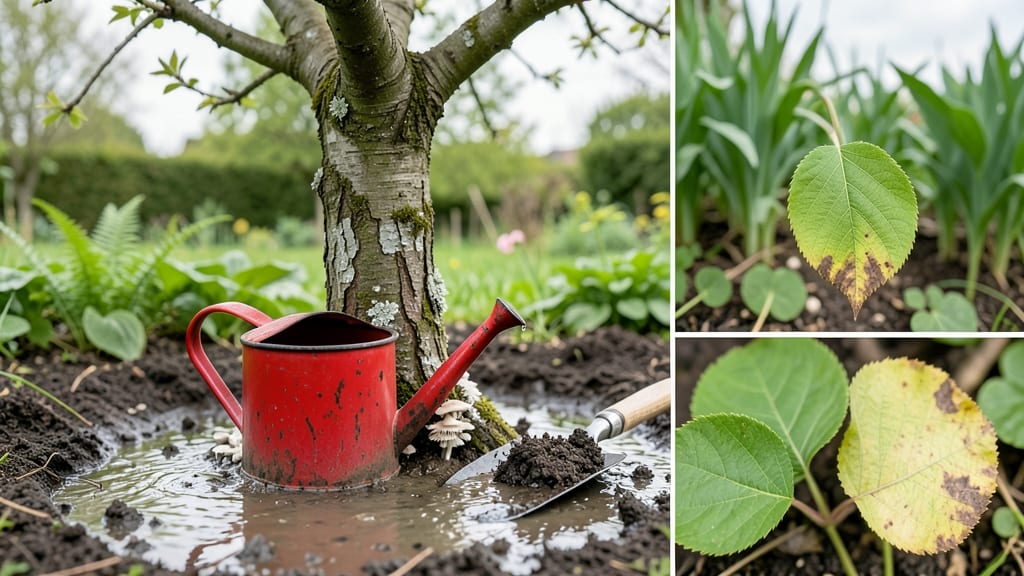
Your cherry tree’s sad yellow leaves aren’t just a summer shade shift—overwatering signs like these mean roots are drowning. 🌳 I’ve watched my own trees go from lush to limp in weeks, and the first clue is always the leaves: they yellow, wilt, or droop even when soil feels damp.
Worse, the bark starts splitting or mushrooms pop up at the base.
Here’s the hard truth: cherry trees hate soggy feet. Too much water cuts off oxygen to roots, inviting rot and fungal infections that turn healthy soil into a disease breeding ground.
The worst part? You might not notice until it’s too late—roots turn mushy brown instead of firm white, and the tree struggles to take up nutrients even when you water less.
Fixing it starts with a simple test: stick your finger 2 inches deep—if it’s damp, hold off. Improve drainage by mixing in 1/3 compost and 1/3 coarse sand to the top 6 inches of soil, then water deeply but only when the top inch feels dry.
Within weeks, new green leaves will tell you the roots are breathing again.
Long-term, mulch helps—but keep it 2-3 inches away from the trunk to avoid trapping moisture. And if your tree’s already struggling, prune back dead branches to redirect energy to healthy growth. Trust me, your cherry tree will thank you with fruit next season.
Root Causes Of Overwatering
Overwatering a cherry tree isn’t just about giving it too much water—it’s a complex issue rooted in soil dynamics, plant physiology, and environmental factors. Understanding why it happens helps you take corrective action before the damage becomes irreversible.
Here’s a breakdown of the key culprits behind soggy soil and stressed trees.
Cherry trees thrive in well-draining soil, but when drainage is compromised, excess water pools around roots instead of filtering away. This often happens due to:
- Compacted soil: Heavy clay or tightly packed soil prevents water from seeping down, creating waterlogged pockets. Test it: Dig a small hole near your tree—if water sits in it after 30 minutes, drainage is poor.
- Lack of organic matter: Soil rich in compost or mulch improves aeration, but if it’s mostly hardpan or sand, water drains too quickly or too slowly. Balanced loam soil (40% sand, 40% silt, 20% clay) is ideal for cherry trees.
- Improper planting depth: Burying the root flare (where roots meet the trunk) too deep traps moisture against the roots, suffocating them. Always plant so the flare is 1–2 inches above ground level.
💡 Pro Tip: Amend heavy clay soil with coarse sand or perlite (1 part amendment to 3 parts soil) to improve drainage. For sandy soil, mix in peat moss or coconut coir to retain moisture without drowning roots.
Even with good soil, human error is the #1 cause of overwatering. Common mistakes include:
- Watering on a schedule: Cherry trees need 1–1.5 inches of water per week (including rainfall), but rigid schedules ignore real-time needs. Check soil moisture first: Stick your finger 2–3 inches deep—if it’s damp, wait.
- Shallow, frequent watering: Light sprinkles encourage roots to stay near the surface, where they’re more prone to rot. Deep, infrequent watering (every 7–10 days) encourages roots to grow downward, seeking moisture.
- Ignoring weather conditions: Rainy seasons or high humidity reduce the need for supplemental water. Use a rain gauge to track natural precipitation and adjust accordingly.
- Using the wrong tools: Sprinklers or hose-end sprayers often oversaturate soil, while drip irrigation or soaker hoses deliver water slowly and directly to the root zone.
⏰ Actionable Fix: Switch to a soil moisture meter ($10–$20) to avoid guesswork. Water only when the meter reads 3–4 (dry) instead of 1–2 (wet).
Sometimes, overwatering is out of your hands. These external factors can turn your well-intentioned care into a disaster:
- Heavy rainfall or poor site selection: Planting a cherry tree in a low-lying area or near a gutter downspout ensures water pools around roots during storms. Solution: Grade the soil so it slopes away from the tree’s trunk.
- Impermeable mulch layers: Thick mulch (over 3–4 inches) can act like a waterproof blanket, trapping moisture against roots. Fix: Keep mulch 2–3 inches deep and 2 inches away from the trunk.
- Container limitations: Potted cherry trees (common in dwarf varieties) have restricted root space. Even with drainage holes, water can’t escape fast enough. Upgrade: Use terracotta pots (better drainage) or self-watering containers with moisture sensors.
🌡️ Climate Matters: In humid climates (like the Southeast U.S.), cherry trees need less frequent watering because high air moisture slows evaporation. In arid regions, roots may dry out faster, but never compensate by drowning them.
Waterlogged soil creates the perfect breeding ground for root rot fungi (like Phytophthora or Pythium) and bacterial diseases. These pathogens:
- Thrive in anaerobic (oxygen-deprived) soil, where roots suffocate.
- Block nutrient uptake, leading to yellowing leaves (chlorosis) even when soil is wet.
- Spread quickly in dense, poorly aerated soil.
🔥 Emergency Fix: If you suspect fungal root rot, stop watering immediately and improve drainage. In severe cases, prune affected roots (sterilize tools with 70% isopropyl alcohol) and treat with copper fungicide.
By addressing these root causes—literally—you’ll give your cherry tree the dry-but-moisture-balanced environment it craves. Next up: How to spot overwatering before it’s too late.
Revive Your Cherry Tree Now
Overwatering can feel like a silent killer for your cherry tree—it’s sneaky, but with the right moves, you can nurse it back to health. Below are practical fixes tailored to the most common overwatering symptoms, plus prevention tips to keep your tree thriving.
Let’s get your cherry tree back on track!
If your cherry tree’s leaves are turning yellow (especially between the veins), it’s likely drowning in excess moisture. Here’s how to save them:
🔥 Step 1: Adjust Your Watering Schedule
- Stop watering immediately until the top 2–3 inches of soil are dry (use a moisture meter or stick your finger in—if it’s soggy, wait).
- Water deeply but infrequently: Cherry trees prefer 1–1.5 inches of water per week (including rain).
Space out waterings to let the soil dry between sessions. - Morning watering is key: Water early in the day so excess moisture evaporates, reducing fungal risks.
🍳 Step 2: Improve Soil Drainage
- Aerate compacted soil: Loosen the top 6–12 inches of soil around the tree with a garden fork to help roots breathe.
- Add organic matter: Mix in compost or well-rotted manure to improve drainage and soil structure.
- Consider raised beds: If your soil is naturally heavy clay, planting in a raised bed with sandy loam can prevent future sogginess.
👨🍳 Step 3: Prune Damaged Foliage
- Trim yellow or wilted leaves with clean, sharp pruners to redirect the tree’s energy to healthy growth.
- Avoid heavy pruning—focus on removing only the worst-affected branches to prevent stress.
Mushy, brown roots and foul-smelling soil mean root rot has set in. Act fast with these steps:
🔪 Step 1: Dig Out Affected Soil (If Severe)
- Gently loosen the soil around the roots (don’t damage them!) and remove any black, mushy roots with sterilized pruners.
- Discard infected soil—don’t compost it, as spores can survive.
⏰ Step 2: Repot or Replant (For Container Trees)
- If your cherry tree is in a pot, repot it in fresh, well-draining soil (a mix of potting soil + perlite or sand works well).
- Ensure the container has drainage holes—no exceptions!
🌡️ Step 3: Apply Fungicide (For Advanced Cases)
- Spray copper fungicide or hydrogen peroxide (3%) on the roots and surrounding soil to kill fungal pathogens.
- Repeat every 7–10 days for 3 weeks to prevent reinfection.
Once your tree recovers, lock in these habits to avoid future disasters:
- 🎯 Test soil moisture weekly: Stick a screwdriver into the soil—if it goes in easily, wait to water.
- ✨ Use mulch (but not too much): Apply 2–3 inches of mulch (wood chips or straw) around the base to retain just enough moisture—keep it 6 inches away from the trunk.
- 🌧️ Account for rain: If it’s been raining, skip watering for a few days to avoid over-saturating the soil.
- 🔥 Choose the right pot: If growing in containers, pick terracotta or fabric pots (they dry out faster than plastic).
- Mild cases: Yellowing leaves may improve in 2–4 weeks with adjusted care.
- Root rot: Severe cases can take months to fully recover—be patient and consistent!
- Prevention is key: Once your tree stabilizes, stick to the dry-before-watering rule to avoid relapse.
Your cherry tree isn’t beyond saving—act now, and it’ll reward you with lush green leaves and sweet fruit in no time! 🍒🌿
Frequently asked questions
Why do cherry tree leaves turn yellow when overwatered?
Yellowing leaves (especially between veins) signal chlorosis from oxygen-starved roots. Excess water displaces air in soil, preventing nutrient uptake. Check for soggy soil—if it stays damp for days, roots can’t breathe, causing leaves to yellow and drop.
How do I know if my cherry tree has root rot?
Look for mushy, brown roots that smell foul (like rotting vegetables) and blackened soil. Gently dig near the base—healthy roots should be firm and white. If roots pull apart easily, root rot has set in and requires immediate drainage fixes.
Can I save a cherry tree with fungal growth at the base?
Yes, but act fast! Remove the fungus (wear gloves) and improve drainage by adding coarse sand or perlite to the soil. Apply copper fungicide every 2 weeks until new growth appears. Avoid watering until the soil dries completely.
Is it better to underwater than overwater cherry trees?
Not exactly—both extremes stress trees, but underwatering causes wilting while overwatering leads to rot. The key is balance: water when the top 1-2 inches of soil feels dry. Use a moisture meter for accuracy.
How long does it take to recover from overwatering?
Mild cases show improvement in 2-4 weeks with adjusted care, while severe root rot may take months. Prune dead branches immediately, improve drainage, and monitor soil moisture daily. Patience is critical—don’t rush recovery.