
Trees
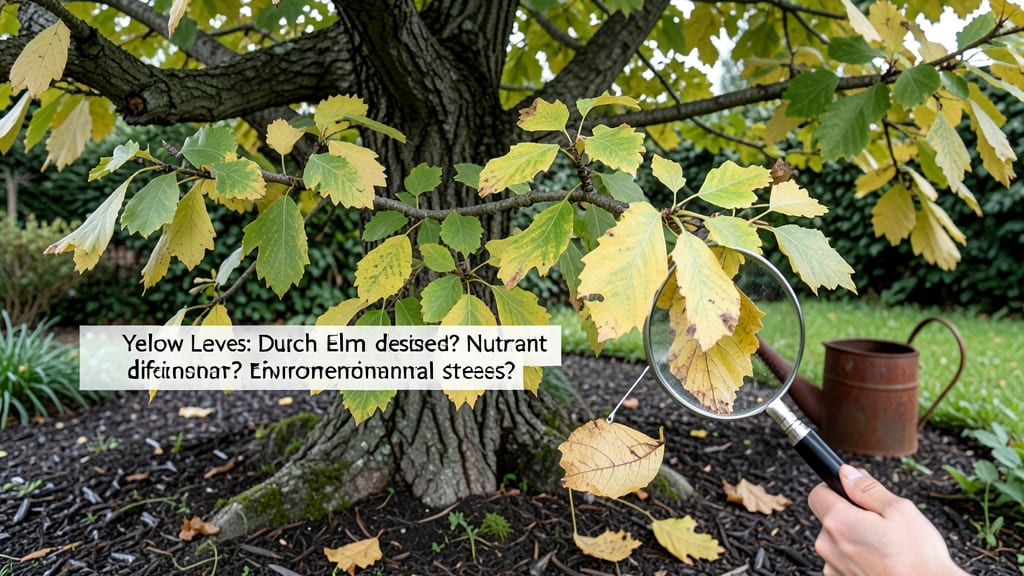
Yellow leaves on your elm tree usually indicate underlying stress from overwatering, nutrient imbalances, fungal infections like Dutch elm disease, or environmental pressures such as drought or pest infestations. Addressing the root cause quickly can save your tree from further decline.
When elm leaves turn yellow, it's often your tree's way of signaling distress before more serious damage sets in. 🌿 The most common culprits are overwatering (which can lead to root rot) or nutrient deficiencies like low iron or magnesium, both of which disrupt chlorophyll production.
Dutch elm disease—a fungal infection spread by bark beetles—also causes rapid yellowing, particularly in mature trees. I've seen this problem worsen quickly in urban areas where trees face additional stress from compacted soil or air pollution.
Don't wait until the leaves start falling to act. Early intervention—whether through proper watering adjustments, soil testing, or targeted treatments—can make all the difference in restoring your elm's health.
For example, a simple soil test can reveal if your tree needs iron supplements, while pruning infected branches can help contain fungal spread before it becomes irreversible.
💡 In This Article
- Diagnosing Elm Tree Leaf Discoloration Causes
- Step-by-Step Elm Tree Care Fixes for Yellowing Leaves
Diagnosing elm tree leaf discoloration causes
Yellowing elm leaves often stem from disrupted chlorophyll production, where the tree's ability to convert sunlight into energy falters. Overwatering creates anaerobic conditions in the soil, suffocating roots and triggering root rot—a fungal infection that blocks nutrient uptake.
You'll notice yellowing starting at the base of leaves, often paired with wilting or a foul odor near the roots, especially in heavy clay soils where drainage is poor.
Nutrient deficiencies reveal themselves through specific patterns. Iron deficiency (chlorosis) causes yellowing between leaf veins while keeping veins green—a classic sign in acidic soils. Magnesium deficiency appears as yellow patches between veins on older leaves first, since magnesium is mobile within the plant.
Nitrogen shortages cause overall pale yellowing, often paired with stunted growth. A simple soil test can confirm these deficiencies, with ideal elm soil pH ranging between 6.0 and 7.5.
Fungal diseases like Dutch elm disease present with distinct symptoms beyond just yellowing. Look for dark streaks under the bark (vascular wilt) and wilting that occurs even when soil moisture is adequate. The disease spreads via bark beetles, which lay eggs in weakened trees.
Other pathogens like anthracnose cause yellow spots with dark borders, often appearing during wet springs. Pest damage from elm leaf beetles creates skeletonized leaves with a shiny, metallic sheen on the underside.
Environmental factors play a surprising role too. Urban trees often face drought stress from compacted soil and limited root space, causing gradual yellowing from the leaf edges inward. Air pollution can also trigger yellowing by damaging leaf tissues.
Compare your tree's symptoms to these patterns: root rot yellows start at leaf bases, while nutrient deficiencies target older leaves first, and fungal diseases spread through the vascular system.
Seasonal timing matters when diagnosing. Spring yellowing often indicates nutrient deficiencies or pest emergence, while summer yellowing suggests drought stress or fungal infections. In fall, some yellowing is normal, but if leaves drop prematurely or show unnatural patterns, investigate further.
The key is observing whether the yellowing progresses upward through the canopy or starts randomly—this helps pinpoint whether the issue is systemic or localized.
Don't overlook the role of soil compaction in urban environments. Roots struggling to access water and nutrients will show yellowing symptoms similar to drought. Test soil moisture by pushing a screwdriver into the ground—if it resists after 1-2 inches, compaction may be the culprit.
Mulching with 2-4 inches of organic material can improve soil structure over time while retaining moisture.