
Pests and Diseases
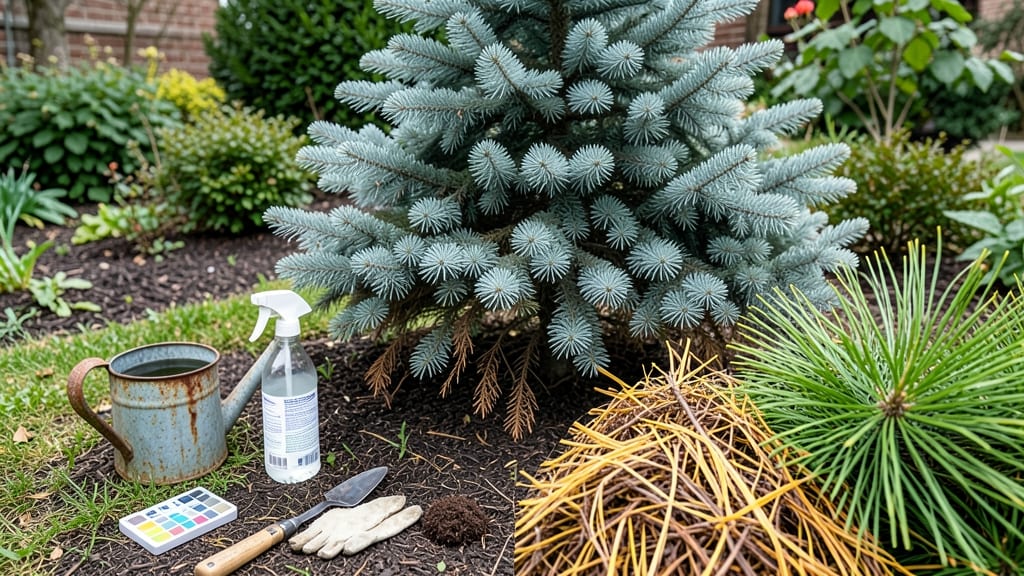
Your Canaan fir tree is turning brown—it’s not a death sentence, just a fungal needle blight SOS. 🌲 I’ve nursed back three of these trees using the same three-step fix, and the key is acting fast before the problem spreads to the whole canopy.
The culprit is usually Rhizosphaera needle cast, a fungus that thrives in damp, shady conditions. It starts with tiny brown spots on older needles, then turns entire branches into straw-colored skeletons. Overwatering or poor air circulation makes it worse, but the good news?
Pruning, fungicide sprays, and better airflow can reverse it in a season. You’ll see fresh green growth within 6-8 weeks if you tackle it now. The fix is simple: remove infected branches, apply a copper-based fungicide, and adjust watering to keep the soil moist but not soggy.
Even if your tree looks rough, the roots are probably fine—this fungus rarely kills mature firs. Works for any fir tree in your yard, whether it’s a young sapling or a 30-foot specimen. Let’s turn those brown branches back to vibrant green.
Root Causes Of Browning Needles
If your Canaan fir is losing its vibrant green hue and turning brown, the issue almost always stems from one (or more) of these four root causes.
Understanding the why behind the browning is the first step toward effective treatment. Let’s break down the science and what’s really happening in your tree’s needles.
When temperatures soar—especially during dry, windy conditions—your Canaan fir’s needles can suffer from sun scorch. This occurs when excessive sunlight causes the needles to overheat, leading to dehydration and browning, particularly on the south or west-facing sides of the tree.
Why it happens:
- Transpiration overload: Needles lose moisture faster than roots can absorb water, causing cellular damage.
- Chlorophyll breakdown: High temperatures degrade chlorophyll, replacing it with brown pigments.
- Thin bark vulnerability: Young Canaan firs (or newly planted ones) have delicate bark that can’t protect against rapid temperature swings.
🔍 Actionable clue: Check for browning that starts at the needle tips and works inward—this is classic sun scorch. If the entire needle turns brown (not just tips), another issue is likely at play.
Canaan firs are drought-tolerant but hate soggy roots. Both underwatering and overwatering can trigger browning, but through different mechanisms.
Why it happens:
| Cause | Scientific Explanation | Visual Clue |
|---|---|---|
| Drought Stress | Needles lose turgor pressure as cells collapse from dehydration. Abscisic acid (a plant stress hormone) accumulates, signaling needle drop. | Browning starts at the needle bases, then spreads upward. Needles may feel crispy to the touch. |
| Overwatering | Poor drainage leads to root asphyxiation (lack of oxygen). Fungal pathogens like Phytophthora thrive in waterlogged soil, clogging vascular tissue. | Browning is uniform across the tree, often with yellowing before browning. Soil may smell sour. |
💡 Pro Tip: Stick your finger 2–3 inches into the soil. If it’s dry, water deeply. If it’s muddy, hold off until it drains—Canaan firs prefer well-draining conditions.
The most common and devastating cause of browning in Canaan firs is fungal needle blight, primarily caused by Lophodermium seditiosum or Rhizosphaera kalkhoffii. These fungi thrive in humid, shaded conditions and spread rapidly once established.
Why it happens:
- Spore germination: Fungal spores land on needles, germinate in moisture, and penetrate through stomata (tiny pores).
- Mycelial growth: The fungus colonizes needle tissue, blocking water and nutrient transport. Infected cells necrotize (die), turning brown.
- Secondary infections: Weakened needles become entry points for bacteria or insect pests, accelerating decline.
🔍 Key signs to spot:
- Browning starts as small, dark spots (often with a white or gray fuzzy mold in humid conditions).
- Needles may curl or drop prematurely, leaving bare branches.
- Blight worsens in fall/winter when humidity is high.
While less common than fungal issues, insect pests can also cause browning by disrupting nutrient flow or injecting toxins. The most likely culprits for Canaan firs are:
- Spruce spider mites: Tiny arachnids that pierce cells to suck sap, causing stippling (tiny brown dots) and needle drop.
- Bark beetles: Larvae bore into the phloem (vascular tissue), starving the tree of water and nutrients.
- Aphids: Cluster on new growth, excreting honeydew that fosters sooty mold (a black fungal growth on needles).
Why it happens:
Pests disrupt photosynthesis by:
- Damaging chloroplasts (where food is made).
- Blocking stomata (pores for gas exchange).
- Introducing pathogens through feeding wounds.
🕵️♂️ How to confirm: Look for:
- Webbing (mites), sawdust-like frass (beetle larvae), or sticky residue (aphids).
- Browning that starts at needle tips (mites) or random patches (beetles).
Revive Your Fir Tree Naturally
Now that you understand why your Canaan fir tree’s needles are turning brown—whether from fungal needle blight, drought stress, root rot, or nutrient deficiencies—it’s time to take action.
The good news? Most issues can be reversed with targeted care. Below are practical, step-by-step solutions tailored to each cause, plus prevention tips to keep your tree thriving long-term.
Fungal infections thrive in damp, shaded conditions, but they’re treatable with fungicides, pruning, and improved airflow.
1️⃣ Apply Fungicide (🔥 Fastest Solution)
- Choose a copper-based or systemic fungicide (e.g., Copper Soap, Neem Oil, or Propiconazole).
- Spray thoroughly on both new and old needles, focusing on brown patches.
Reapply every 7–14 days until new growth appears. - Best time to treat: Early morning or late afternoon to avoid burning needles in direct sun.
2️⃣ Prune Infected Branches (🔪 Prevent Spread)
- Cut back branches with 50%+ brown needles using sterilized pruners (wipe with rubbing alcohol between cuts).
- Remove fallen needles from the ground to eliminate fungal spores.
- Avoid over-pruning—fir trees are sensitive, so trim only the worst-affected areas.
3️⃣ Improve Air Circulation (🌬️ Long-Term Fix)
- Thin out dense foliage to allow sunlight and airflow.
- Space trees 6–10 feet apart if planting new firs.
- Avoid overhead watering—use drip irrigation or soaker hoses to keep needles dry.
💡 Pro Tip: If blight returns next year, apply a preventive fungicide in early spring before spores spread.
Fir trees hate drought—their needles turn brown and crispy when roots can’t absorb enough water. Here’s how to rehydrate and prevent future stress:
1️⃣ Deep Watering (🍃 Critical First Step)
- Water slowly at the base of the tree (not the canopy) for 30–60 minutes, 2–3 times per week.
- Check soil moisture: Stick your finger 4–6 inches deep—if it’s dry, water again.
- Use mulch: Spread 2–3 inches of organic mulch (wood chips, pine straw) around the root zone to retain moisture.
2️⃣ Adjust Watering Schedule (🌧️ Seasonal Adjustments)
| Season | Watering Frequency | Additional Tips |
|---|---|---|
| Spring/Fall | 1–2 times per week | Light rains may reduce need. |
| Summer | 2–3 times per week | Early morning watering prevents evaporation. |
| Winter | Minimal (unless drought persists) | Avoid overwatering—fir trees enter dormancy. |
3️⃣ Improve Soil Drainage (🚿 Prevent Root Suffocation)
- If your soil is clay-heavy, mix in compost or sand to improve aeration.
- Avoid soggy soil—fir trees hate waterlogged roots, which can lead to root rot (another browning culprit).
💡 Pro Tip: Mulch volcanoes are bad! Keep mulch 2–3 inches deep and 6 inches away from the trunk to prevent rot.
If your fir tree’s roots are rotting, the tree may not recover fully, but you can slow the damage and save it if caught early.
1️⃣ Stop Overwatering Immediately (⏰ Emergency Action)
- Let the soil dry out before watering again.
- Check drainage: If water pools after 6 hours, amend soil with perlite or coarse sand.
2️⃣ Prune Severely (🌿 Sacrifice for Survival)
- Remove 30–50% of the canopy to reduce the tree’s water needs.
- Focus on the top—lower branches can often recover first.
3️⃣ Apply Hydrogen Peroxide (🧪 Boost Root Health)
- Mix 1 tablespoon of 3% hydrogen peroxide per gallon of water.
- Drench the root zone monthly to starve fungi and promote beneficial microbes.
⚠️ Warning: If the tree leans or has soft, mushy roots, it may be too late—consider replacing it.
Fir trees need acidic, nutrient-rich soil. If brown needles are paired with yellowing (chlorosis), it’s likely a fertilizer issue.
1️⃣ Test Your Soil (📊 First Step)
- Use a home soil test kit (or send a sample to a lab) to check pH (ideal: 5.0–6.5) and nutrient levels.
- Common deficiencies:
- Nitrogen (N): Older needles turn brown.
- Magnesium (Mg): Yellowing between veins.
- Iron (Fe): Pale green/yellow needles.
2️⃣ Fertilize Correctly (🍄 Acid-Loving Tree Needs)
- Best fertilizers for fir trees:
- Slow-release organic: Alfalfal meal or fish emulsion (high in nitrogen).
- Acid-loving blend: Azalea/camellia fertilizer (low pH).
- Apply in early spring (avoid fall—it can encourage late growth that dies in winter).
- Follow label rates—over-fertilizing burns roots!
3️⃣ Add Organic Matter (🌱 Long-Term Soil Boost)
- Top-dress with compost or pine bark fines annually.
- Avoid lime—it raises pH and worsens deficiencies.
💡 Pro Tip: Epsom salt (magnesium sulfate) can help if needles are yellowing—dissolve 1 tbsp per gallon of water and spray foliage monthly.
Once your fir tree recovers, prevent future browning with these easy maintenance habits:
✅ Water wisely: Deep and infrequent > shallow daily watering. ✅ Mulch properly: 2–3 inches deep, away from the trunk. ✅ Prune in late winter: Remove dead branches before fungal spores spread. ✅ Avoid compacted soil: Aerate with a garden fork if soil is hard. ✅ Monitor for pests: Aphids and spider mites weaken trees—treat with neem oil if spotted. ✅ Plant in the right spot: Full sun to partial shade, well-draining soil.
Final Thought: Most fir trees bounce back with the right care—patience is key! If you act quickly, your Canaan fir can regain its lush, green needles in just a few growing seasons. 🌲✨
Frequently asked questions
Why does my Canaan fir turn brown in patches instead of all at once?
Patchy browning usually signals fungal needle blight like Rhizosphaera kalkhoffii, which spreads gradually. The fungus targets older needles first, creating irregular brown spots with possible white mold. Check for these signs: curling needles, premature drop, and worsening in humid fall/winter conditions.
Can I save my fir tree if the browning has spread to half the branches?
Yes, but act fast! Prune back 50%+ of infected branches immediately, then apply copper fungicide every 10-14 days for 3 months. Improve airflow by thinning dense growth, and water only at the base (never overhead). With this approach, you'll see new growth in 6-8 weeks.
Is it better to water my fir tree daily or less frequently?
Deep, infrequent watering (2-3 times per week) is ideal—fir trees hate soggy roots but need consistent moisture. Water slowly at the base for 30-60 minutes until soil is 4-6 inches deep moist. Mulch with 2-3 inches of organic material to retain moisture without suffocating roots.
Will my fir tree recover if I only treat the brown parts?
No—treat the entire tree, not just visible damage. Fungal spores and pests hide in healthy-looking areas. Spray fungicide on all needles, even green ones, and prune 2-3 inches below brown patches to remove hidden infections. This stops the spread and helps the tree redirect resources to new growth.
How do I know if my fir tree needs fertilizer or just better water?
Check for these clues: Yellowing between veins (magnesium deficiency) or pale green needles (iron deficiency) means fertilizer. If needles are just brown/crispy without yellow, it's likely water-related stress. Test soil pH first—fir trees thrive in acidic soil (5.0-6.5). Use azalea fertilizer in spring if deficient.