
Planting
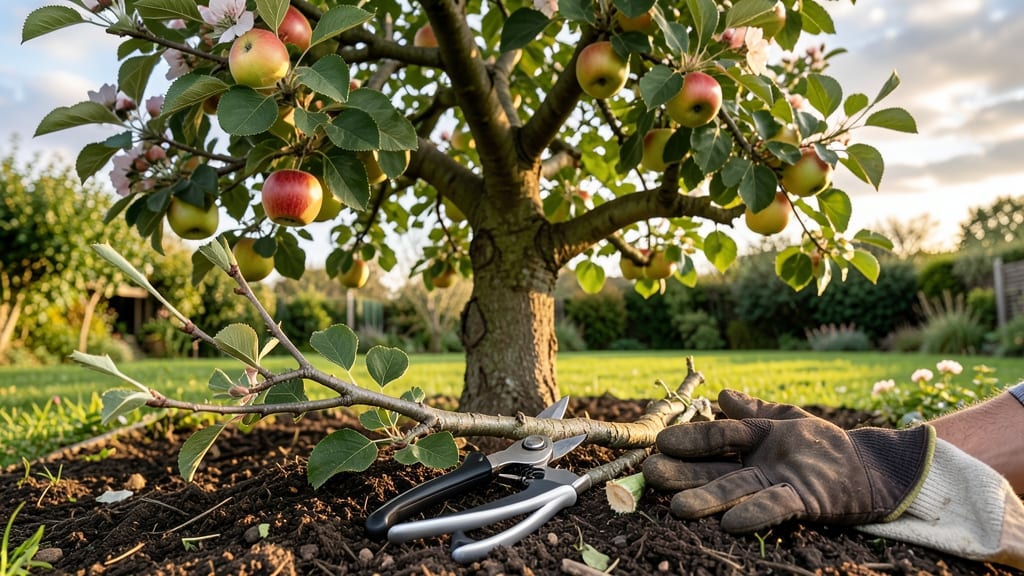
You can prune an apple tree in summer, but it requires extreme caution: only minimal shaping is safe, while heavy cuts risk stressing the tree, inviting disease, and reducing next year's fruit harvest.
Summer pruning disrupts the tree's natural growth cycle, especially when temperatures are high. 🌳 Apple trees produce new growth rapidly in summer, and aggressive cuts can create large wounds that struggle to heal properly, leaving them vulnerable to fungal infections and pests.
The tree also diverts energy from fruit development to repair these injuries, potentially sacrificing next season's harvest.
If you must prune in summer, focus only on removing dead, diseased, or crossing branches—never more than 10-15% of the tree's foliage. Always use sterilized tools and do the work on a cool, cloudy day to minimize stress.
After trimming, apply a wound sealant to protect the cuts and monitor the tree closely for signs of infection.
💡 In This Article
- Why Summer Pruning Damages Apple Trees
- Safe Summer Apple Tree Pruning Techniques
Why summer pruning damages apple trees
Apple trees enter their peak growth phase during summer, producing new leaves, branches, and fruit all at once. When you make cuts during this time, you're essentially asking the tree to heal while it's already working overtime.
The cambium layer—the tree's growth engine—becomes highly active in summer, making it more vulnerable to damage from pruning wounds. These open cuts can expose the tree to bacterial and fungal pathogens like silver leaf fungus or fire blight, which thrive in warm, humid conditions.
Here's what happens biologically: summer pruning triggers a stress response that diverts energy away from fruit development. The tree prioritizes sealing wounds over producing blossoms for next year's harvest.
Studies show that aggressive summer cuts can reduce next season's yield by 20-30% because the tree's energy is consumed by healing rather than storing nutrients. The sap flow, which is already intense during summer, gets disrupted, leading to bleeding wounds that take months to close properly.
Temperature plays a critical role too. When you prune during hot afternoons (above 85°F), the tree loses even more moisture through the fresh cuts, increasing dehydration risk.
The high humidity common in summer creates the perfect environment for spores to land on open wounds. 🌡️ Even a small cut can become an entry point for diseases that might not have been a problem in cooler seasons.
This is why professional arborists recommend waiting until late winter or early spring when the tree is dormant and better equipped to handle pruning.
Another critical factor is the tree's structural integrity. Summer growth is often weaker and more brittle than winter wood because it hasn't had time to fully mature. Cuts made now can lead to splintering or dieback in the following seasons.
The tree's natural defense mechanisms are overwhelmed during summer, making it far more susceptible to pest infestations through these vulnerable points. Even if the immediate damage seems minor, these wounds can become chronic issues that compromise the tree's long-term health.
Consider this real-world example: A 5-year-old apple tree that loses 20% of its canopy in summer may produce only 50% of its normal fruit the following year. The energy that would have gone into blossom formation is instead used for wound repair.
This is why most orchardists avoid summer pruning entirely unless absolutely necessary for safety reasons, like removing a branch that's threatening to fall and cause property damage.
The key takeaway is that summer pruning forces the tree into a defensive mode rather than allowing it to focus on its primary functions—growth and fruit production.
The biological clock of an apple tree is perfectly synchronized with seasonal changes, and disrupting this cycle during summer can have lasting consequences. 🌿