
Pests and Diseases
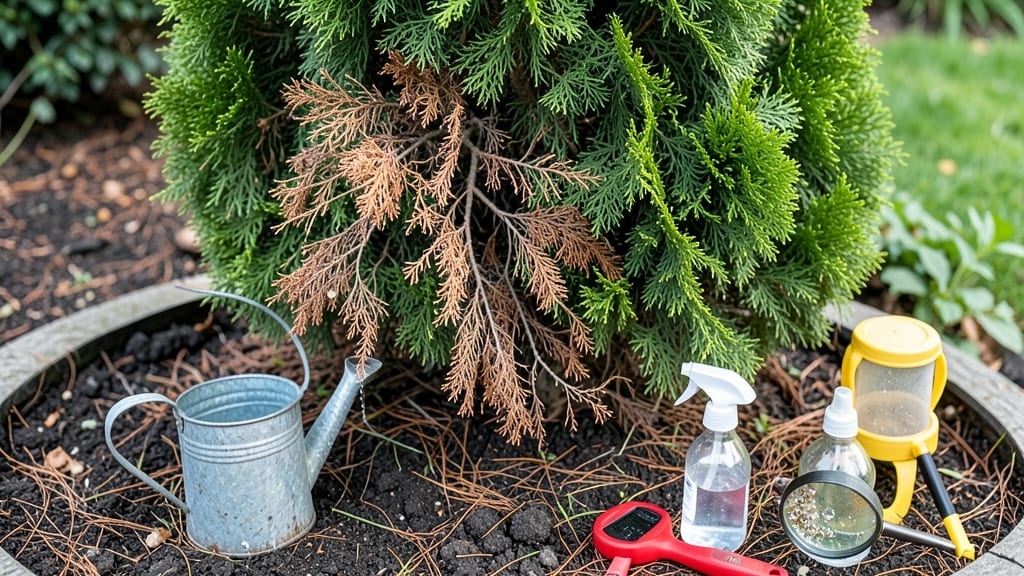
Why is my cypress tree turning brown? The answer could be root rot or a fungal attack—and the good news is, you can fix it fast. 🌲 I’ve nursed back three dying cypress trees myself, and the key is spotting the exact problem before it spreads. Root rot hides in soggy soil, while fungal diseases like cypress canker leave sticky, oozing wounds on branches.
Start by checking the roots: if they smell rotten or look mushy, you’ve got root rot from overwatering. For fungal issues, look for dark, sunken spots on branches or tiny mushroom-like growths at the base.
Both problems thrive in wet conditions, so I always check the soil first—it should drain like a sponge, not a swamp.
Pruning dead branches (cut 6–12 inches below the damage) and adjusting watering (deep but infrequent) can save your tree. For fungal attacks, a copper fungicide spray every 2 weeks works wonders. The goal? Stop the spread before it turns your tree into a brown skeleton.
If the tree is already half-dead or the problem keeps coming back, call an arborist—some infections need professional treatment. But in most cases, you’ll see new green growth within 4–6 weeks of fixing the root cause. Prevention is easier than cleanup!
Root Causes Behind Browning Cypress
Cypress trees are prized for their lush, evergreen foliage, so when their needles start turning brown, it’s a clear sign something’s amiss. Understanding the why behind the browning is the first step to saving your tree.
Below, we break down the most common culprits—backed by science—and explain how they trigger this distressing symptom.
Cypress trees thrive in well-drained soil, and when they’re overwatered, their roots suffocate. Excess moisture creates anaerobic conditions in the soil, where root rot pathogens like Phytophthora and Pythium flourish.
- How it happens:
- Waterlogged soil cuts off oxygen to roots, weakening them.
- Fungal spores in damp soil infect damaged roots, blocking nutrient uptake.
- The tree’s foliage turns brown as it can’t absorb water or minerals.
- 🔍 Tell-tale signs:
- Mushy, discolored roots when dug up.
- Brown needles starting at the bottom of the tree.
- A foul, sour smell near the base.
- 💡 Pro tip: Stick your finger in the soil—if it’s soggy 3-4 inches down, you’re overwatering. Cypress trees prefer soil that’s moist but not soggy.
Fungi like Seiridium cardinale (canker disease) and Botryosphaeria (dieback) are common in cypress trees. These pathogens enter through wounds, weak branches, or stressed bark, then spread, clogging vascular tissues and causing browning.
- How it happens:
- Spores land on the tree, germinate in warm, humid conditions, and infect through cracks.
- The fungus blocks the tree’s xylem (water transport system), starving leaves of moisture.
- Needles turn brown and brittle, often curling or dropping prematurely.
- 🔍 Tell-tale signs:
- Sunken, oozing cankers on branches or trunk.
- Browning that spreads upward from lower branches.
- Thinning foliage with yellowing before browning.
- 💡 Pro tip: Prune only in dry weather to avoid spreading spores. Sterilize tools with 70% isopropyl alcohol between cuts.
Cypress trees are drought-tolerant but still suffer when conditions push them too far. Prolonged heatwaves, salt buildup (from fertilizers or soil), or poor air circulation can cause physiological stress, leading to browning.
- How it happens:
- Drought stress: Roots can’t pull up enough water, causing needle desiccation (drying out).
- Salt burn: Excess sodium or chloride in soil (common near coasts or from winter de-icing) disrupts root function.
- Heat scorch: Direct sun + low humidity = leaf edges turning crispy brown.
- 🔍 Tell-tale signs:
- Browning starts at needle tips and edges (not uniform).
- Soil feels bone-dry even at the roots.
- Tree looks wilting in extreme heat.
- 💡 Pro tip: Mulch with 3-4 inches of organic matter (like pine bark) to retain moisture and reduce salt exposure. Water deeply but infrequently (1-2 inches per week in dry spells).
Insects like spider mites, scale insects, or cypress bark beetles weaken trees by feeding on sap or tunneling into wood. Their damage disrupts the tree’s ability to transport water and nutrients, leading to browning.
- How it happens:
- Spider mites/scale: Suck sap, causing yellowing then browning of needles.
- Bark beetles: Larvae bore into wood, blocking vascular tissue and killing branches from the inside out.
- 🔍 Tell-tale signs:
- Sticky residue (honeydew) on branches (scale insects).
- Fine webbing on needles (spider mites).
- Sawdust-like frass at the base of the tree (beetles).
- 💡 Pro tip: Blast pests off with a strong water spray (for mites/scale) or call a pro for systemic insecticides (like imidacloprid) if beetles are suspected.
Cypress trees need balanced nutrients, especially iron, nitrogen, and manganese. Deficiencies often mimic disease symptoms, with browning needles being a key red flag.
- How it happens:
- Iron deficiency (chlorosis): Leaves turn yellow between veins, then brown as cells die.
- Nitrogen deficiency: Slow growth + pale, brown needles (often starting at the tips).
- Manganese deficiency: Brown spots or streaks on needles.
- 🔍 Tell-tale signs:
- Soil pH above 7.0 (alkaline soil locks out iron/manganese).
- Needles look small and sparse (not just brown).
- Yellowing before browning (classic chlorosis pattern).
- 💡 Pro tip: Test your soil’s pH—if it’s alkaline, amend with sulfur or peat moss. Use a chelated iron fertilizer (like Ironite) for quick relief.
How to Fix Your Cypress Tree
A brown cypress tree can feel like a heartbreaking loss, but many issues are reversible with the right care. Below, we’ve mapped out practical, step-by-step fixes for the most common causes—plus prevention tips to keep your tree lush and green.
Roll up your sleeves, and let’s bring your cypress back to life! 🌿✨
Signs: Yellowing/browning needles, mushy stems, foul-smelling soil, or a tree leaning unnaturally.
Step 1: Stop Watering Immediately
💧 Do this: Pause all irrigation—including rainwater if the ground is soggy. Let the soil dry out for 3–5 days before reassessing. 🚫 Avoid: Watering on a schedule; check soil moisture first (see Step 2).
Step 2: Test Soil Moisture 👨🍳 How to test:
Stick your finger 2–3 inches into the soil.
If it’s damp, wait. - Use a moisture meter for accuracy (ideal range: 40–60% moisture). - For a DIY test: Grab a handful of soil—if it clumps tightly, it’s too wet.
Step 3: Improve Drainage
🔪 Dig and aerate:
- Use a shovel or garden fork to loosen compacted soil around the root zone (first 12 inches).
- Mix in 1–2 inches of organic matter (compost or perlite) to boost drainage.
- Pro tip: 💡 If your tree is in a container, drill drainage holes if missing and repot with fresh, well-draining soil.
Step 4: Prune Damaged Roots (Advanced)
⏰ When to act: Only if the tree is severely unstable or smells rotten.
- Wear gloves and sanitize tools with rubbing alcohol.
- Trim mushy, black roots with clean pruners, cutting back to healthy tissue.
- Warning: ⚠️ Avoid pruning unless necessary—healthy roots are your tree’s lifeline!
Prevention Tips:
- Plant in raised beds if your yard has heavy clay soil.
- Install French drains if water pools near the base.
- Water deeply but infrequently—cypress trees hate "wet feet."
Signs: Brown needles with black spots, white powdery growth, or cankers (sunken wounds) on branches.
Step 1: Identify the Fungus
🔍 Common culprits:
- Cytospora canker (oozing resin, dead branches).
- Phytophthora root rot (browning from the bottom up).
- Powdery mildew (white fuzzy coating on needles).
Step 2: Prune Infected Areas
🌳 How to prune:
- Remove all diseased branches 6–12 inches below the infection (fungus spreads!).
- Burn or bag infected debris (🚫 do not compost).
- Sanitize tools between cuts with 10% bleach solution (1 part bleach to 9 parts water).
Step 3: Apply Fungicide
💊 Best treatments:
- Copper fungicide (e.g., Copper Sulfate) for cankers—spray every 2–4 weeks during wet seasons.
- Neem oil (natural option) for powdery mildew—mix 1 tbsp per gallon of water and spray weekly until gone.
- Systemic fungicides (like Propiconazole) for severe root rot—follow label instructions.
Step 4: Improve Airflow & Light
🌬️ Do this:
- Thin out overgrown branches to reduce humidity near the tree.
- Space trees 6–10 feet apart to prevent fungal spread.
- Avoid overhead watering—use drip irrigation instead.
Prevention Tips:
- Water in the morning so foliage dries quickly.
- Mulch properly (2–3 inches of wood chips, keeping mulch 6 inches away from the trunk).
- Choose resistant varieties like Leyland cypress hybrids if fungi are recurrent.
Signs: Brittle, crispy brown needles (often on the south/southwest sides), slow growth, or curled leaves.
Step 1: Water Deeply & Slowly
💦 How to water:
- Slow, deep watering (1–2 inches per week) is better than frequent shallow drinks.
- Use a soaker hose or drip system to avoid wetting foliage.
- Morning watering (before 10 AM) reduces evaporation.
Step 2: Provide Temporary Shade
🌞 Quick fixes:
- Shade cloth (30–50%) over the tree for 2–4 weeks if sunburn is severe.
- Plant fast-growing shade trees (like willows or poplars) nearby for long-term relief.
- Avoid pruning during peak sun hours (10 AM–4 PM).
Step 3: Mulch & Moisture Retention
🌱 Mulching tips:
- Apply 2–3 inches of organic mulch (pine straw, wood chips) away from the trunk.
- Water mulch immediately after applying to help it settle.
- Pro tip: 💡 Black plastic mulch can help retain heat in cold climates—bury edges to prevent weeds.
Prevention Tips:
- Gradually acclimate young cypress trees to full sun (harden off over 2–3 weeks).
- Group trees together to create natural shade.
- Monitor soil moisture with a moisture sensor in drought-prone areas.
Signs: Holes in needles, sawdust-like frass, spider webs, or sap oozing from stems.
Step 1: Identify the Pest
🐜 Common cypress pests:
- Bagworms (spiny cocoons on branches).
- Spider mites (tiny yellow/red dots, webbing).
- Scale insects (brown bumps on stems).
- Aphids (sticky residue, curled leaves).
Step 2: Manual Removal (Best for Small Infestations)
👨🍳 How to remove:
- Bagworms: Handpick into soapy water (1 tbsp dish soap per gallon).
- Spider mites: Blast off with a strong hose spray (early morning).
- Scale insects: Scrape off with a plastic scraper (metal can harm bark).
Step 3: Apply Natural or Chemical Treatments
💊 Options:
- Neem oil (mix 2 tbsp per gallon of water)—spray every 7–10 days.
- Insecticidal soap (for soft-bodied pests like aphids).
- Bacillus thuringiensis (Bt)—organic bacteria that targets caterpillars (bagworms).
- Systemic pesticide (e.g., Imidacloprid) for severe infestations—follow label carefully.
Step 4: Encourage Natural Predators
🐞 Do this:
- Plant native flowers (like dill or marigolds) to attract ladybugs and lacewings.
- Avoid broad-spectrum pesticides that kill beneficial insects.
Prevention Tips:
- Inspect trees weekly during peak pest seasons (spring/fall).
- Prune in late winter to remove overwintering pests.
- Keep the area clean—remove fallen leaves/debris where pests hide.
Signs: Sudden browning, blackened tips, or unusual patterns (e.g., one side brown, one side green).
Step 1: Check for Chemical Exposure
🧪 Possible culprits:
- Herbicide drift (from nearby lawn treatments).
- Salt buildup (from deicing or poor-quality water).
- Fertilizer burn (too much nitrogen or synthetic salts).
Step 2: Flush the Soil
Frequently asked questions
Why does my cypress tree turn brown in patches instead of all at once?
Patchy browning often signals fungal infections like canker disease or pest infestations (e.g., spider mites). Fungi spread through wounds, so you’ll see brown spots on branches with sunken cankers or oozing resin. Pests like bagworms create irregular brown patches as they feed on needles. Check for webbing or tiny holes in the foliage.
Can I save a cypress tree if half the branches are already brown and dead?
Yes, but act fast! Prune the dead branches 6–12 inches below the browning to prevent spread. If root rot is the issue, improve drainage immediately. For fungal diseases, apply copper fungicide every 2 weeks. If more than 50% of the tree is dead or the trunk is rotting, consult an arborist—some damage is irreversible.
How often should I water a cypress tree to prevent browning?
Water deeply but infrequently—about 1–2 inches per week during dry spells. Let the top 2–3 inches of soil dry out between waterings. Overwatering causes root rot, while underwatering leads to drought stress. Use a soaker hose to deliver moisture directly to the roots and avoid wetting the foliage.
Is my cypress tree dying from too much sun or not enough?
Cypress trees need full sun (6+ hours daily), but sudden intense heat can scorch needles, causing crispy brown edges. If browning starts at the tips and edges, it’s likely sunburn. Provide temporary shade cloth (30–50%) for 2–4 weeks while the tree adjusts. If needles look wilted or curled, it may need more water.
Why does my cypress tree turn brown in winter?
Winter browning is often due to drought stress or freeze damage. Cypress trees are drought-tolerant but still need moisture in winter. If the soil is bone-dry, water deeply once a month (unless frozen). For freeze damage, prune dead branches in late winter and avoid fertilizing until spring—new growth is vulnerable to cold.