
Blooming
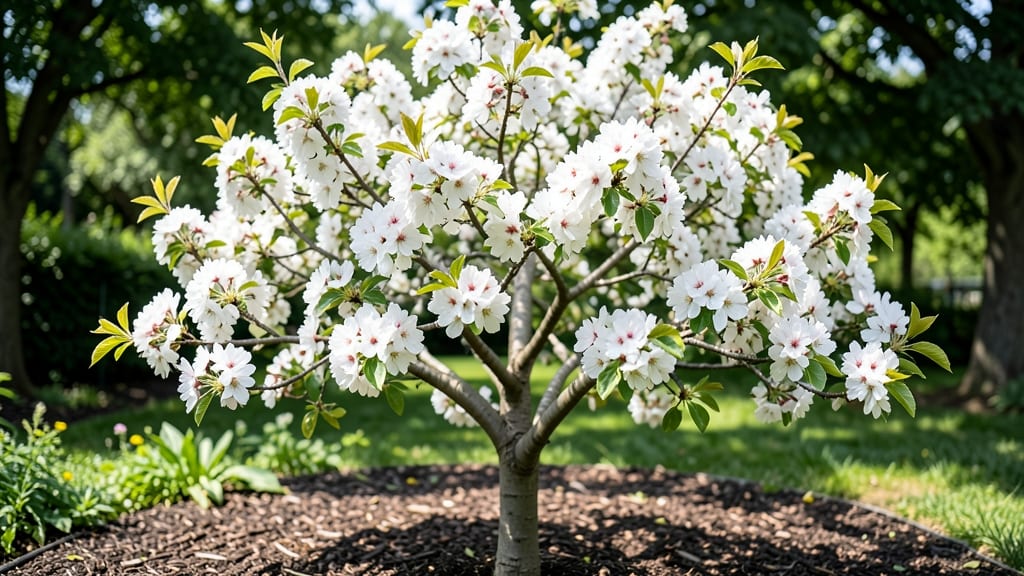
Bartlett pear trees transform your yard into a fragrant spring dream when their delicate white blossoms burst forth—just as the last frost threatens to retreat. 🌸 I’ve watched mine explode into bloom between late April and early May, filling the air with a honeyed scent that rivals any garden favorite.
The timing depends on your zone, but one late frost can turn that floral spectacle into a heartbreaking loss if you’re not prepared.
Protecting those blossoms means knowing your last frost date and having a frost cloth or sprinkler system ready—because even a light freeze can damage delicate petals. Once they open, invite pollinators with a shallow dish of water and sugar, or plant a companion like a dwarf apple tree nearby.
The more bees and butterflies visiting, the better your fruit set will be later in the season.
After the petals fall, don’t celebrate too soon—this is when the real work begins. Prune out any dead wood and thin crowded branches to improve airflow, then feed the tree with a balanced fertilizer (10-10-10) to support fruit development.
The goal? Turning those fleeting blossoms into sweet, juicy Bartlett pears by harvest time.
Whether you’re in the Pacific Northwest or the Mid-Atlantic, the key is patience and protection during that critical bloom window. A little prep now means a bountiful harvest—and a yard that smells like spring for weeks.
📚 In This Guide
- What you need
- Instructions
- Tips and common mistakes
- Wrapping up and next steps
What you need
- ● Bartlett pear tree sapling (dwarf or standard variety, Pyrus communis ‘Bartlett’): 1-2 trees (for pollination, plant a second if possible)
- ● Age: 1-3 years (younger trees establish faster)
- ● Rootstock: Semi-dwarf (6-8 ft mature height) or dwarf (4-5 ft) for smaller spaces
- ● Well-draining soil mix: 60% native soil
- ● 30% compost (aged, weed-free)
- ● 10% perlite or coarse sand (for drainage)
- ● Organic mulch (2-3 inches): Wood chips, straw, or shredded bark
- ● Keep mulch 3-4 inches away from the trunk to prevent rot
- ● Slow-release fertilizer (10-10-10 or 5-10-10 NPK ratio): 1 lb per tree (sprinkle around root zone in early spring)
- ○ Drip irrigation system or soaker hose (optional but recommended for young trees)
- ● Shovel or trowel (for planting)
- ● Garden gloves (to protect hands from thorns)
- ● Pruning shears (sterilized, sharp)
- ● Measuring tape (for spacing trees 15-20 ft apart)
- ● Watering can or hose (with adjustable nozzle)
- ● Staking kit (2-3 stakes + soft ties, for young trees in windy areas)
- ● pH testing kit (ideal soil pH: 6.0–7.0)
- ● Sunlight: Full sun (6+ hours daily) for optimal blossoms
- ● Spacing: Minimum 15–20 feet between trees (or 8–10 ft for dwarf varieties)
- ● Climate: Hardy in USDA Zones 4–9 (protect young trees in Zone 4 with winter wrap)
- ● Pollination: Plant a second Bartlett or a compatible variety (e.g., ‘Seckel’ or ‘Anjou’) within 50 ft for fruit production
- ● Pest control: Monitor for pear psylla or fire blight (copper fungicide or neem oil may be needed)
How to encourage abundant Bartlett pear tree blossoms
Here's my approach to coaxing those fragrant, show-stopping blooms from your Bartlett pear tree.
🌱 Step 1: Prune for Optimal Airflow and Light
Start in late winter or early spring before buds swell, using sharp pruning shears to remove 1/3 of last year's growth. Focus on thinning out crowded branches to improve airflow—this reduces disease risk and lets sunlight penetrate to dormant buds. I always cut just outside the branch collar where it meets the trunk to prevent unsightly stubs.
Remove any dead, diseased, or crossing branches first. These compete with healthy growth for energy that could fuel blossoms. You'll see the tree's structure become more open, which is exactly what Bartlett pears need for abundant flowering. Avoid heavy pruning after bloom—this removes next year's flower buds.
☀️ Step 2: Provide Full Sun and Proper Nutrition
Bartlett pears demand 6-8 hours of direct sunlight daily for vigorous blooming. If your tree is in partial shade, consider transplanting to a sunnier location. The more sunlight the leaves receive, the more energy they can store in the roots for spring flowering.
Apply a balanced 10-10-10 fertilizer in early spring when buds begin to swell, following package rates. I like to work in 2-3 inches of compost around the dripline as well—this improves soil structure and provides slow-release nutrients. Avoid high-nitrogen fertilizers; they promote leafy growth at the expense of flowers.
💧 Step 3: Water Deeply During Critical Growth Stages
Water deeply once weekly during bud formation (late winter to early spring), ensuring moisture reaches 12-18 inches deep. You'll know you've watered enough when the soil feels damp at that depth—this encourages strong root development. Use a moisture meter if you're unsure; Bartlett pears are particularly sensitive to drought stress during bloom preparation.
Mulch with 3-4 inches of organic mulch (like wood chips) around the base, keeping it 6 inches away from the trunk. This conserves moisture and regulates soil temperature, which is crucial for flower bud development. Never let the soil dry out completely during this period—wilting branches mean lost blossoms.
✂️ Step 4: Thin Fruit After Blooming for Better Blossoms Next Year
After flowers appear but before fruit sets, thin clusters to 6-8 inches apart using clean pruners. This might seem counterintuitive, but fewer fruits mean more energy for next year's blossoms. I always remove the smallest fruits first—they're the biggest energy drainers.
Remove any fruit growing on water sprouts (vertical shoots) as well. These never produce quality fruit and divert energy from the main branches. You'll see healthier remaining fruit grow larger and sweeter, and the tree will reward you with even more abundant blooms next spring.
🌿 Step 5: Protect Blooms from Late Frosts
Cover the tree with frost cloth when nighttime temperatures drop below 28°F during bloom time. I've seen entire blossoms killed by surprise frosts, and that means no fruit—and no stored energy for next year's flowers. Secure the cloth loosely with stakes so it doesn't damage branches.
If frost is forecast, water the ground thoroughly the day before. The moisture in the soil helps moderate temperature fluctuations. You'll notice the cloth will collect dew—this is normal and actually helps protect the flowers. Remove the covering during the day to allow pollinators access to the blossoms.
Tips & tricks for perfect Bartlett pear tree blossoms
These insider strategies will help you transform your Bartlett pear tree into a fragrant spring spectacle.
Pruning Precision: When removing that 1/3 of last year's growth in Step 1, focus on branches that are thinner than a pencil—these often produce the most abundant blossoms. I've found that cutting just outside the branch collar (where it meets the trunk) creates cleaner wounds that heal faster, reducing disease risk. Use sharp shears to make clean cuts at a 45-degree angle if you're removing larger branches, but for smaller ones, a straight cut works fine. The goal is to create an open canopy that lets sunlight reach every bud.
Sunlight Strategy: The 6-8 hours of direct sunlight Bartlett pears need isn't just about location—it's about timing too. If your tree gets morning sun but afternoon shade, the afternoon light is more critical for photosynthesis. Consider pruning neighboring trees or shrubs that might be casting shade during peak sunlight hours (10 AM to 2 PM). A simple trick: place a white board near the tree during the day to track how much sunlight it actually receives—you might be surprised by how much shade is sneaking in.
Watering Wisdom: That 12-18 inch deep watering in Step 3 is crucial, but timing matters just as much. Water in the early morning so the soil has all day to absorb moisture before evening. I've noticed that watering in the late afternoon can lead to fungal issues, especially if the leaves stay wet overnight. During drought periods, you might need to water twice weekly instead of once—just check that soil moisture with your finger or a moisture meter. The roots need consistent hydration to support those energy-hungry blossoms.
Frost Protection: The 28°F threshold is important, but don't wait until the last minute to cover your tree. I've seen blossoms killed when temperatures dip just below this mark overnight. Set up your frost cloth the night before any cold snap is forecasted, even if it's only predicted to drop to 30°F. A pro trick: string a few small lights around the edges of your frost cloth—these create a slight heat effect that can raise temperatures by a few degrees. Just make sure the lights are far enough away not to burn the branches.
Pro Tips for Bartlett Pear Tree Blossom
- These insider strategies will help you transform your Bartlett pear tree into a fragrant spring spectacle.
- Pruning Precision: When removing that 1/3 of last year's growth in Step 1, focus on branches that are thinner than a pencil—these often produce the most abundant blossoms.
- Sunlight Strategy: The 6-8 hours of direct sunlight Bartlett pears need isn't just about location—it's about timing too.
Frequently asked questions
Got questions about Bartlett pear tree blossoms? You’re not alone! Here are some of the most common queries—plus straightforward answers to help you make the most of this fragrant spring spectacle.
When do Bartlett pear tree blossoms typically appear?
The timing depends on your climate, but Bartlett pear trees (Pyrus communis) usually bloom in early to mid-spring, often between late March and early May. Warmer regions may see blossoms as early as February, while cooler areas might delay until May. Watch for pink or white clusters—they’re stunning but short-lived!
How long do Bartlett pear blossoms last before fruit forms?
Blossoms last about 7–14 days, but fruit development takes 4–6 months after pollination. Pears need cross-pollination (another Bartlett or compatible variety nearby) for fruit to set. If you see blossoms but no pears later, consider planting a second tree!
What should I do if my Bartlett pear tree isn’t blooming?
Several factors could be at play:
- Age: Young trees (under 3–5 years) may not bloom yet.
- Pruning timing: Heavy pruning in late winter can delay blooms.
- Nutrition: Lack of phosphorus or potassium can stunt flowering. Fertilize in early spring.
- Disease/pests: Check for fire blight or borers—these can stress the tree.
Can I force Bartlett pear blossoms indoors for decoration?
Unfortunately, no—Bartlett pear blossoms won’t force indoors like some flowers (e.g., poinsettias). Their heavy, clustered blooms require the tree’s energy, and cutting them weakens the plant. Instead, enjoy them outdoors or take photos! For indoor fragrance, try jasmine or gardenia branches.
Do Bartlett pear blossoms attract bees? Should I be concerned?
Yes! Bees love Bartlett pear blossoms—they’re a key early-season food source. While bees are essential for pollination, don’t panic if you see them. If you’re allergic, avoid standing directly under blooming branches. For bee-friendly gardening, plant native flowers nearby to support pollinators year-round.
Will Bartlett pear blossoms appear every year?
Generally, yes, but heavy fruit production one year can reduce blooms the next (the tree “rests”). To encourage consistent blooming:
- Thin fruit in summer to reduce stress.
- Avoid late-season pruning (after June).
- Ensure 6+ hours of sunlight daily.
Wrapping up and next steps
The Bartlett pear tree’s fragrant blossoms aren’t just a fleeting spring spectacle—they’re a promise of sweet rewards to come! 🌸 Whether you’re admiring their delicate beauty or dreaming of the juicy pears ahead, these trees bring joy, functionality, and a touch of nature’s magic to any garden.
Ready to take the next step? Plant one this season and watch your backyard transform into a blooming paradise—where every petal whispers of the harvests yet to unfold.