
Trees
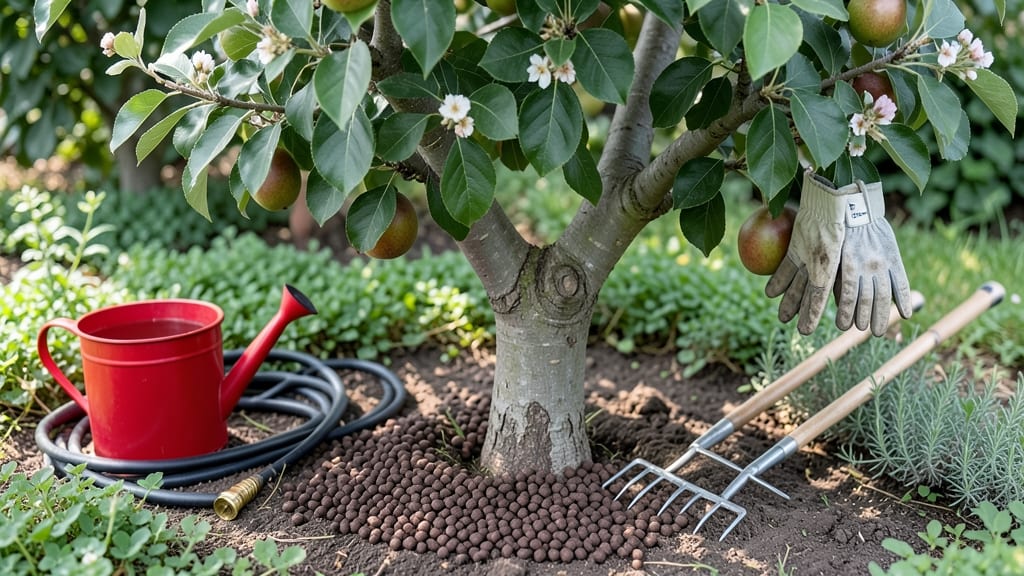
Feeding your Asian pear tree 🍐 the right fertilizer is the secret to bigger, sweeter fruit—and skipping the wrong schedule can leave you with sparse harvests or even a struggling tree.
Most gardeners either drown their trees in too much nitrogen (burning roots) or starve them of key nutrients (limiting growth). Asian pears are picky—they need a balanced approach that changes with the seasons, from spring blooms to summer fruiting.
Get it right, and you’ll see fruit production double in just one season.
Below, I break down the exact month-by-month feeding plan used by orchardists, plus how to spot over- or under-fertilization before it’s too late. Whether you’re working with a young sapling or a mature tree, this guide keeps your Asian pear thriving—without the guesswork.
You’ll learn which fertilizers to use (organic vs. synthetic), when to apply them, and how to adjust for soil tests. Ready to turn your tree into a fruit-producing powerhouse? Let’s get started.
Best fertilizers for Asian pear trees by growth stage (with soil test guide)
Asian pear trees need different nutrients at each growth stage to produce abundant fruit. Young saplings focus on root and leaf growth, while flowering and fruiting trees require phosphorus and potassium for blossoms and fruit development.
Without the right fertilizer balance, you’ll see stunted growth, poor flowering, or small, tart fruit instead of sweet, juicy pears.
Most gardeners make two critical mistakes: over-fertilizing with high-nitrogen products (which burns roots) or under-feeding (limiting fruit production). The solution? A stage-specific approach that matches your tree’s needs.
Below, we break down the best organic and synthetic fertilizers for each phase, plus how to read soil tests to avoid costly errors.
For saplings, a balanced 10-10-10 fertilizer (organic or synthetic) encourages root and leaf development. I recommend fish emulsion for organic gardeners—it’s gentle on young roots while providing nitrogen for early growth. Synthetic options like Osmocote granules release nutrients slowly, reducing the risk of over-fertilization.
Avoid high-nitrogen fertilizers (like 20-0-0) during flowering or fruiting stages—this shifts energy to leaves instead of fruit.
Instead, switch to a phosphorus-heavy formula (e.g., 5-10-10) in early spring to stimulate blossoms. Bone meal is my go-to organic option for this phase, as it’s packed with phosphorus for flower development.
Mature fruiting trees need potassium-rich fertilizers (like 3-4-6 ratios) to improve fruit sweetness and disease resistance. Wood ash is a free, organic source of potassium, but apply it sparingly—too much raises soil pH. For synthetic options, Espoma Garden-Tone is a top pick for its balanced micronutrients.
🚨 Warning: Over-fertilizing with potassium can cause magnesium deficiency (yellowing leaves between veins). If you notice this, flush the soil with water or apply Epsom salt (1 tbsp per gallon of water) every 2 weeks.
Before applying any fertilizer, conduct a soil test (available through local extension offices or home kits like Luster Leaf). Asian pear trees thrive in slightly acidic to neutral soil (pH 6.0-7.0).
If your test shows a pH below 6.0, add lime to raise it; for pH above 7.0, use sulfur or peat moss to lower it.
Pro tip: Mix fertilizer into the top 6 inches of soil rather than scattering it on the surface. This mimics natural decomposition and prevents nutrient runoff. For container-grown Asian pears, reduce fertilizer amounts by 50% since roots are confined and absorb nutrients faster.
🌱 Start with a soil test, then adjust your fertilizer strategy based on your tree’s stage. Saplings need gentle feeding, flowering trees crave phosphorus, and fruiting trees thrive on potassium—get it right, and you’ll harvest bigger, sweeter pears in just one season.
Seasonal fertilizer schedule for maximum Asian pear fruit growth (month-by-month)
Timing your Asian pear tree's fertilizer applications is just as important as choosing the right blend. Unlike annuals, these trees respond dramatically to seasonal shifts in nutrients—too much nitrogen in summer can delay fruit ripening, while phosphorus shortages before bloom mean fewer blossoms.
My 12-month schedule balances organic and synthetic options, with special notes for container-grown trees that dry out faster. Think of this as your tree's nutritional calendar, where each month plays a specific role in fruit development.
For container trees, cut all fertilizer amounts by 50% since roots have less soil volume to absorb nutrients. Also, flush containers with water every 4-6 weeks to prevent salt buildup from granular fertilizers.
The key months—April and August—require your most attention, as these align with blossoming and fruit expansion phases. Let's dive into the monthly breakdown that will transform your tree's productivity.