
Trees
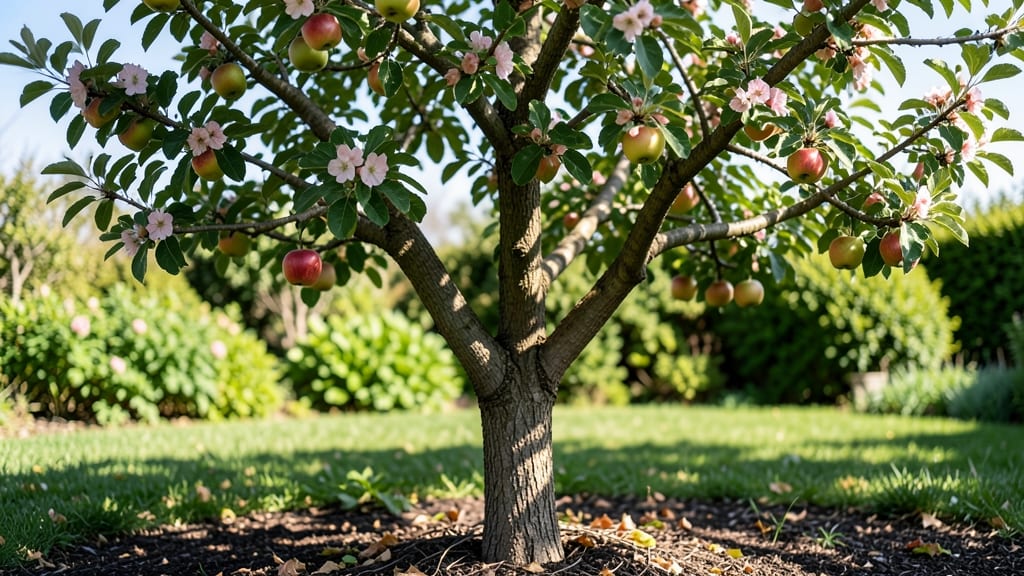
Apple trees thrive in Zone 9 with heat-resistant varieties like Anna, Dorsett Golden, and Tropic Sweet, which tolerate humidity and require minimal winter chilling. Choose dwarf rootstocks for easier cultivation in containers or small spaces.
Growing apples in Zone 9's hot, humid climate requires selecting varieties that can handle 200-400 chill hours or less—far below what traditional apple trees need. 🍏 These specialized cultivars not only survive but thrive, producing sweet, flavorful fruit even when temperatures soar.
The key is pairing the right variety with proper care: well-draining soil, consistent moisture, and strategic pruning to improve airflow during the wet season.
For container growing, dwarf rootstocks like M.9 or B.9 become your best friend—they stay compact enough for patios while still delivering full-sized apples. Just remember to upgrade your pot size as the tree matures and use a lightweight potting mix to prevent root stress from heat.
The payoff? You can enjoy homegrown apples in regions where most fruit trees simply refuse to survive.
💡 In This Article
- Heat-Tolerant Apple Varieties for Zone 9 Climates
- Planting and Care Tips for Zone 9 Apple Trees
Heat-tolerant apple varieties for Zone 9 climates
The secret to growing apples in Zone 9 lies in their chilling hour requirements—the number of hours below 45°F a tree needs to break dormancy and produce fruit. Traditional apple varieties demand 800-1,200 chill hours, but Zone 9 only offers 200-400 hours.
That's why varieties like Anna and Dorsett Golden excel: they thrive with just 200-300 chill hours, making them perfect for Florida, Southern California, and other warm climates. These trees also have a natural resistance to fire blight and powdery mildew, common fungal threats in humid conditions.
Take Tropic Sweet, for example—a variety bred specifically for tropical and subtropical zones. It produces bright red, crisp apples with a sweet-tart flavor, and its thick, waxy skin helps retain moisture during hot spells.
What's remarkable is how its roots stay cooler underground through a process called transpirational cooling, where water evaporation from leaves creates a microclimate that protects the tree's core. This adaptation allows it to continue flowering and fruiting even when daytime temperatures hit 95°F or higher. 🌡️
Another standout is Anna, which bears yellow, tart-sweet fruit perfect for fresh eating or baking.
Its compact growth habit (typically 10-15 feet tall) makes it ideal for small gardens or containers, while its low branching angle helps prevent water from pooling on leaves—a major cause of fungal diseases in humid climates. The trade-off?
These varieties often have slightly shorter storage lives than their cold-climate counterparts, so plan to enjoy or preserve your harvest within 2-3 months of picking.
For those with limited space, consider dwarf rootstocks like M.9 or B.9, which produce full-sized fruit on trees just 6-8 feet tall. These rootstocks also mature faster—some varieties bear fruit within 2-3 years instead of the usual 5-7 years for standard trees.
The science here is fascinating: dwarf rootstocks have a higher root-to-shoot ratio, meaning more energy goes into fruit production rather than vertical growth, even in heat-stressed conditions.
If you're comparing varieties, pay attention to their heat tolerance thresholds.
Most Zone 9 apples handle up to 100°F daytime highs without stress, but prolonged exposure above 105°F can cause flower drop and reduced fruit set. Dorsett Golden, for instance, consistently outperforms others in Southern California's inland valleys, where summer temperatures frequently exceed 110°F. The key difference?
Its leaves have a thicker waxy coating that reduces water loss through transpiration—a critical adaptation in arid-heat conditions.
One common misconception is that all heat-tolerant apples sacrifice flavor for survival. That's simply not true. Tropic Sweet apples, for example, score 8.5/10 on flavor tests for sweetness and acid balance, comparable to popular cold-climate varieties like Fuji.
The trick is choosing varieties bred for your specific microclimate—some perform better in coastal humidity (like Anna) while others excel in inland dry heat (like Dorsett Golden). 🍎