
Pests and Diseases
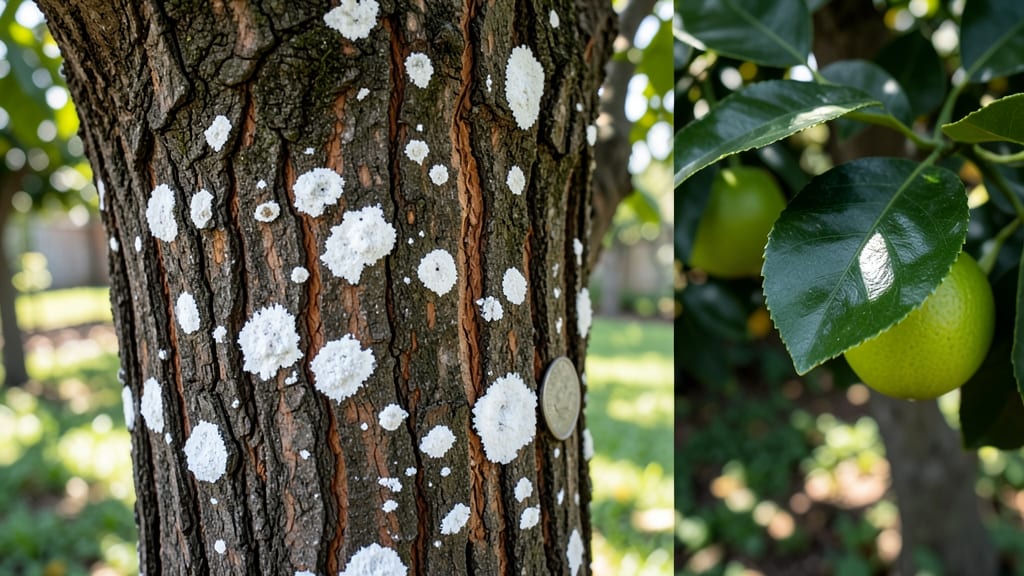
Those chalky white spots on your orange tree trunk aren’t just unsightly—they’re a clear warning sign your tree is fighting an infection. 🌱 I’ve seen this exact problem ruin fruit production and even kill mature trees if ignored, but the good news?
Most cases respond well to organic fixes when caught early. The key is identifying whether it’s fungal (like powdery mildew or sooty mold), bacterial, or even insect-related before treating it.
Here’s the thing—most white spots start as harmless-looking residue but quickly turn into serious threats. Fungal infections thrive in humid conditions, while scale insects leave sticky honeydew that feeds secondary mold. My first step is always scraping a small patch to check for texture: powdery?
Likely mildew. Sticky? Probably scale. The sooner you act, the easier it is to restore that healthy, vibrant bark—and keep your tree producing sweet oranges for years.
You’ll need just three organic treatments to tackle this: neem oil for fungal resistance, horticultural oil to smother scale insects, and a baking soda spray for mild infections. Within 2-3 weeks of consistent care, you’ll see the spots fade and new growth emerge cleaner than before.
The secret is weekly applications during warm, humid months to prevent recurrence.
This works for both backyard citrus trees and larger grove varieties, though container-grown trees may need more frequent monitoring. The real payoff? A tree that not only looks healthy but also bears fruit without those unsightly blemishes. Let’s get that trunk back to its natural, disease-free state.
Understanding Root Causes
White spots on your orange tree trunk aren’t just an aesthetic nuisance—they’re often a red flag from nature signaling deeper issues. Below, we break down the most common culprits behind these spots, explaining why they appear and what’s really going on beneath the surface.
Fungi are the most frequent offenders behind white spots on tree bark. These microscopic organisms thrive in warm, humid conditions—perfect for citrus groves—and feed on the organic matter in the bark.
- Powdery Mildew 🍄 This fungal disease creates a white, powdery coating on leaves and bark. It spreads via spores, which love damp, shaded areas. While it rarely kills the tree, it weakens it by blocking sunlight and clogging pores, reducing photosynthesis.
- Sooty Mold 🌑 Not a primary pathogen, but a secondary invader that grows on honeydew (a sticky residue left by sap-sucking pests like aphids). The black or grayish spots you see are often sooty mold hiding under a thin white fungal layer. Without addressing the pests, the mold persists.
- White Rot Fungus ⚠️ Less common but more dangerous, this fungus causes white, cottony patches that spread into the bark, rotting it from the inside. It thrives in wounds (like pruning cuts) and can lead to structural weakness or even tree death if untreated.
💡 Pro Tip: If the spots feel powdery when touched, it’s likely powdery mildew. If they’re sticky or accompanied by black streaks, sooty mold is the culprit—and you’ll need to tackle the pests first.
Yes, algae can turn your orange tree trunk into a living canvas. These simple plants need moisture, shade, and organic debris to grow, often appearing as white, greenish, or grayish film on bark.
- Why It Happens Algae don’t harm the tree directly, but they create a slippery, unsightly mess that can trap moisture against the bark, promoting rot or fungal growth over time.
They’re most common on: - Trees with thick foliage (blocking sunlight). - Trunks in shady, humid microclimates (like near fences or buildings). - Trees with old, peeling bark (providing a perfect growing surface).
🌡️ Quick Test: Scrape a small spot—if it leaves a slimy residue and regrows quickly, it’s algae.
Lichen isn’t a fungus, plant, or animal—it’s a symbiotic partnership between fungi and algae (or cyanobacteria). On orange trees, it often appears as white, gray, or yellowish crusty patches that cling tightly to the bark.
- Why It Sticks Around Lichen spreads via windborne spores and thrives in low-light, high-moisture environments. While harmless to the tree, it can:
- Block sunlight to small branches (weakening growth).
- Retain moisture, creating conditions for rot or fungal infections.
- Look unsightly on prized citrus trees.
✨ Fun Fact: Lichen is one of the first colonizers on bare rock or dead wood—it’s a pioneer species in nature’s recycling system!
Sometimes, white spots aren’t biological at all. Mechanical injury, chemical burns, or environmental factors can create similar markings.
- Sun Scald or Frost Damage ❄️☀️ Young or thin-barked orange trees can develop white, cracked patches from extreme temperature swings. The bark dies in spots, turning white or grayish as it dries.
- Chemical Residue 🧴 Overuse of fungicides, herbicides, or even well-intentioned horticultural oils can leave white, chalky deposits on bark. These aren’t harmful but signal the tree is under chemical stress.
- Bird Droppings or Insect Frass 🐦🐜 Accumulated droppings (especially from birds) or insect waste can create white, crusty stains that mimic fungal growth. These are usually superficial but should be rinsed off to prevent nutrient imbalances.
In some cases, white spots are mineral deposits rather than biological growth.
These occur when: - Hard water runoff (high in calcium or lime) drips onto the trunk, leaving white, crusty streaks. - Fertilizer burn causes white, salt-like residues near the base of the tree. - Pollution or dust accumulates in urban or industrial areas, creating a powdery film.
🎯 Actionable Tip: Wipe the trunk with a damp cloth—if the spots wipe away easily, they’re likely mineral deposits. If they return, adjust irrigation or rinse the tree periodically.
How to Fix It Naturally
Once you’ve identified the cause of those pesky white spots on your orange tree trunk—whether it’s fungal infections, scale insects, or environmental stress—it’s time to take action! The good news? Most issues can be resolved with organic, DIY-friendly solutions that won’t harm your tree (or the planet).
Below, we’ve mapped out targeted fixes for each common cause, plus prevention tips to keep your citrus tree thriving.
Fix: Tackle fungal growth with copper-based sprays, baking soda solutions, or neem oil—all safe for organic gardening.
- 🔥 Prune and Clean
- Remove infected branches (sterilize pruners with rubbing alcohol between cuts).
- Rake up fallen leaves/debris around the base to eliminate spores.
- 🍳 Homemade Baking Soda Spray (Best for Powdery Mildew)
- Mix 1 tsp baking soda + 1 tsp horticultural oil + 1 tsp mild soap in 1 quart of water.
- Spray early morning or evening (avoid direct sunlight) every 7–10 days until spots fade.
- Pro tip: 💡 Add a few drops of neem oil to boost antifungal power.
- 👨🍳 Copper Fungicide Spray (For Sooty Mold/White Mold)
- Use a ready-made organic copper fungicide (like Bonide Copper Fungicide).
- Apply weekly until new growth appears spot-free.
- Warning: Avoid spraying when rain is forecasted within 24 hours.
- 🌿 Neem Oil Treatment (Preventative & Curative)
- Combine 1 tbsp neem oil + 1 tsp soap in 1 quart of water.
- Spray foliage and trunk thoroughly, repeating every 2 weeks during warm months.
Prevention: ✅ Improve airflow by thinning dense branches. ✅ Water at the base (avoid wetting leaves) to reduce humidity. ✅ Mulch with straw to keep soil moist but not soggy.
Fix: These sap-suckers leave sticky residue that fuels sooty mold—smother them with oil or soap!
- 🥘 Horticultural Oil Spray (Best for Scale)
- Apply dormant oil (like Safer® Brand Dormant Spray Oil) in early spring or late fall when insects are dormant.
- Reapply every 2–4 weeks until infestation clears.
- 🧼 Soap Spray (Quick Fix for Mealybugs)
- Mix 1 tbsp castile soap + 1 quart water in a spray bottle.
- Drench infested areas (especially crevices in the trunk) every 3–5 days for 2 weeks.
- Pro tip: 🌡️ Do this on a cool day (below 85°F) to avoid burning leaves.
- 🔪 Manual Removal (For Small Infestations)
- Use a soft brush or cotton swab dipped in rubbing alcohol to wipe off visible bugs.
- Focus on trunk cracks, leaf axils, and branches.
Prevention: ✅ Encourage natural predators like ladybugs by planting marigolds or lavender nearby. ✅ Inspect new plants before adding them to your garden. ✅ Avoid over-fertilizing (scale thrives on stressed trees).
Fix: If the spots are dry, chalky, and painless to touch, your tree is likely sunburned or thirsty.
- 💧 Deep Watering (Not Surface Splashing!)
- Water slowly at the base (1–2 inches per week) rather than quick sprinkles.
- Use drip irrigation or a soaker hose to keep roots consistently moist.
- 🌳 Provide Shade Cloth (For Young Trees)
- If your tree gets harsh afternoon sun, drape light shade cloth (30–50%) over it for a few weeks.
- Gradually reduce shade as the tree acclimates.
- 🎯 Mulch Like a Pro
- Apply 3–4 inches of organic mulch (straw or wood chips) around the base (keep it 6 inches away from the trunk).
- Mulch retains moisture and regulates soil temperature.
Prevention: ✅ Plant in a location with partial shade (especially in hot climates). ✅ Avoid pruning during peak sun (early morning is best). ✅ Fertilize lightly (over-fertilizing stresses trees).
If the white spots spread rapidly, the bark oozes sap, or your tree wilts despite treatment, consult a certified arborist. Severe fungal infections (like citrus canker) or bacterial diseases may require professional fungicides.
Final Reminder: 🌱 Consistency is key! Most fixes take 4–6 weeks to show results. Monitor your tree, adjust treatments as needed, and soon, your orange tree will be spot-free and flourishing!
Frequently asked questions
Are white spots on my orange tree trunk always harmful?
Not necessarily! While fungal infections like powdery mildew or sooty mold are common culprits, some white spots are harmless. Algae or lichen may appear but rarely damage the tree. The key is checking texture—if spots feel powdery or sticky, they’re likely problematic. Dry, crusty patches might just be mineral deposits from hard water.
How can I tell if the white spots are from scale insects?
Look for sticky residue (honeydew) beneath the white spots—this is a dead giveaway for scale insects. Wipe a small area with a damp cloth: if you see tiny brown bumps (the insects) or black sooty mold growing on the sticky mess, you’ve got an infestation. Scale often hides in bark crevices or leaf axils.
Will pruning help remove white spots from my orange tree?
Pruning alone won’t eliminate fungal spots, but it’s a critical first step! Remove infected branches (cut 6 inches below visible spots) and sterilize tools with rubbing alcohol to prevent spread. Focus on improving airflow by thinning dense foliage—this reduces humidity, making it harder for fungi to thrive.
How often should I apply neem oil for white spots?
For active fungal infections, spray neem oil every 2 weeks during warm months. For prevention, monthly applications work well. Always mix 1 tbsp neem oil + 1 tsp soap per quart of water and apply in the early morning or evening to avoid leaf burn. Consistency is key—keep treating until new growth appears spot-free!
Can I use vinegar to treat white spots on my tree?
Never use straight vinegar—it’s too harsh and can burn the bark. However, a very diluted vinegar solution (1 part vinegar to 10 parts water) can help remove mineral deposits or mild algae. For fungal spots, stick to baking soda sprays or neem oil instead. Always test on a small area first!