
Size
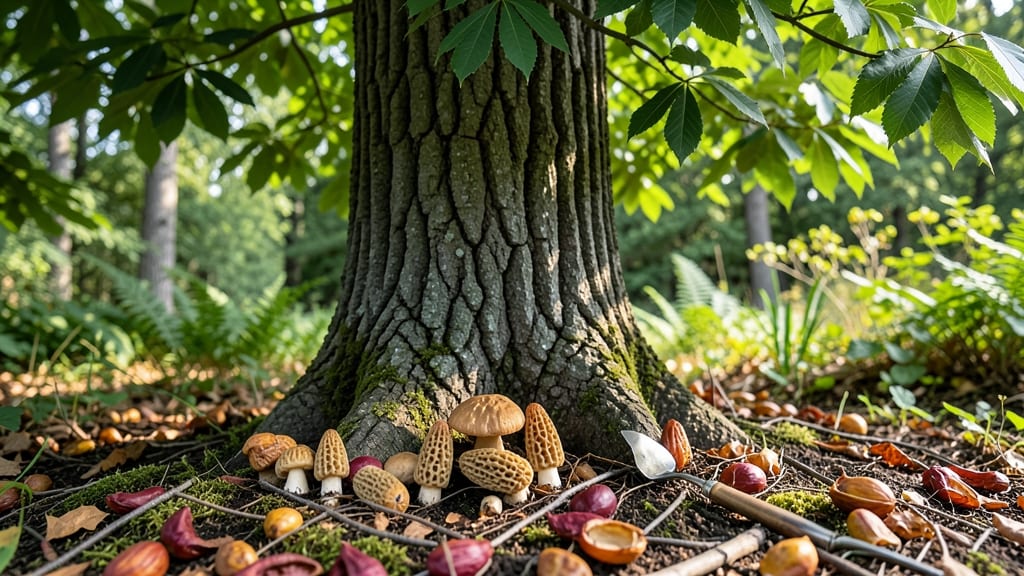
Morel mushrooms grow by specific trees like ash, apple, elm, and oak, often appearing near dead or dying wood in spring. These fungi thrive in moist, well-drained soil with decaying roots or stumps as their primary hosts.
Morels have a fascinating relationship with certain hardwood trees, particularly those in the ash, apple, and oak families. 🌳 Unlike many mushrooms that grow directly in soil, morels rely on decomposing wood—whether from fallen branches, rotting stumps, or even the base of older trees—as their nutrient source.
This explains why you’ll often find them popping up after winter storms or in areas where trees have recently died. The key is looking for trees with damp, decaying wood, as morels need that specific environment to germinate their spores and grow.
What makes this even more interesting is how regional differences can shift which trees are most productive hosts. For example, in the eastern U.S., ash trees are a top choice, while in the Pacific Northwest, cedar stumps sometimes produce morels.
Always check for fresh cuts or wounds on trees—these are prime spots for morels to emerge, especially after heavy rains in spring.
💡 In This Article
- Morel Mushroom Tree Hosts and Their Ecological Role
- How to Identify Ideal Morel Hunting Locations by Tree Type
Morel mushroom tree hosts and their ecological role
Morels establish a unique relationship with their host trees that goes beyond simple parasitism. These fungi act as saprophytes, meaning they primarily feed on decaying organic matter rather than living tissue.
When morel spores land on damp, rotting wood—especially from ash, apple, or oak trees—they detect specific chemical signals released during the wood's decomposition process.
These signals include cellulose-degrading enzymes and lignin breakdown products that create the perfect nutrient cocktail for germination. 🌱 The fungi then form a dense mycelial network that penetrates the wood, breaking it down into simpler compounds while extracting nutrients to fuel their growth.
The preference for certain tree species like ash and apple stems from their chemical composition. These hardwoods contain higher levels of phenolic compounds and tannins that morels can metabolize, while their decay process produces the right pH balance (typically 5.0-6.5) for fungal growth.
For example, ash trees often develop wetwood disease, creating internal cavities filled with moisture—an ideal environment for morels to establish colonies.
What's fascinating is how morels can "wait" for years in a dormant state within the wood, only sprouting when conditions become perfect, usually after 1-2 inches of rain followed by warming temperatures.
This ecological partnership explains why morels rarely grow on healthy trees. They target stressed or dead wood because living trees actively defend against fungal invasion through phytochemicals and structural barriers.
The fungi's preference for decaying wood also creates a microclimate with consistent moisture and temperature—critical factors for their development. 🌲 In fact, studies show morels can appear within 24-48 hours after heavy rains in areas with suitable host trees, demonstrating how quickly they respond to environmental cues.
This rapid response is one reason experienced foragers check the same reliable spots year after year.
Regional variations in host trees reveal how climate influences morel ecology. In the eastern U.S., ash and apple trees dominate as hosts, while in the Pacific Northwest, cedar stumps often produce morels due to the region's cooler, wetter climate.
Even within a single forest, you might find morels growing near different tree species depending on soil composition and moisture levels. For instance, oak morels tend to prefer acidic soils with pH levels around 4.5-5.5, while ash morels thrive in slightly more neutral conditions (6.0-6.5).
This ecological flexibility is why morel hunters need to understand both the tree species and their surrounding environment.
The timing of morel emergence also ties directly to tree decay processes. As wood breaks down, it releases volatile organic compounds that morels detect through specialized receptors.
These compounds act like a chemical invitation, signaling the fungi to germinate and form fruiting bodies. 🌿 The most productive morel patches often develop near trees that have been dead for 3-10 years, as this provides enough decomposition to create the necessary nutrient gradient while maintaining structural integrity for fungal attachment.
This explains why you'll frequently find morels growing at the base of old stumps or along the roots of fallen trees—these are the "sweet spots" where decay and moisture converge.
Understanding this ecological relationship helps explain why morel hunting requires patience and observation. The fungi don't just appear randomly—they respond to specific conditions created by their host trees.
By learning to identify the chemical and physical signals these trees produce during decay, foragers can predict where morels are most likely to emerge. This knowledge transforms a simple walk in the woods into a scientific quest to understand the intricate dance between fungi and their tree partners. 🌿