
Watering
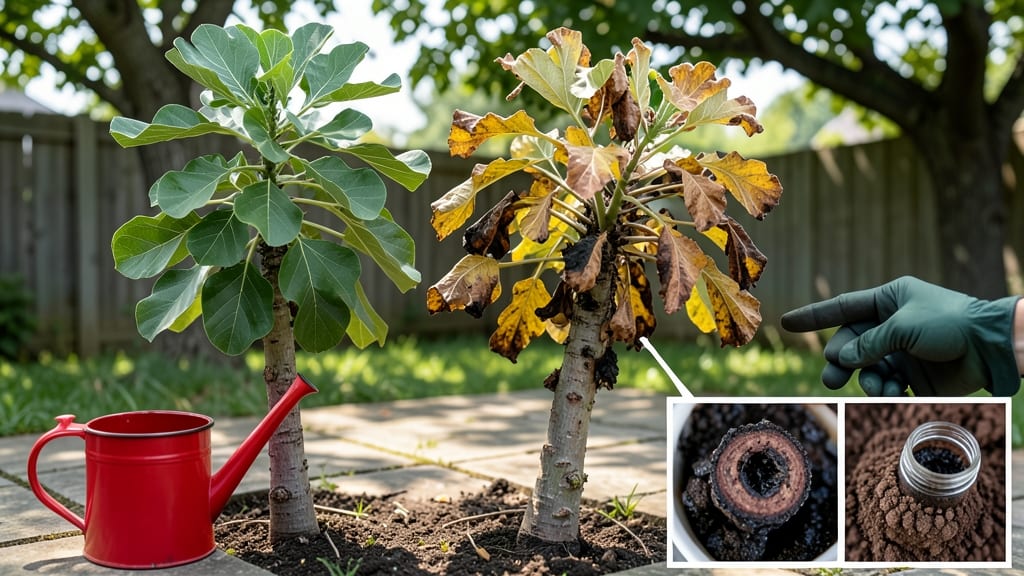
Your fig tree's sad droop isn't always thirst—it's often drowning. 🌱 I've seen overwatered figs with leaves that look like limp wet paper, roots that smell like rot, and stems that ooze when prodded.
These are the warning signs that tell you to stop watering and start fixing things before it's too late.
The first clue is usually yellowing leaves that start at the bottom and creep upward. Then comes the droop—even when the soil feels damp. Stick your finger in: if water drips out, you're overdoing it.
Fig trees hate soggy roots, and once root rot sets in, the tree struggles to take up nutrients, leaving it weak and wilted.
Don't panic—figs are tough, and with the right care, they bounce back. We'll show you how to check drainage, adjust your watering schedule, and nurse your tree back to health. By the end, you'll spot the difference between thirsty and waterlogged soil in seconds.
This works for both backyard figs and container-grown trees. Whether you're dealing with a mature tree or a young sapling, the same principles apply. Let's get your fig tree thriving again—it's easier than you think!
Root Causes Of Overwatering
Overwatering a fig tree isn’t just about giving it too much water—it’s a chain reaction triggered by poor soil conditions, inadequate drainage, and even environmental factors. Understanding why this happens helps you fix the problem before it’s too late. Let’s break down the science behind it.
Fig trees thrive in well-draining soil, but when water can’t escape, roots suffocate. Here’s how it plays out:
- Compacted Soil: Heavy clay or tightly packed soil traps water like a sponge, cutting off oxygen to roots. Without air pockets, roots can’t respire (breathe), leading to rot.
- No Drainage Holes: Containers without drainage holes act like bathtubs—water pools at the bottom, drowning roots over time.
- Mulch Overload: Too much organic mulch (like thick wood chips) can smother the soil, preventing excess water from evaporating.
Pro Tip: 💡 Test your soil’s drainage by filling a container with water, then timing how long it takes to drain. If it sits for more than 30 minutes, your soil is too dense.
Even with perfect soil, external factors can push a fig tree toward overwatering. Here’s what’s really happening:
- High Humidity: Air saturated with moisture slows evaporation, keeping soil damp longer. In tropical or rainy climates, roots stay waterlogged for days.
- Cold Temperatures: Cool weather reduces root activity, so excess water lingers instead of being absorbed. This is why overwatering in winter is especially risky.
- Wind or Shade Issues: Without airflow, water evaporates too slowly. Shady spots trap humidity, while windy areas can dry out foliage—but the roots may still stay soggy.
Fix It: ✨ In humid areas, water less frequently but deeply—let the top 2–3 inches of soil dry out before adding more. In winter, cut back to once every 2–3 weeks unless potted.
Overzealous watering—whether from a hose, sprinkler, or automatic system—is the #1 culprit. But it’s not just about quantity; timing and method matter too:
- Frequent Light Watering: Dabbling with a spray bottle or shallow watering keeps the topsoil wet but leaves deeper roots thirsty. This encourages shallow root growth, which is more prone to rot.
- Automatic Systems Gone Wild: Drip irrigation or timers set on a schedule (without soil checks) can drown roots, especially in clay-heavy soil.
- Watering at the Wrong Time: Early morning or late evening watering increases humidity around the plant, trapping moisture and inviting fungal diseases.
Actionable Fix: ⏰ Water deeply once or twice a week (adjust for climate) and always in the early morning. Use a moisture meter to guide you—aim for 40–60% moisture at root level.
A stressed fig tree can’t handle water like a healthy one. Here’s how underlying issues make overwatering worse:
- Root-Bound Plants: Roots circling in a pot or crowded in the ground can’t absorb water efficiently, leading to waterlogging.
- Pests or Disease: Root-knot nematodes or fungal infections (like Phytophthora) clog root cells, reducing their ability to process water.
- New Growth Strain: Fig trees flush with new leaves in spring/summer, demanding more water. If you don’t adjust your schedule, roots drown.
Prevent It: 🔥 Repot root-bound trees in well-draining mix and inspect roots for pests. If you spot yellowing leaves or mushy stems, stop watering immediately and let the soil dry.
Revive Your Fig Tree Now
Overwatering can turn your thriving fig tree into a sad, soggy mess—but don’t worry! With the right steps, you can nurse it back to health and keep it strong for years.
Below, we’ll match common signs of overwatering to practical fixes and prevention tips tailored to your fig tree’s needs. Let’s get to work!
Cause: Too much water starves roots of oxygen, leading to yellowing (chlorosis) or brown patches. Fix:
- 🔥 Step 1: Stop Watering Immediately – Let the soil dry out completely before watering again. Stick your finger 2–3 inches deep; if it’s damp, wait.
- 🍳 Step 2: Improve Soil Drainage – Mix in perlite, coarse sand, or gravel (20–30%) to loosen heavy soil. Fig trees hate sitting in wet soil.
- 👨🍳 Step 3: Repot if Needed – If the pot lacks drainage holes, transfer the tree to a terracotta pot with holes or a raised bed. Elevate pots on feet or bricks to prevent water pooling.
- 🌡️ Pro Tip: Mulch with gravel or straw (not wood chips) to keep moisture away from the base while allowing airflow.
Cause: Waterlogged roots suffocate, causing leaves to droop or curl—even if the soil feels dry on top. Fix:
- ⏰ Step 1: Trim Damaged Roots (If Severe) – Gently remove the tree from its pot and snip off black, mushy roots with sterilized scissors. Healthy roots are firm and white.
- 🔪 Step 2: Prune Affected Leaves – Cut back 1/3 of the foliage to reduce stress on the struggling plant. Focus on yellow or brown leaves first.
- 💡 Pro Tip: After repotting, water lightly only when the top 1–2 inches of soil are bone-dry. Fig trees prefer drought-like conditions once established!
Cause: Excess moisture invites root rot (Phytophthora) or fungal diseases, causing stems to soften or develop mold. Fix:
- 🧴 Step 1: Apply Fungicide – Spray with a copper-based or neem oil fungicide to stop spread. For severe cases, use hydrogen peroxide (3%) as a soil drench (1 part peroxide to 10 parts water).
- 🌡️ Step 2: Adjust Watering Schedule – Water only in the morning so foliage dries quickly. Avoid overhead watering; use a drip irrigation system or water at the base.
- ✨ Pro Tip: Add 1 part compost to 3 parts soil when repotting to boost microbial activity, which naturally fights pathogens.
Once your fig tree recovers, prevent future overwatering with these habits: - 📊 Watering Rule: Deep but infrequent—water until it drains from the pot’s bottom, then wait until the soil is 60% dry before repeating. - 🥗 Soil Test: Use a moisture meter ($10–$15) to track soil moisture accurately.
Fig trees in containers dry out faster than in-ground plants! - 🌿 Container Care: If growing in pots, upgrade to a larger container (1–2 sizes bigger) every 2–3 years to prevent root-binding, which worsens water retention. - 🎯 Seasonal Adjustments: Reduce watering in winter (fig trees are semi-dormant) and increase slightly in spring/summer when they fruit.
Remember: Fig trees are tough once they adapt—they thrive on neglect almost as much as they do on care. With these fixes, your tree should bounce back in 4–6 weeks, and you’ll avoid the heartbreak of a soggy, sad plant again! 🌳💚
Frequently asked questions
How can I tell if my fig tree's yellow leaves mean overwatering or underwatering?
Check the soil first—if it's damp 2-3 inches down, you're overwatering. Yellow leaves from overwatering start at the bottom and feel soft or mushy. For underwatering, leaves yellow from the edges and the soil feels dry all the way through. Pro tip: Gently tug on a leaf—if it pulls away easily, your tree needs water.
My fig tree's leaves are drooping but the soil feels dry—what's happening?
This is classic overwatering! Even dry topsoil can hide waterlogged roots below. The roots may be suffocating from previous overwatering. Stop watering immediately and let the soil dry completely. If the drooping continues, check for root rot by gently lifting the tree and inspecting the roots.
Can I save a fig tree with black, mushy roots?
Yes, but act fast! Trim all black/mushy roots with clean scissors, then repot in fresh, well-draining soil mix. Water lightly only when the top 1-2 inches of soil are bone-dry. With proper care, new roots will grow within 4-6 weeks. For severe cases, consider root hormone treatment to encourage regrowth.
How often should I water my container-grown fig tree?
Water container figs when the top 2-3 inches of soil are completely dry—usually 2-3 times per week in summer, but reduce to once every 2 weeks in winter. Always use pots with drainage holes and elevate them to prevent water pooling at the bottom.
Will my fig tree recover if I've been overwatering it for months?
With immediate action, yes! Start by letting the soil dry completely, then gradually resume proper watering. Prune back severely affected foliage to reduce stress. Most fig trees show improvement in 4-6 weeks if root rot hasn't completely taken over. The key is consistent care—don't go back to overwatering once it recovers!