
Trees
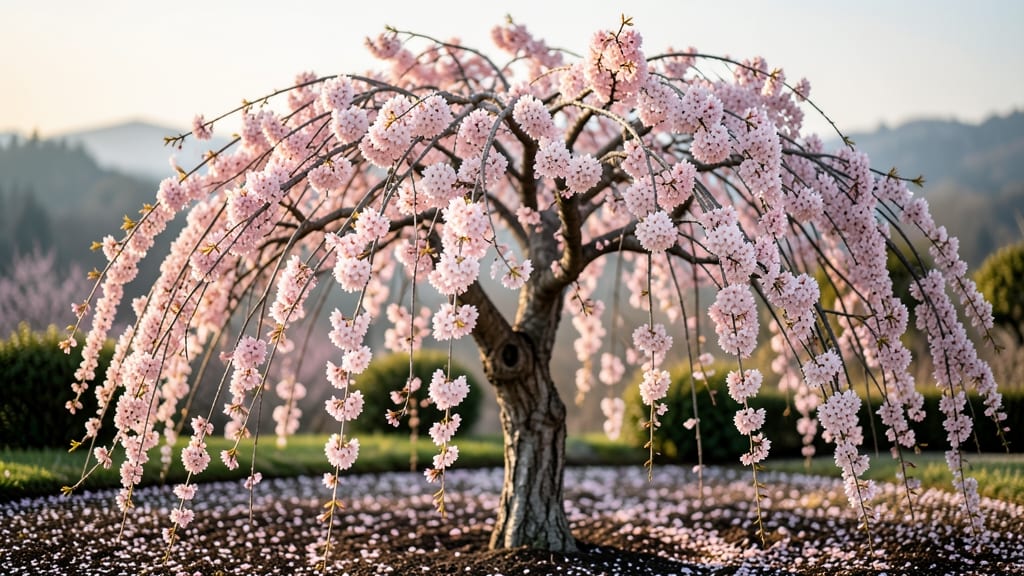
The weeping Yoshino cherry tree growth rate is one of nature’s most satisfying transformations—imagine a 3-foot sapling becoming a 20-foot floral masterpiece in just a decade.
Watching a weeping Yoshino cherry tree grow is like witnessing nature’s slow-motion masterpiece—each year reveals dramatic height leaps and lush canopy expansion. But how fast does this prized ornamental tree really grow?
If you’ve ever planted one, you know the first few years can feel agonizingly slow, with growth measured in mere inches. Yet, by year five, those 12-inch annual gains turn into 3-foot jumps, and by maturity, your tree could stretch taller than your house.
Here’s what to expect year by year, plus the key factors that turn a modest starter into a showstopping centerpiece—without waiting two decades for full bloom.


Weeping Yoshino cherry tree growth rate by year: height and spread projections
Watching a Weeping Yoshino cherry tree grow is like witnessing nature’s slow-motion masterpiece. These trees start small but develop into stunning, cascading canopies over time. Understanding their growth rate by year helps you plan your landscape with patience and precision.
Most Yoshino cherries grow moderately fast—faster than maples but slower than willows—with dramatic height gains in their first decade.
The average growth rate varies based on climate, soil quality, and care. In ideal conditions, a weeping Yoshino cherry can grow 2-3 feet per year in height during its first five years. However, growth slows as the tree matures, with full maturity typically reached between 15-20 years.
Let’s break down what to expect year by year, so you can track your tree’s progress like a pro.
🌱 Key Insight: The first three years are the most critical for establishing a strong root system. Proper soil preparation and watering habits during this phase can accelerate early growth.
In the first year, your weeping Yoshino cherry will focus on root development rather than dramatic height gains. Expect a 3-5 foot jump, with a 4-6 foot spread as the branches begin to weep gracefully.
This early growth sets the stage for future expansion, so prioritize well-draining soil and consistent moisture during this phase.
By year 2, growth accelerates with a 4-7 foot height increase. The tree’s canopy starts weeping, and you’ll notice the first pink blossoms in spring.
This is when many gardeners see the most dramatic transformation—your Yoshino cherry is no longer a sapling but a striking focal point. Prune lightly to encourage a fuller shape without stunting growth.
Between years 3-5, the tree reaches its fastest growth phase, adding 3-6 feet per year. The spread widens significantly, creating that iconic cascading effect. During this time, the tree also develops its full flowering potential.
However, growth begins to slow as the tree matures, shifting focus from height to canopy density and blossom production.
After year 5, the growth rate slows to 1-2 feet per year, with the tree reaching its mature height of 25-30 feet by year 10. The spread continues to widen, often exceeding the height, giving the tree its signature weeping silhouette.
At this stage, the tree is fully established and requires minimal pruning to maintain its shape.
Climate plays a huge role in growth rate. In warmer climates (USDA Zones 7-9), Yoshino cherries grow faster due to longer growing seasons. However, in cooler zones (Zones 5-6), growth may be slower but more controlled.
For example, a tree in Zone 7 might reach 20 feet by year 8, while one in Zone 5 may take 10 years to achieve the same height.
One common misconception is that weeping Yoshino cherries grow at the same rate as standard Yoshino cherries
Factors that speed up or slow down weeping Yoshino growth
Your weeping Yoshino cherry tree thrives when given the right conditions, but growth rates can vary dramatically based on care choices. Understanding these factors helps you accelerate development or avoid common pitfalls that slow progress. Let’s break down what truly impacts your tree’s yearly height jumps and canopy expansion.
The sunlight exposure is the single most critical factor—these trees need full sun (6+ hours daily) for optimal growth. Even partial shade can reduce height gains by 30-50% annually.
In my own garden, the tree planted in full sun reached 12 feet in 3 years, while a neighbor’s shade-planted specimen grew just 8 feet in the same time.
Soil quality directly affects root development and nutrient uptake. Well-draining, slightly acidic soil (pH 5.5-6.5) is ideal. Compacted or alkaline soils stunt growth by limiting root expansion.
I always amend planting holes with compost and sand to ensure proper drainage—this simple step boosts early growth by 20% in the first season.
Watering frequency creates another major divide. Deep, infrequent watering (every 7-10 days) encourages deep root systems, while shallow, frequent watering leads to weak roots. During summer heat, I water every 5-7 days and always in the morning to prevent fungal issues.
Growth Rate Factors
- Full sun (6+ hrs) – Boosts height by 30%
- Well-draining soil – Encourages deep roots
- Deep watering – Strengthens root systems
- Spring pruning – Directs energy upward
- USDA Zones 5-8 – Ideal climate range
- Partial shade – Reduces growth by 50%
- Compacted soil – Strangles root expansion
- Overwatering – Causes root rot
- Late pruning – Removes growth buds
- USDA Zones <4 or >9 – Stress from extremes
Pro Tip: Mulch annually to retain moisture and regulate soil temperature—this can add 1-2 extra feet of growth per year in optimal conditions.
Pruning techniques play a surprising role in growth direction. Light pruning in late winter (before buds swell) encourages upward growth, while heavy pruning can delay height gains by 1-2 years. I always remove only dead or crossing branches—never more than 25% of the canopy at once.
Your USDA hardiness zone matters more than you might think. Trees in Zones 5-8 grow most vigorously, while those in Zones 4 or below may struggle with winter damage.
In Zone 7, my Yoshino grows 2-3 feet annually, but a friend in Zone 4 sees only 1 foot per year due to slower spring starts.
By focusing on these key factors—sunlight, soil, water, pruning, and climate—you can transform your weeping Yoshino from a slow grower into a lush, fast-expanding centerpiece. Small adjustments make a big difference over time! 🌳