
Pruning
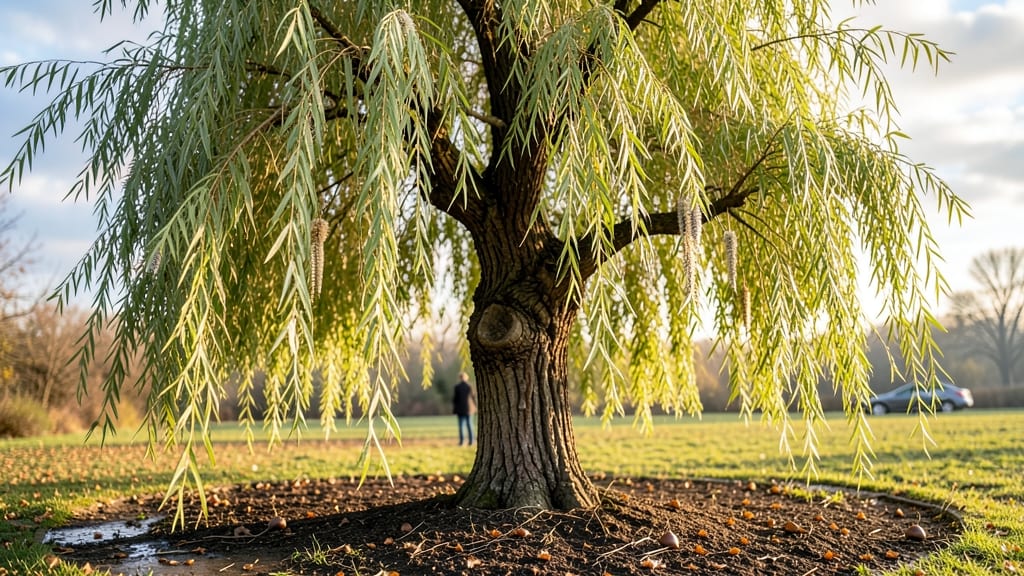
The weeping willow tree size grows to 30–75 feet with a spread of 20–50 feet, making it one of the fastest-growing trees you can plant.
If you're dreaming of a graceful, drooping canopy to shade your garden or waterfront property, the weeping willow tree’s dramatic size and rapid growth make it a standout—but knowing its exact space needs and growth rate is critical before planting.
This tree isn’t just about height; its roots spread aggressively, too, which means you’ll need to plan for at least 50 feet of clearance from homes, fences, or septic systems. Skimp on space, and you risk damage to your foundation or pipes.
Below, I’ll break down how fast these trees grow, the best varieties for your space, and how to prune them to keep them in check—so you can enjoy their beauty without the headaches.


Weeping willow tree size by variety: height, spread & mature dimensions
If you're planning to add a weeping willow (Salix babylonica) to your landscape, understanding its mature dimensions is essential. These trees are famous for their dramatic height and wide-spreading branches, but varieties differ significantly in size.
The classic weeping willow can reach 30–75 feet tall with a spread of 20–50 feet, making them ideal for large properties but challenging for small yards.
Choosing the right variety depends on your space. Some, like Salix x sepulcralis, stay more compact, while others, like Salix caprea, grow aggressively. Below, I’ve broken down the most popular types to help you pick the perfect fit for your garden or waterfront.
For small landscapes, I recommend Salix caprea or dwarf varieties like Salix x sepulcralis 'Pendula', which max out around 20–30 feet tall. These are perfect for adding drama without overwhelming your space.
In contrast, the classic Salix babylonica is best suited for large properties or waterfronts where its massive spread can be fully appreciated.
When planning your planting site, account for the tree’s root spread, which can extend twice the canopy width. This means a 50-foot-wide willow could have roots spreading 100 feet in all directions!
Always plant at least 30–50 feet from structures, septic systems, or other plants to avoid damage or competition.
If you’re unsure about long-term space needs, consider starting with a container-grown sapling to monitor growth before committing to permanent placement. Young weeping willows grow rapidly, so their size can surprise even experienced gardeners.
For example, a 3-foot sapling can reach 15–20 feet in just 3 years under ideal conditions.
Another key factor is the tree’s branch density. Varieties like Salix x sepulcralis have denser foliage near the trunk, creating a stunning, cascading effect, while others like Salix babylonica have longer, airier branches. Choose based on whether you prefer a lush curtain or a dramatic, open silhouette.
For urban or HOA settings, check local regulations—some areas restrict weeping willows due to their aggressive growth and potential to clog drains or damage sidewalks. If space is limited, opt for a dwarf variety or consider pruning regularly to control size.
I’ve found that annual pruning in late winter can keep even large varieties more manageable without sacrificing their beauty.
Finally, remember that soil moisture and sunlight exposure directly impact size. Weeping willows thrive in wet soils near ponds or streams, where they can reach their maximum height.
In drier conditions, growth slows, and the tree may stay 10–20 feet shorter than its potential. Always plant in full sun for the best results.
With the right variety and placement, a weeping willow can become the centerpiece of your landscape, offering year-round shade, wildlife habitat, and a touch of old-world charm. Just be prepared for its impressive scale—and the stunning views it will create! 🌳
How fast weeping willows grow: annual growth rates & early care tips
The weeping willow tree is one of nature's fastest-growing trees, capable of shooting up 1–3 feet per year under ideal conditions. In my experience, this rapid growth is both a blessing and a challenge—it creates stunning shade quickly, but it also demands careful planning to manage its aggressive spread.
Understanding these growth patterns helps you prepare for its mature size (typically 30–50 feet tall) and spread (20–50 feet wide) within just a few years.
Several factors influence how quickly your weeping willow grows, including soil moisture, sunlight exposure, and nutrient availability.
For example, a tree planted in full sun with consistently moist soil can grow 2–3 feet annually, while one in partial shade or dry soil may only reach 1 foot per year.
My first weeping willow in a waterfront garden hit 15 feet in just three years—proof of its potential!
To harness this growth without losing control, early care is key. Pruning young trees helps shape their structure and prevents overgrowth near structures or power lines. I recommend starting pruning in the first year to encourage a strong central leader and remove any suckers that compete for nutrients.
This sets the foundation for a healthier, more manageable tree as it matures.
Critical Care Milestones for Weeping Willows
- 🌱 Year 1: Plant in full sun with moist soil. Expect 3–5 feet of growth. Prune to establish shape and remove weak branches.
- 🌿 Year 2: Growth accelerates to 8–12 feet. Monitor for root spread—keep at least 20 feet from structures. Fertilize lightly in spring.
- 🪴 Year 3: Reaches 15–20 feet. Prune to control canopy width and prevent overcrowding. Mulch to retain moisture.
- ✂️ Years 4–5: Growth slows slightly to 1–2 feet/year. Focus on structural pruning to maintain health and aesthetics.
One common mistake I see is underestimating the root system of weeping willows. Their roots spread aggressively, often twice as wide as the canopy. To prevent damage to sidewalks or foundations, plant them at least 50 feet from buildings and avoid areas with underground utilities.
In my waterfront project, I installed a root barrier to contain the spread near the dock.
Watering is another critical factor. Weeping willows thrive in wet soils, so I recommend deep watering 2–3 times per week during the first year, especially in hot, dry climates.
Over time, once established, they become more drought-tolerant but still prefer consistent moisture. Avoid letting the soil dry out completely, as this can stunt growth and weaken the tree.
If you're planting a weeping willow in a smaller garden, consider dwarf varieties like Salix babylonica 'Tortuosa', which grows more slowly and stays compact.
For larger spaces, embrace the tree's rapid growth and use it as a focal point—just be prepared to invest time in pruning and soil maintenance to keep it in check.
With the right care, your weeping willow can become the stunning centerpiece of your landscape in just a few years! 🌳