
Pests and Diseases
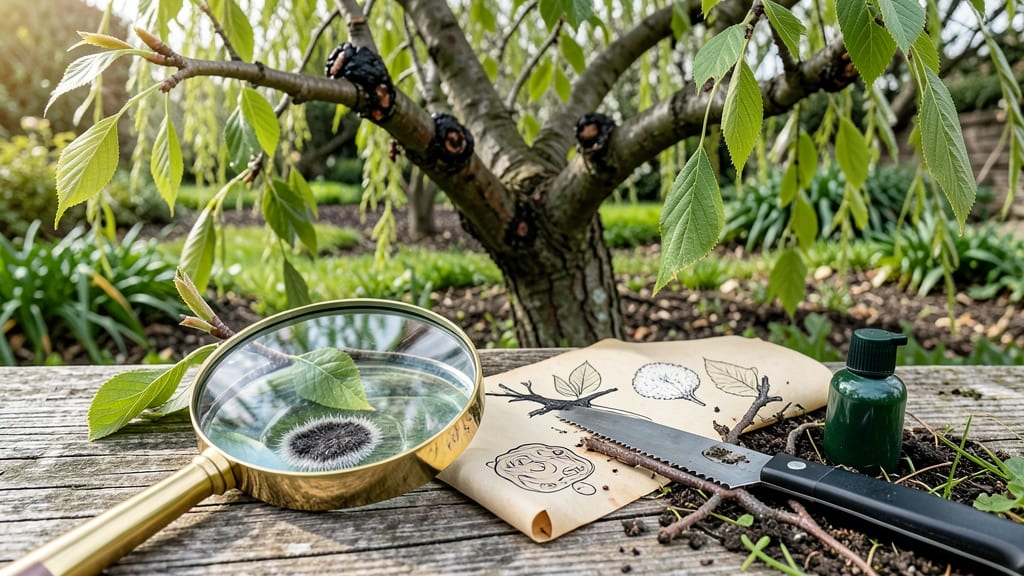
Silky bark scorch and canker diseases can turn your weeping cherry tree’s delicate branches into a sad, skeletal mess—but there’s hope. 🌿 I’ve nursed back trees with oozing cankers and scorched bark using simple, effective methods that stop the spread and restore health.
The key is acting fast before the disease moves deeper into the wood.
These diseases thrive in wet, humid conditions, and once they take hold, they spread like wildfire through wounds or weak spots. I’ve seen cankers ooze dark sap and leaves curl up like burnt paper—until I treated them with copper fungicide and pruned the right way.
The good news? Most trees recover completely with proper care, and you can prevent future outbreaks with a few smart habits.
By the end of this guide, you’ll know exactly how to identify the disease, trim infected branches safely, and apply treatments that actually work. No more guessing whether to prune or spray—just clear, step-by-step instructions that have saved my own weeping cherries from decline.
Your tree’s future starts with the right moves today.
Whether you’re dealing with fresh symptoms or just want to protect your tree, these methods work for all weeping cherry varieties. Let’s get your tree thriving again—before the disease spreads further.
Root Causes Of Tree Decline
Understanding why your weeping cherry tree develops disease—like silky bark scorch or canker—starts with identifying the primary triggers behind its distress. These issues rarely appear in isolation; they’re often the result of a perfect storm of environmental, biological, and human factors.
Let’s break down the key culprits with clear science and actionable insights.
Weeping cherry trees (Prunus serrulata) are stunning but sensitive to extreme conditions. When environmental factors push them beyond their comfort zone, their defenses weaken, making them vulnerable to fungal and bacterial invaders.
- Heatwaves & Drought - Prolonged high temperatures (above 90°F/32°C) combined with low humidity cause leaf scorch—a precursor to silky bark disease.
The tree’s stomata (pores) close to conserve water, but this disrupts nutrient transport, leading to necrotic (dead) tissue that fungi like Leucostoma or Botryosphaeria exploit. - Actionable fix: Mulch heavily (3–4 inches of organic mulch) to retain moisture and water deeply 2–3 times per week during droughts.
Drip irrigation is ideal to avoid wetting foliage (which spreads spores).
- Poor Drainage & Overwatering - Waterlogged roots suffocate the tree, weakening its bark and inviting canker-forming pathogens (e.g., Phytophthora or Fusarium).
Symptoms include oozing sap, sunken lesions, and dieback. - Actionable fix: Test soil drainage—if water pools after 6 hours, amend with sand or compost to improve aeration. Avoid overhead watering; focus on slow, deep irrigation at the base.
- Sudden Temperature Shifts - Late spring frosts or winter thaw-freeze cycles damage new growth, creating entry points for bacteria like Pseudomonas syringae, which causes bacterial canker.
The tree’s stress response triggers abnormal bark splitting, perfect for pathogen colonization. - Actionable fix: Mulch in late fall (4–6 inches) to insulate roots and choose disease-resistant cultivars (e.g., ‘Kwanzan’ or ‘Shirotae’).
Once environmental stress weakens a tree, opportunistic microbes move in to claim their territory. Here’s how the most notorious offenders operate:
| Disease | Causal Agent | How It Attacks | Telltale Signs |
|---|---|---|---|
| Silky Bark Scorch | Leucostoma (fungus) | Spores land on wounded bark, germinate in moist conditions, and girdle branches by killing phloem (nutrient-transport tissue). | Silvery-gray cankers with ropey fungal strands; branches die back from tips. |
| Bacterial Canker | Pseudomonas syringae (bacteria) | Enters via pruning cuts or frost cracks, multiplies in xylem vessels, and clogs water transport. | Oozing bacterial ooze, dark cankers with raised edges, wilting leaves. |
| Botryosphaeria Canker | Botryosphaeria (fungus) | Invades through stressed bark, blocks sap flow, and kills cambium layer (growth tissue). | Sunken, tar-like cankers; dieback in one-sided branches. |
- Pro tip: Prune in dry weather (avoid wet conditions that spread spores) and sterilize tools with 70% rubbing alcohol between cuts to prevent cross-contamination.
Even the hardiest trees suffer when gardening practices accidentally invite disease. Common blunders include:
- Improper Pruning
- Topping trees (cutting back to stubs) or pruning during wet seasons creates large wounds that heal poorly, inviting pathogens. Bacterial canker thrives in these conditions.
- Fix: Use clean, sharp tools and make cuts at a 45° angle just outside the branch collar (never flush with the trunk).
- Over-Fertilizing (Especially Nitrogen)
- Excess nitrogen promotes soft, lush growth that’s highly susceptible to fungal infections. It also delays dormancy, leaving trees vulnerable to late-season pathogens.
- Fix: Use a balanced fertilizer (10-10-10) and test soil pH (ideal: 6.0–7.0). Avoid spring applications—fall feeding is safer.
- Ignoring Early Warning Signs - Yellowing leaves, wilting, or dieback are often dismissed as "normal aging." By the time cankers or scorch appear, the tree may be too compromised to save. - Fix: Inspect trees monthly for discoloration, oozing, or fungal growth.
Act at the first sign—early intervention (e.g., copper fungicide sprays) can halt spread.
Weeping cherry trees don’t fight disease alone—pests and neighboring plants can tip the scales against them.
- Boring Insects (e.g., Shot Hole Borers, Bark Beetles) - These insects tunnel into bark, creating entry points for bacteria/fungi.
Their frass (sawdust-like waste) also traps moisture, accelerating rot. - Fix: Remove infested branches (burn or bag them!) and apply systemic insecticides (e.g., imidacloprid) in early spring.
- Competition from Weeds or Other Trees - Root competition for water/nutrients weakens the cherry tree, making it easier for pathogens to take hold.
Even overly dense mulch (too close to the trunk) can smother roots. - Fix: Clear a 3–4 foot radius around the trunk of weeds and keep mulch 6+ inches from the bark.
Some weeping cherry cultivars are naturally more resistant to disease, while others are genetic sitting ducks. For example:
- Susceptible: ‘Amanogawa’ (prone to canker), ‘Takasago’ (silky bark scorch).
- Resistant: ‘Kwanzan’ (better canker resistance), ‘Shirofugen’ (tolerates heat stress).
Actionable tip: If your tree is repeatedly diseased, consider replacing it with a resistant cultivar—sometimes, prevention starts with the right genetics.
Fixing Your Cherry Tree’s Health
Reviving a weeping cherry tree suffering from silky bark scorch or canker disease requires a mix of immediate action and long-term care. Below, we break down practical solutions tailored to the root cause—whether fungal, bacterial, or environmental—along with prevention tips to keep your tree thriving.
Let’s get to work! 🌳🔧
Fungal diseases like Leucostoma or Botryosphaeria thrive in wet, stressed trees. Here’s how to stop the spread and restore health:
🍳 Prune Infected Areas
- Identify the damage: Look for sunken, discolored cankers (often with oozing sap or dead bark). Use sterilized pruning shears (rubbing alcohol or bleach wipe).
- Cut 6–12 inches below the canker into healthy wood (no cracks or discoloration).
Burn or double-bag infected branches (do not compost!). 3. Seal wounds: Apply pruning sealant (like Tanglefoot Tree Wound Pruning Sealer) to prevent secondary infections.
👨🍳 Apply Fungicide
- Copper-based fungicides (e.g., Copper Soap or Cheshunt Compound) are most effective for fungal cankers.
Spray during dormant season (late fall/winter) and again in early spring before buds swell. - Organic option: Mix 1 tbsp baking soda + 1 tsp horticultural oil + 1 gallon water and spray foliage (test on a small area first).
🥘 Improve Airflow & Drainage
- Thin the canopy (remove 20–30% of dense branches) to reduce humidity near the trunk.
- Raise soil level around the base with gravel or compost to prevent waterlogging.
- Avoid overhead watering—use drip irrigation or soaker hoses to keep foliage dry.
Bacterial infections (e.g., Pseudomonas syringae) cause oozing cankers and leaf scorch. Since bacteria are harder to treat, focus on removal and prevention:
⏰ Remove & Destroy Infected Wood
- Cut out infected branches (as above) and sterilize tools between cuts.
- Do not compost—burn or dispose in sealed bags to prevent reinfection.
🎯 Boost Tree Resilience
- Water deeply but infrequently (1–2 inches per week) to strengthen roots.
- Fertilize in early spring with a balanced, slow-release fertilizer (e.g., 10-10-10) to support recovery.
- Avoid stress factors: Prune only in dormant season, and mulch properly (2–4 inches of organic mulch, kept 6 inches from the trunk).
Often, disease is a symptom of poor care. Fix these underlying issues to prevent recurrence:
🌡️ Adjust Watering Practices
- Overwatering = fungal paradise. Underwatering = stress. Test soil moisture (stick your finger 2 inches deep—if dry, water).
- Water in the morning to allow foliage to dry before night.
🌿 Optimize Soil & Nutrition
- Test soil pH (ideal: 6.0–7.0 for cherries). Amend with lime (to raise pH) or sulfur (to lower it) if needed.
- Add compost annually to improve drainage and nutrient uptake.
🔪 Protect from Physical Damage
- Avoid bark injuries (e.g., from lawnmowers, string trimmers, or leaning ladders).
- Install protective barriers (e.g., tree guards) if pets or wildlife scratch the trunk.
| Task | When to Do It | How to Do It |
|---|---|---|
| Prune for airflow | Late winter/early spring | Remove 10–20% of dense branches |
| Apply fungicide | Dormant season (fall/winter) | Copper spray or organic mix |
| Mulch properly | Spring/fall | 2–4" organic mulch, 6" from trunk |
| Water deeply | Early morning, weekly | 1–2 inches per week (adjust for climate) |
| Fertilize | Early spring | Balanced fertilizer (follow label rates) |
Pro Tip: 💡 Monitor your tree regularly—catching issues early (like small cankers or wilting leaves) makes treatment far easier!
By tackling the root cause—whether fungal, bacterial, or environmental—your weeping cherry can bounce back with proper care. Stay vigilant, and your tree will reward you with years of stunning blooms! 🌸🌿
Frequently asked questions
What are the first signs my weeping cherry tree has silky bark scorch?
Look for silvery-gray cankers on branches with ropey fungal strands hanging from them. You’ll also notice branches dying back from the tips, and leaves may appear scorched or curled. These symptoms typically appear after hot, dry weather when the tree is already stressed.
Can I save a weeping cherry tree if it already has large cankers?
It depends on how deep the cankers go. If they’re girdling the branch (completely encircling it), that branch is likely lost—but the tree can often recover if the cankers aren’t spreading rapidly. Prune out infected areas immediately, apply copper fungicide, and focus on improving the tree’s overall health to prevent further spread.
Is bacterial canker contagious to other trees?
Yes, bacterial canker (Pseudomonas syringae) spreads through water, tools, and even wind. To prevent cross-contamination, always sterilize pruning tools with rubbing alcohol between cuts, avoid overhead watering, and remove infected branches immediately (don’t compost them). Keep diseased trees isolated from healthy ones until fully treated.
How often should I apply fungicide to prevent disease?
For prevention, apply copper-based fungicide 2–3 times per year: once in late winter/early spring (before buds swell), again after summer rains, and a final application in fall. If your tree is already infected, increase frequency to every 2–4 weeks until symptoms disappear, then maintain a regular schedule.
Will pruning help my weeping cherry tree recover from disease?
Proper pruning is critical for recovery. Remove all infected branches (cut 6–12 inches below the canker into healthy wood) and thin the canopy to improve airflow. Just remember: Never prune during wet weather (spores spread easily), and always sterilize tools to avoid spreading disease further.