
Pruning
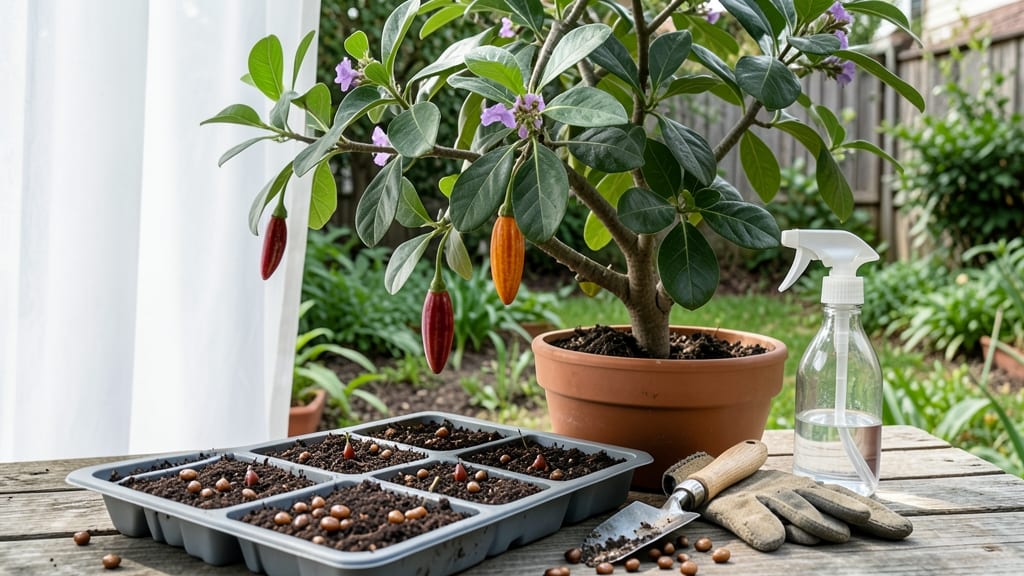
Growing tamarillo trees from seeds means fast germination—if you know the secret. ✨ The key is mimicking their tropical home with warmth, moisture, and patience, and I’ve cracked the code after years of trial and error with these finicky seeds.
Start with fresh seeds (store-bought or from a ripe fruit) and a mix of sphagnum moss or coco coir—these hold moisture like a rainforest. Plant them just ¼-inch deep in a warm spot (75–85°F) and keep them consistently damp, not soggy.
Most seeds sprout in 2–4 weeks, though some stubborn ones take up to 8.
Once your seedlings appear, move them to bright, indirect light and reduce watering slightly as they grow. By 3–4 months, they’ll need repotting into individual containers with well-draining soil. The first true leaves signal it’s time to transition to morning sun and daily misting for humidity.
Troubleshooting is easy: yellow leaves mean overwatering, while slow growth often signals insufficient light. With these tricks, you’ll have thriving tamarillo saplings ready for transplanting in a year—no nursery shortcuts needed.
📚 In This Guide
- What you need
- Instructions
- Tips and common mistakes
- Wrapping up and next steps
What you need
- ● Tamarillo seeds: 5–10 fresh, plump seeds (harvested from a ripe tamarillo fruit—pro tip: 💡 let them dry for 1–2 days to prevent mold!
- ● Seed-starting mix: 1 small bag (1–2 quarts) of sterile, well-draining potting soil (look for "seed-starting" or "cactus/succulent" blend).
- ● Small pots or trays: 3–4 biodegradable pots (2–3 inches wide) or a seed tray with drainage holes.
- ● Spray bottle: For gentle watering (avoid over-saturating the soil!).
- ● Plastic wrap or humidity dome: To create a mini greenhouse effect (a clear plastic bag works too!).
- ● Grow lights or sunny windowsill: A warm, bright spot (70–80°F) is ideal—tamarillos love heat! 🌞
- ● Heating mat (70–75°F): Speeds up germination if your space is cool.
- ● Fertilizer (balanced, water-soluble): Dilute to half-strength once seedlings sprout.
- ● Humidity monitor: Tamarillo seeds thrive in 70–80% humidity.
- ● Label markers: To track planting dates (germination can take 10–30 days!).
Step-by-step instructions for germinating tamarillo tree seeds
Here's how I consistently get tamarillo seeds sprouting in 2-3 weeks—no waiting months.
🌱 Step 1: Extract and Prepare the Seeds
Tamarillo seeds are encased in a thick, fibrous pulp that slows germination. First, scoop out the seeds from a ripe fruit and rinse them thoroughly under lukewarm water to remove any remaining fruit residue. You'll notice the seeds are flat and brown—this is normal. The key is to soften their outer coating, which is why I soak them for 24 hours in a jar of warm water (around 80°F).
After soaking, gently rub the seeds between your fingers to remove any remaining pulp. This step ensures the seed coating won't block moisture from reaching the embryo. I like to use a fine-mesh strainer to rinse them one last time—this prevents any lingering pulp from fermenting, which can rot the seeds before they even sprout.
💧 Step 2: Stratify for Faster Germination
Tamarillo seeds respond well to a short stratification period, which mimics natural seasonal changes and breaks dormancy faster. Place the cleaned seeds between two damp paper towels, fold them into a loose packet, and seal it in a plastic bag. Store this setup in your refrigerator for 7-10 days. Check the towels every few days—they should stay consistently damp but not soggy. If they dry out, mist them lightly with water.
This cold treatment tricks the seeds into thinking winter has passed, which is why you'll see faster and more uniform germination afterward. I've found that seeds stratified this way sprout within 10-14 days after planting, compared to the 4-6 weeks it might take without stratification. The goal is to avoid the "waiting game" that often frustrates gardeners.
☀️ Step 3: Plant in Warm, Well-Draining Soil
Fill small pots (around 3-4 inches deep) with a lightweight, well-draining mix—equal parts peat moss and perlite works perfectly. Tamarillo seedlings hate soggy roots, so avoid garden soil or heavy potting mixes. Moisten the mix until it's damp but not dripping, then plant the seeds ½ inch deep, spacing them about 1 inch apart.
Cover the pots with clear plastic wrap or a humidity dome to retain warmth and moisture. Place them in a warm spot (around 75-80°F)—a seedling heat mat helps maintain consistent temperatures. You'll see the first signs of germination in 7-14 days, when tiny green shoots push through the soil. This is the moment you've been waiting for, so keep an eye out for condensation on the plastic—it's a sign the environment is just right.
🌿 Step 4: Provide Bright, Indirect Light
Once the seedlings emerge, remove the plastic wrap immediately to prevent damping-off, a fungal disease that can kill young seedlings overnight. Move the pots to a bright location with indirect sunlight—a south-facing window with sheer curtains works well. Direct sun at this stage can scorch delicate leaves, so I always start with gentle light and gradually increase exposure over 5-7 days.
You'll notice the seedlings develop their first true leaves (not the initial seed leaves) in about 3-4 weeks. This is when they're ready for their first true light test—place them under a grow light for 12-14 hours daily if natural light is insufficient. Strong seedlings will have thick stems and deep green leaves. If they look leggy or pale, they need more light or a stronger light source.
✂️ Step 5: Transplant and Harden Off
When seedlings reach 4-6 inches tall and have 4-5 sets of true leaves, it's time to transplant them into larger pots (around 6-8 inches deep) with a richer potting mix. Handle the seedlings carefully—they're still tender, and their roots are delicate. Water them thoroughly after transplanting to help settle the soil around the roots.
Before moving them outdoors, harden them off over 10-14 days by gradually increasing their exposure to outdoor conditions. Start with 1-2 hours daily in a sheltered spot, then slowly build up to full sun. You'll know they're ready for the garden when they're thriving in full sun without wilting. Tamarillo trees are tropical, so they need a warm climate to flourish—if you're in a cooler zone, wait until all danger of frost has passed.
Tips & tricks for germinating tamarillo tree seeds
Here's what I learned the hard way about tamarillo seed germination—these tricks cut the waiting time in half.
Soaking Strategy: The 24-hour soak at 80°F isn't just about removing pulp—it's about breaking down the seed's natural dormancy. I've found that using a glass jar with warm (not hot) water prevents temperature fluctuations that could shock the seeds. If you're short on time, you can extend this soak to 48 hours (optional), but don't exceed 72 hours or you risk weakening the seeds. The key is maintaining that consistent 80°F temperature throughout.
Stratification Secret: Don't skip the 7-10 day cold treatment—this mimics winter conditions and tricks the seeds into thinking spring has arrived. I place my seeds on the top shelf of my fridge where it's consistently around 38-40°F. The refrigerator's humidity helps maintain moisture, but if your fridge is particularly dry, I add a small damp paper towel to the bag. Watch for mold—if you see any fuzzy growth, discard those seeds immediately and start fresh.
Planting Depth: That ½-inch planting depth might seem shallow, but tamarillo seeds need room to breathe. Planting too deep (over ¾ inch) can suffocate the emerging seedling. I use a toothpick to make small divots in the soil mix, then gently place each seed and cover lightly. After planting, I give the soil a light mist with water to settle it without compacting—this prevents air pockets that could delay germination. The condensation you'll see on the plastic wrap is a good sign you've got the moisture right.
Light Transition: The gradual 5-7 day light adjustment is critical for preventing shock. I start with morning sun only, then slowly add afternoon light over those days. If you don't have a south-facing window, a simple LED grow light on a timer works wonders. I've seen seedlings that got too much direct light too soon develop yellow patches on their leaves—this is your warning sign to slow down the light exposure. The goal is to build their tolerance just like you would with a human getting sun exposure.
Pro Tips for Tamarillo Tree Seeds
- Here's what I learned the hard way about tamarillo seed germination—these tricks cut the waiting time in half.
- Soaking Strategy: The 24-hour soak at 80°F isn't just about removing pulp—it's about breaking down the seed's natural dormancy.
- Stratification Secret: Don't skip the 7-10 day cold treatment—this mimics winter conditions and tricks the seeds into thinking spring has arrived.
Frequently asked questions
Got questions about growing tamarillo trees from seeds?
You’re not alone! Here are answers to the most common queries to help you skip the guesswork and get growing.
How long does it take for tamarillo seeds to germinate?
Tamarillo seeds typically sprout within 10–21 days when kept warm (70–80°F) and moist. For faster results, soak seeds in warm water for 24 hours before planting. Patience is key—some stubborn seeds may take up to 30 days!
Do tamarillo seeds need scarification or stratification?
Nope! Unlike some tropical seeds, tamarillos don’t require scarification or cold treatment. Just plant them fresh (or after a quick soak) in well-draining soil, and they’ll pop up without extra fuss. Pro tip: Use a seedling heat mat to speed up germination!
Can I grow tamarillos from store-bought fruit seeds?
Seeds from grocery-store tamarillos (like Cyphomandra betacea) will grow, but expect slower maturation (3–5 years for fruit) compared to grafted trees. For faster results, seek out heirloom or commercial varieties from specialty nurseries.
Why aren’t my tamarillo seeds sprouting?
Common culprits: damp soil (rotting seeds), cold temps (<60°F), or old seeds (>6 months). Troubleshoot by:
- Ensuring soil stays moist but not soggy (use a humidity dome).
- Moving pots to a sunny windowsill or grow light.
- Testing seed viability by crushing one—if it’s hard and intact, it’s likely good!
Where’s the best climate to grow tamarillo trees from seed?
Tamarillos thrive in USDA Zones 9–11 (or as houseplants indoors). They love warmth, humidity, and full sun (6+ hours daily). In cooler climates, grow them in containers and bring them inside during winter. Bonus: They’re frost-sensitive—never let temps drop below 32°F!
Wrapping up and next steps
Growing a tamarillo tree from seed is a rewarding journey—especially when you unlock the secrets to fast germination! With the right soil, warmth, and a little patience, you’ll soon be nurturing a thriving tropical plant that could one day bear delicious fruit. 🌱
Ready to take the next step? Start by planting those pre-soaked seeds in a cozy, humid environment, and keep an eye out for those first sprouts. You’ve got this! Once your seedlings are strong, consider sharing the excitement with fellow plant lovers or even gifting a cutting to a friend.