
Blooming
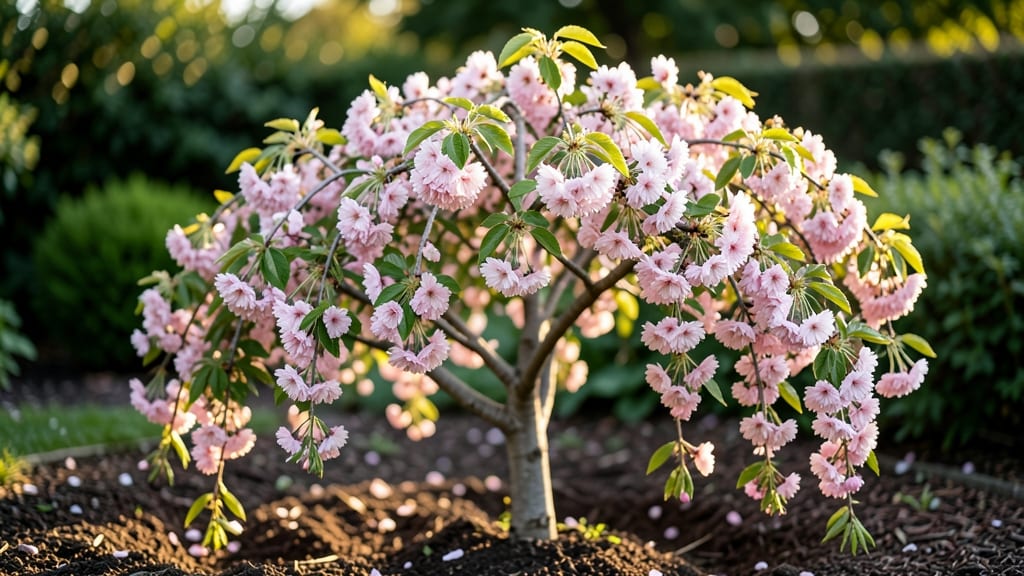
The sight of a sour cherry tree in full blossom transforms any yard into a springtime masterpiece. 🌸 These delicate pink canopies arrive reliably after just three years, creating a fragrant focal point that outshines store-bought bouquets.
I planted mine near the patio where I can enjoy the sweet almond scent while sipping morning coffee—it's become the highlight of my spring routine.
Pairing them with spring bulbs like daffodils or tulips extends the show from early blooms through late spring. The trees also attract pollinators early in the season, giving your garden a head start on productivity.
Their elegant branches create stunning silhouettes against the sky, making them perfect for both formal and informal landscapes.
By summer, the blossoms give way to tart cherries that birds and humans alike will love. The tree's layered interest—from fragrant blossoms to edible fruit—makes it one of the most rewarding small trees for any garden. You'll get years of beauty with minimal maintenance once established.
Works beautifully as a single specimen, in small groves, or alongside other early bloomers like magnolias or crabapples. The key is planting in full sun where the blossoms can really shine. Here's how to make the most of their seasonal magic in your design.
📚 In This Guide
- What you need
- Instructions
- Tips and common mistakes
- Wrapping up and next steps
What you need
- ● Sour cherry tree: Option 1: Seeds (10–20, from fresh, organic sour cherries—not store-bought)
- ● Option 2: 1–2-year-old sapling (dwarf or standard variety, disease-resistant like Montmorency or Meteor)
- ● Option 3: Grafted whip (for faster blooms, available at specialty nurseries)
- ● High-quality potting soil: 3–5 gallons (sterile, well-draining mix with 50% compost)
- ● Organic fertilizer: Balanced 10-10-10 or fruit-tree-specific blend (1 lb)
- ● Mulch: Wood chips or straw (2–3 inches, 3–4 feet radius around the base)
- ● Hand trowel (for seed planting or transplanting)
- ● Garden fork (to loosen soil before planting)
- ● Pruning shears (sharp, sterilized with rubbing alcohol)
- ● Watering can (or hose with gentle spray nozzle)
- ● pH test kit (to check soil acidity; ideal range: 6.0–6.5)
- ● Planting hole digger (or shovel for saplings)
- ● Sunlight: Full sun (6–8+ hours/day)—no compromises!
- ● Climate: USDA Zones 4–8 (or equivalent for your region)
- ● Space: Dwarf variety: 6–8 feet apart
- ● Standard tree: 15–20 feet apart
- ○ Cross-pollination: Plant at least two varieties for fruit (optional if you only want blossoms)
- ● Epsom salt (1 tbsp/month in water for magnesium boost)
- ● Tree guard (to protect young trunks from critters)
- ● Drip irrigation system (for consistent moisture)
- ● Blossom-encouraging spray (like seaweed extract in early spring)
How to grow a sour cherry tree with stunning spring blossoms
Here's the straightforward approach to planting a sour cherry tree that bursts into fragrant spring blooms within three years.
🌱 Step 1: Choose the Right Location and Prepare the Soil
Sour cherry trees thrive in full sun, so pick a spot that receives at least 6-8 hours of direct sunlight daily. The tree needs space to grow—plant at least 20 feet away from buildings, fences, or other trees to allow for mature spread. Avoid low-lying areas where cold air settles, as young trees are vulnerable to frost damage.
Test your soil's pH before planting—sour cherries prefer slightly acidic to neutral soil with a pH between 6.0 and 7.0. If your soil is too alkaline, amend it with peat moss or sulfur a few weeks before planting. Dig a hole twice as wide as the root ball but no deeper. Loosen the sides of the hole with a shovel to encourage root growth into the surrounding soil.
🪴 Step 2: Plant the Bare-Root or Container-Grown Tree
If you're planting a bare-root tree, soak the roots in lukewarm water for 1-2 hours before planting to rehydrate them. For container-grown trees, gently remove the plant from its pot and loosen any circling roots. Place the tree in the hole so the top of the root ball sits 2-3 inches above ground level. This prevents soil from settling and burying the trunk too deeply.
Backfill the hole with native soil, tamping it down gently to remove air pockets. Water thoroughly to settle the soil and eliminate gaps. Create a 4-inch-high berm around the tree to direct water toward the roots. Mulch the area with 2-3 inches of organic mulch, keeping it 3-4 inches away from the trunk to prevent rot.
☀️ Step 3: Water and Fertilize for Strong Early Growth
Water the tree deeply once a week during the first growing season, providing 1-2 gallons of water per irrigation. Young trees need consistent moisture, so check the soil 1-2 inches below the surface—if it feels dry, it’s time to water. Avoid overhead watering, which can spread disease. Instead, use a soaker hose or drip irrigation to deliver water directly to the root zone.
Apply a balanced, slow-release fertilizer (10-10-10 or 20-20-20) at planting time, following the package instructions for dosage. In the second year, switch to a fertilizer higher in phosphorus (like 10-20-10) to encourage root and blossom development. Avoid high-nitrogen fertilizers, which promote leafy growth at the expense of flowers and fruit.
✂️ Step 4: Prune for Shape and Health in Late Winter
Prune your sour cherry tree in late winter or early spring, just before buds begin to swell. Remove any dead, diseased, or crossing branches first. Then, thin out the canopy to allow light and air to reach the center of the tree. Aim to create an open, vase-like shape that encourages airflow and reduces the risk of fungal diseases.
Cut back any suckers or water sprouts that grow from the base or trunk. These compete with the main tree for nutrients and weaken its structure. Use clean, sharp pruning shears to make cuts just outside the branch collar—the swollen area where the branch meets the trunk. Seal larger cuts (over ½ inch in diameter) with pruning sealant to prevent disease entry.
🌿 Step 5: Protect and Encourage Blossoms for the First Three Years
Sour cherry trees are self-pollinating, but planting two trees nearby can increase fruit production. If you notice blossoms forming in the first year, thin them out to 20-30% of their number to reduce stress on the young tree. Focus on allowing the tree to establish a strong root system and framework before it bears heavy fruit loads.
Watch for signs of pests like cherry fruit flies or diseases such as brown rot. Remove and destroy any infected fruit or leaves immediately. Apply horticultural oil or neem oil in early spring to prevent pest infestations. By the third year, your tree should be robust enough to support a full canopy of fragrant blossoms and a bounty of tart-sweet cherries.
Tips & tricks for perfect sour cherry tree blossoms
These simple strategies will help your sour cherry tree thrive and deliver that dreamy spring display you're imagining.
Sunlight Secret: While 6-8 hours of sunlight is ideal, I've found that morning sun (east-facing) combined with afternoon shade in hot climates actually produces more vibrant blossoms. The gentle morning light helps prevent heat stress on those delicate spring flowers. If your location gets intense afternoon sun, consider a partial afternoon shade solution like a sheer fabric screen during the hottest months.
Root Revival: That 1-2 hour root soaking before planting is crucial for bare-root trees, but here's the trick: use lukewarm water (around 70°F) rather than cold water. Cold water can shock the roots, while warm water helps them rehydrate more effectively. For container-grown trees, gently squeezing the root ball to loosen circling roots makes all the difference in preventing root girdling as the tree matures.
Watering Wisdom: The once-weekly watering guideline works for most climates, but I've learned to adjust based on rainfall. After a heavy rain, skip the scheduled watering and check soil moisture first. The key is keeping that 1-2 inches of soil consistently moist—not soggy. A simple soil moisture meter makes this easy to track, especially during dry spells when young trees are most vulnerable to drought stress.
Pruning Precision: When pruning in late winter, focus on creating a natural vase shape rather than a perfectly symmetrical tree. This open structure allows sunlight to reach all blossom clusters, which is essential for even flowering. I always prune just outside the branch collar and avoid leaving stubs—these small details prevent disease entry points and promote healthier regrowth.
Pro Tips for Sour Cherry Tree Blossom
- These simple strategies will help your sour cherry tree thrive and deliver that dreamy spring display you're imagining.
- Sunlight Secret: While 6-8 hours of sunlight is ideal, I've found that morning sun (east-facing) combined with afternoon shade in hot climates actually produces more vibrant blossoms.
- Root Revival: That 1-2 hour root soaking before planting is crucial for bare-root trees, but here's the trick: use lukewarm water (around 70°F) rather than cold water.
Frequently asked questions
Got questions about growing a sour cherry tree with stunning blossoms? Here’s what you need to know to get started—and keep those fragrant blooms coming back year after year!
How long does it take for a sour cherry tree to bloom after planting?
A young sour cherry tree typically takes 3–5 years to produce its first blossoms, depending on the variety and growing conditions. Early-blooming cultivars like Montmorency may reward you sooner, while slower growers might take a little longer. Patience pays off—those first pink-and-white bursts are worth the wait!
What’s the best time of year to plant a sour cherry tree for optimal blossoms?
Plant your tree in early spring or fall, when the soil is workable but not frozen. Spring planting (March–April) gives roots time to establish before summer heat, while fall (October–November) allows them to settle before winter dormancy. Avoid planting in extreme heat or cold—your tree will thank you with vibrant, healthy blossoms next spring!
Can I grow a sour cherry tree in a container, or does it need to be planted in the ground?
While sour cherry trees thrive best in the ground, dwarf varieties (like Stella®) can grow in large containers (15+ gallons) for 3–5 years. Ensure the pot has drainage holes and use well-draining soil. Container-grown trees may bloom slightly later but can still produce stunning flowers—just expect smaller yields.
Why aren’t my sour cherry tree blossoms lasting long, or are they falling off?
Blossoms dropping early often signals stress from frost, pests (like aphids or cherry fruit flies), or poor pollination. To help:
- Protect young trees from late frosts with frost cloth.
- Inspect leaves for pests and treat with neem oil if needed.
- Plant two compatible varieties nearby to improve pollination.
- Ensure the tree gets full sun (6+ hours/day) and consistent water.
Are sour cherry tree blossoms edible, or are they just for show?
While the blossoms themselves aren’t edible, they’re a gorgeous (and fragrant!) precursor to the tart, juicy cherries you’ll harvest later. Some cultures use them in decorative syrups or teas, but focus on their beauty and the pollinators they attract—bees love them! For edible blooms, consider planting ornamental cherry trees like Prunus serrulata instead.
Wrapping up and next steps
Watching a sour cherry tree blossom in just three years is a rewarding experience that brings beauty and fragrance to your garden. With the right soil, care, and patience, you can enjoy stunning pink or white blooms that signal spring’s arrival—plus the promise of delicious fruit later. 🌸
Ready to turn your yard into a fragrant paradise? Start by gathering your supplies and planting your tree this season. Your future blossoms—and future harvests—are just a few seasons away!