
Trees
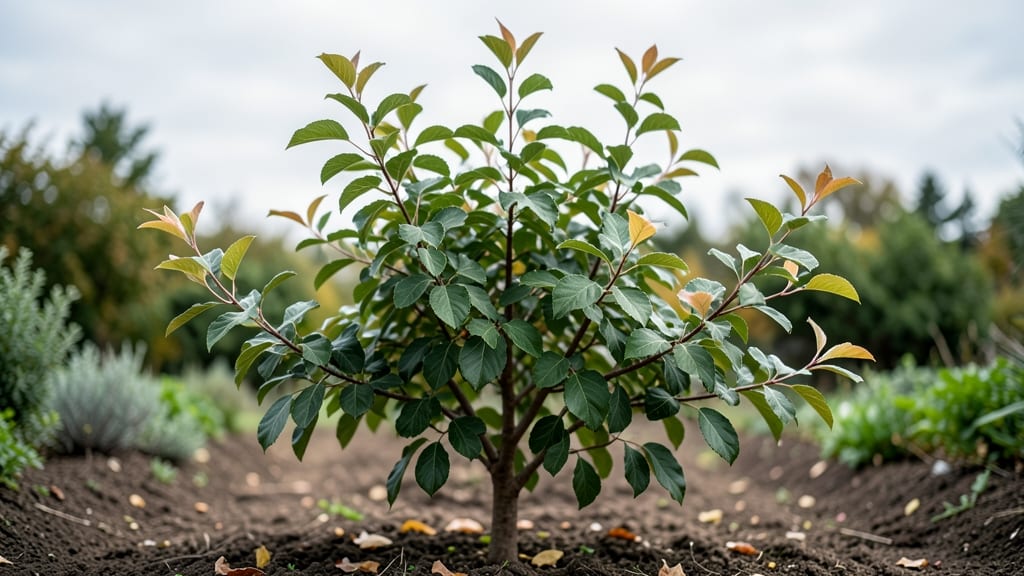
Santa Rosa plum tree leaves hold the secret to healthier fruit and fewer pests—if you know how to read them. 🌿 I’ve spent years watching these trees, and the first sign of trouble often appears in the foliage: yellowing, curling, or mysterious spots that seem to appear overnight.
The good news? Most issues are preventable with the right care.
Start by inspecting leaves for common problems like aphids, powdery mildew, or nutrient deficiencies—each has a distinct look. Yellowing between veins often means iron deficiency, while sticky leaves scream for a good spray of soapy water to knock back pests.
Prune strategically in late winter to improve airflow, reducing humidity where fungi love to thrive.
📚 In This Guide
- What you need
- Instructions
- Tips and common mistakes
- Wrapping up and next steps
What you need
- ● Pruning shears: Bypass pruners (sharp, 6–8" blades) for clean cuts—1 pair (sterilize with rubbing alcohol between trees!).
- ● Loppers: Long-handled (24–36") for thicker branches—1 pair (test for leverage before use!).
- ● Gloves: Heavy-duty, cut-resistant (e.g., Mechanix Wear) to protect hands—1 pair.
- ● Disposable bags: Heavy-duty, 30–50 gallon for leaf debris—2–3 bags.
- ● Ladder: Sturdy, extendable (12–16 ft) if tree exceeds 8 ft—1 (safety first: secure it to the tree!).
- ● Rake: Medium-tooth, 4–5 ft for sweeping up fallen leaves—1.
- ● Hose & nozzle: Adjustable spray tip for rinsing tools/leaves—1.
- ○ Safety goggles: Protect eyes from debris—1 pair (optional but highly recommended).
- ○ Ear protection: If using a leaf blower (optional for cleanup).
- ● Pest control spray: Neem oil or insecticidal soap (if treating pests)—1 bottle.
- ● Sharpie/marker: Label bags for composting vs. disposal—1.
- ● First-aid kit: For minor cuts/scrapes—1 small kit.
Step-by-step guide to harvesting Santa Rosa plum tree leaves
Here's how to prune and manage your Santa Rosa plum tree's leaves for peak health and pest prevention.
🌿 Step 1: Identify and Remove Diseased or Damaged Leaves
Start by examining your Santa Rosa plum tree for any leaves showing signs of disease, pest damage, or physical harm. Look for yellowing, brown spots, holes, or leaves that appear curled or distorted—these are clear signs something's wrong. I always grab a small pruning shears and a bucket to collect these leaves as I go.
Remove any leaves with visible signs of fungal infections or insect infestations first. These include leaves with powdery white coatings (likely powdery mildew) or sticky residue (aphids or scale insects). Place them in a sealed bag to dispose of properly—never compost diseased plant material. Healthy leaves should be a vibrant green with no unusual markings.
✂️ Step 2: Prune for Airflow and Light Penetration
Next, focus on improving airflow and sunlight exposure throughout the tree. Use sharp pruning shears to trim back any dense growth or branches that are crossing or rubbing against each other. This not only prevents physical damage but also reduces humidity in the canopy, which helps prevent fungal diseases.
Look for branches that are growing inward or upward—these block light and air from reaching the inner leaves. Aim to create an open, vase-like shape. Cut just above a bud or outward-facing leaf to encourage healthy new growth. Remember, you're not trying to drastically reduce the tree's size, just improve its overall structure and health.
💧 Step 3: Collect Healthy Leaves for Pest Control
Once you've addressed the unhealthy leaves and pruned for better airflow, it's time to harvest healthy leaves for natural pest control. Santa Rosa plum leaves contain compounds that can help deter pests when used properly. Select leaves that are fully mature but not yet showing signs of aging or yellowing.
Use clean, sharp scissors or pruning shears to cut leaves at their base, being careful not to damage the branch. Place the collected leaves in a paper bag—this allows them to dry naturally. You'll want to gather about 4 cups of fresh leaves (enough to fill a quart-sized bag) for effective pest control applications. Store the bag in a dry, shaded area until completely dry.
🪴 Step 4: Apply Leaf Tea for Natural Pest Prevention
After the leaves are completely dry (typically 1-2 weeks), crush them into a coarse powder using a mortar and pestle or by placing them in a sealed bag and crushing with a rolling pin. Place 1 cup of the dried leaf powder in a 1-gallon container and fill with warm water. Let this mixture steep for 24 hours, stirring occasionally.
Strain the liquid through a fine mesh sieve or cheesecloth, pressing gently to extract all the beneficial compounds. This leaf tea can be diluted with water (1 part tea to 3 parts water) and sprayed on the tree's leaves, focusing on the undersides where many pests hide. Apply in the early morning or late afternoon to avoid burning the leaves in direct sunlight.
☀️ Step 5: Maintain Regular Pruning and Monitoring
To keep your Santa Rosa plum tree healthy, establish a regular pruning schedule. I recommend light pruning in early spring (just before bud break) and again in late winter to remove any dead or diseased wood. This maintains the tree's shape and encourages new, vigorous growth.
Monitor your tree throughout the growing season for any new signs of pests or diseases. Keep an eye out for early indicators like tiny webs, chewed leaves, or unusual spots. The more proactive you are, the easier it is to manage any issues before they become serious. Regular pruning and leaf collection for pest control will keep your Santa Rosa plum tree thriving for years to come.
Tips & tricks for pruning and pest control with Santa Rosa plum leaves
Here's what nobody tells you about getting the most out of your Santa Rosa plum tree's leaves—and avoiding common pitfalls along the way.
Tool Prep: Sterilize your pruning shears with rubbing alcohol before you start. I learned this the hard way after transferring fungal spores from diseased branches to healthy ones. Clean tools between cuts when removing infected leaves, and wipe them down again after finishing. This simple step can prevent spreading infections throughout your entire tree.
Timing Secret: The early spring pruning (just before bud break) is your best chance to remove winter-damaged branches and encourage vigorous new growth. If you miss this window, don't worry—late winter pruning still works, but you'll want to focus more on removing dead wood than shaping. The key is to prune when the tree is dormant but just about to wake up, giving it maximum energy to recover.
Leaf Selection Tip: When harvesting healthy leaves for pest control, focus on the middle-aged leaves—not the youngest or oldest. The youngest leaves are still developing their full chemical defenses, while the oldest leaves may already be breaking down. Look for leaves that are fully expanded but still firm to the touch, with a deep green color and no visible veins turning yellow. These are the ones packed with the most beneficial compounds.
Drying Strategy: Spread your collected leaves out in a single layer on a clean, dry surface rather than piling them in the bag. This allows for better air circulation during the drying process, which typically takes 1-2 weeks. If you're in a humid climate, consider using a food dehydrator set to its lowest setting to speed up the process. Just make sure the leaves are completely dry before crushing—they should crumble easily between your fingers with no moisture.
Pro Tips for Santa Rosa Plum Tree Leaves
- Here's what nobody tells you about getting the most out of your Santa Rosa plum tree's leaves—and avoiding common pitfalls along the way.
- Tool Prep: Sterilize your pruning shears with rubbing alcohol before you start.
- Timing Secret: The early spring pruning (just before bud break) is your best chance to remove winter-damaged branches and encourage vigorous new growth.
Frequently asked questions
Got questions about Santa Rosa plum tree leaves?
Here are answers to the most common ones to help you navigate pruning, pest control, and leaf management like a pro!
When is the best time to prune Santa Rosa plum trees for leaf management?
The ideal time to prune is late winter or early spring (before buds swell) or summer after harvest. Avoid pruning during dormancy (fall/winter) to prevent disease entry. Light pruning can also happen in early autumn if needed, but avoid heavy cuts then.
How do I identify pests or diseases on Santa Rosa plum tree leaves?
Watch for yellowing leaves (aphids, spider mites), brown spots (fungal diseases like leaf spot), or holes/chewed edges (caterpillars). Inspect undersides of leaves too! Use a magnifying glass for tiny pests. Neem oil or insecticidal soap works for mild infestations.
Can I use Santa Rosa plum tree leaves for compost or mulch?
Yes! Healthy leaves make great mulch (reduce weeds, retain moisture) or compost (chop them first). Avoid diseased or pest-ridden leaves—they can spread issues. Spread a thin layer around the base (3–4 inches) and keep moist for best results.
Why are my Santa Rosa plum tree leaves turning yellow or dropping early?
Yellowing leaves often signal overwatering, nutrient deficiency (like iron or nitrogen), or root stress. Check soil moisture (should be dry 1–2 inches down) and test pH (ideal: 6.0–7.0). Yellow edges? Likely chlorosis—amend soil with compost or iron supplements.
Are there alternatives to pruning for managing leaf growth?
If pruning feels overwhelming, try thinning (remove 10–20% of dense growth) or selective leaf removal (snip only diseased/damaged leaves). For pests, introduce beneficial insects (like ladybugs) or use organic sprays. Regular mulching also improves leaf health by retaining moisture.
Wrapping up and next steps
Harvesting Santa Rosa plum tree leaves for pruning and pest control is a rewarding way to keep your tree thriving while reducing waste.
By following the right techniques—like timing your harvest, using the proper tools, and monitoring for pests—you’ll ensure a healthier tree and a bountiful harvest. Now’s the perfect time to roll up your sleeves and give your plum tree the care it deserves!
Ready to take action? Start with a quick inspection of your tree and gather your supplies—then dive in! Whether you’re pruning for shape or collecting leaves for natural pest control, every step brings you closer to a lush, productive Santa Rosa plum tree. 🌿✨