
Pruning
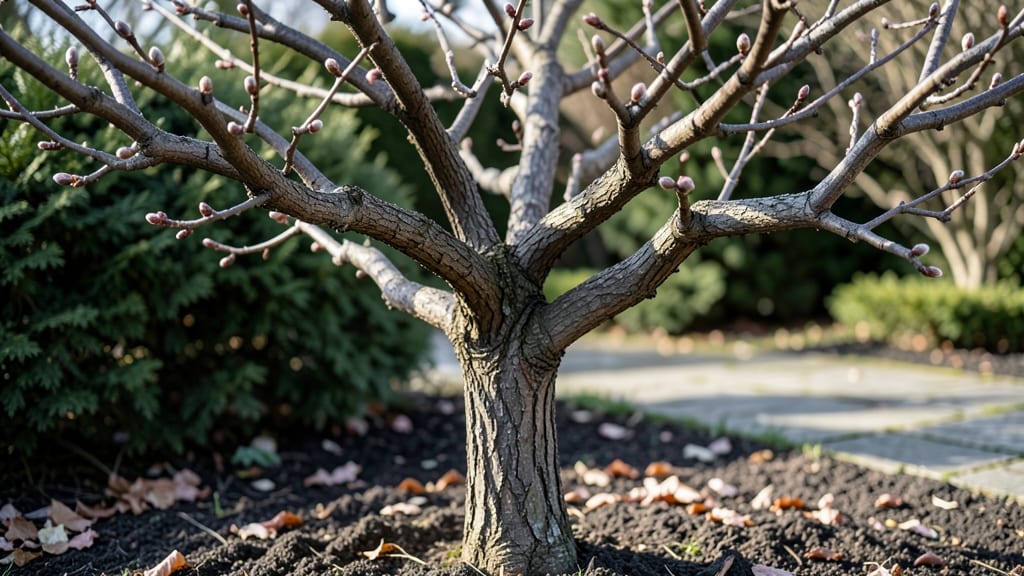
During a plum tree's dormant season—typically late winter or early spring before buds swell—you should prune to promote healthier growth, stronger blooms, and better fruit production by removing dead, crossing, or diseased branches while avoiding over-pruning that could stress the tree.
The dormant season is your plum tree's natural recovery period when it's not actively growing, making it the perfect time to prune without causing unnecessary stress. 🌿 This is when the tree's energy is focused inward, allowing it to heal cuts more efficiently and redirect resources to new growth.
I recommend checking your local climate zone—most plum trees in the U.S. can be pruned between February and early March, but colder regions may need to wait until late March or even April when frost danger has passed.
What sets this time apart is the tree's reduced sap flow, which minimizes bleeding and disease risk. The key is to act before buds begin to swell—this is your window to shape the tree's structure for the coming season.
For best results, I always use sharp, sterilized pruners and make cuts just outside the branch collar to encourage proper healing.
💡 In This Article
- Understanding Plum Tree Dormancy and Its Pruning Window
- Step-by-Step Guide to Pruning a Dormant Plum Tree
Understanding plum tree dormancy and its pruning window
Plum trees enter dormancy as a survival mechanism when temperatures drop and daylight shortens, triggering a metabolic slowdown. During this phase, the tree's growth hormones (like auxins) decrease dramatically, while stress hormones (abscisic acid) increase to protect against cold damage.
This biological shift creates an ideal window for pruning because the tree isn't actively photosynthesizing or transporting nutrients through its system, reducing stress from cuts. The real magic happens when you prune at 50-60°F temperatures—this range ensures the tree is dormant but not yet preparing for spring growth.
Climate zones play a crucial role in determining the perfect pruning window. In warmer regions (USDA zones 7-10), plum trees may begin bud swelling as early as February, while in colder zones (3-6), you might need to wait until late March or April when frost danger has passed.
The key biological cue is the absence of swollen buds—if you see buds starting to plump up, it's too late.
I've found that pruning too early in cold climates can expose fresh cuts to late frosts, while waiting too long risks stimulating premature growth that could be damaged by unexpected cold snaps.
Sap flow dynamics explain why dormancy is the best time to prune. When a tree is actively growing, cutting branches creates "bleeding" as sap escapes from the wound, which can attract pests and diseases. During dormancy, this sap flow is minimal, allowing cuts to seal naturally within 2-4 weeks.
This natural sealing process is critical for preventing silver leaf disease—a fungal infection that thrives in fresh wounds. The tree's reduced metabolic activity also means it can allocate more energy to healing rather than supporting new growth.
What most gardeners overlook is how pruning during dormancy affects the tree's flowering pattern. Plum trees produce flowers on one-year-old wood, so strategic pruning encourages robust growth from last season's branches.
By removing up to 25% of the tree's canopy during dormancy, you're actually setting the stage for next year's fruit production. The tree interprets these cuts as a signal to redirect energy toward developing strong, fruitful branches rather than maintaining unnecessary growth.
Here's a practical tip: Use a 10x magnifying lens to examine branch collars before making cuts. Healthy collars have a slight ridge where the branch meets the trunk—this is where you should make your cut at a 45-degree angle just outside the collar.
The angle helps water runoff, while staying outside the collar prevents damaging the tree's natural healing tissues. I always sterilize my pruners with rubbing alcohol between cuts to prevent spreading bacterial cankers, which are particularly problematic for plum trees.
Seasonal variations also affect pruning success. In regions with unpredictable weather, like the Pacific Northwest, I recommend waiting until you've seen three consecutive days above 40°F with no frost forecast. This gives you confidence the tree has fully broken dormancy but hasn't yet begun active growth.
The window between these conditions is typically 2-3 weeks, so don't wait until the last minute—proper planning ensures you don't miss your opportunity to shape the tree for optimal fruit production.
Remember that plum trees are particularly sensitive to over-pruning. While you might be tempted to give your tree a dramatic makeover, removing more than 25% of the canopy in one season can shock the tree and reduce flowering.
The goal is to maintain an open center that allows sunlight to reach all branches—this sunlight penetration is what triggers the hormonal changes needed for abundant blooming.
Think of dormancy pruning as giving your tree a spa day: you're removing the dead weight so it can focus its energy on becoming stronger and more productive. 🌱