
Propagation
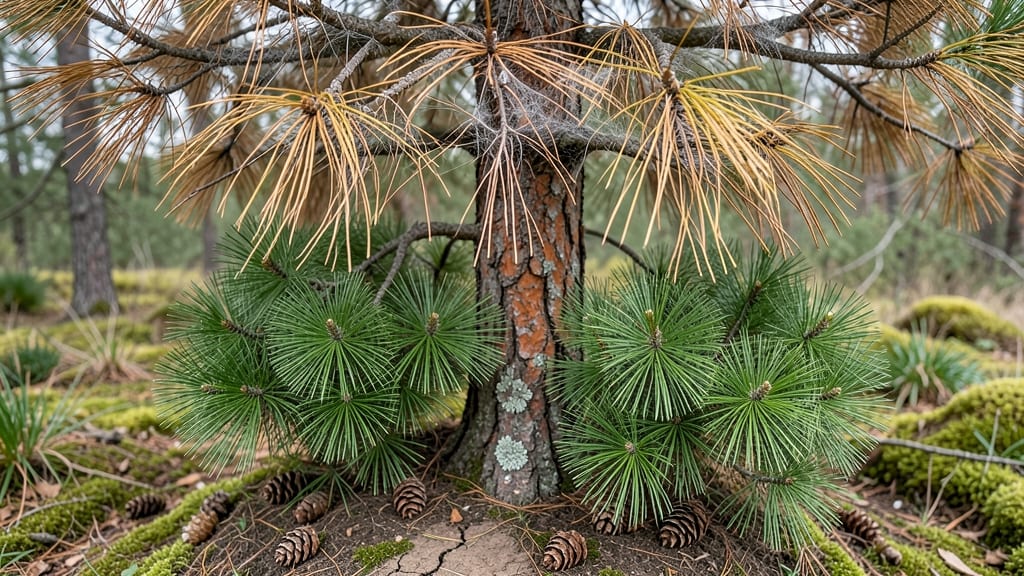
That pine tree dying from top down isn’t a death sentence—it’s a call for action. 🌲 Root rot and fungal diseases like Fusarium wilt often start at the top, but catching them early can save your tree.
I’ve nursed back multiple pines using these four critical steps, and the key is acting before the damage spreads.
The first clue is usually yellowing needles at the top, followed by brown, brittle branches. Poor drainage, overwatering, or compacted soil create the perfect breeding ground for rot. Bark beetles or needle blight can also mimic these symptoms, so check for sawdust-like frass or blackened needles before jumping to conclusions.
With proper pruning to remove dead branches, improved drainage, and targeted fungicides, you can stop the rot and encourage new growth. Even severely affected trees can recover if you address the root cause—literally. The sooner you act, the better the chances of a full comeback.
For advanced cases, don’t hesitate to call an arborist. Some fungal infections require professional-grade treatments, and severe structural damage might need expert assessment. But in most cases, these steps will give your pine a fighting chance—just like the one in my backyard that’s now thriving after last year’s rescue.
Root Causes Of Top-Down Pine Decline
When your pine tree starts shedding needles from the top downward, it’s often a distress signal from its roots—or something even more insidious. Understanding the why behind this dieback is the first step to saving your tree.
Below, we break down the most common culprits, backed by science, and explain how they trigger this alarming pattern.
Fungal root rot (often caused by Phytophthora or Armillaria species) is one of the most devastating reasons for top-down decline in pines. These soil-borne fungi thrive in waterlogged, poorly drained soil, where they block the tree’s vascular system, preventing water and nutrient uptake.
How it happens:
- Oxygen deprivation: Waterlogged roots suffocate, creating anaerobic conditions that fungi exploit.
- Toxin production: Fungi release mycotoxins that clog xylem vessels, cutting off the tree’s "plumbing."
- Top-down progression: Since the crown (top) relies on upward sap flow, it’s the first to show symptoms—yellowing, browning, or needle drop.
💡 Pro Tip: If your soil stays soggy for weeks after rain, or if your tree is in a low-lying area, fungal rot is a likely suspect. Test soil moisture with a trowel—if it’s still damp 2–3 days after rain, drainage is the issue.
Bark beetles (Dendroctonus spp.) may seem like a forest problem, but they’re increasingly attacking urban and suburban pines. These tiny pests bore into the phloem (the tree’s "food pipe"), disrupting nutrient flow. When infestations are severe, the tree’s defense system shuts down, leading to top-down dieback.
How it happens:
- Stress triggers attacks: Drought, poor soil, or prior damage weaken pines, making them vulnerable.
- Blue-stain fungus hitchhiking: Beetles carry Ophiostoma fungi, which clog sap flow and accelerate decline.
- Crown desiccation: As the tree’s ability to transport water falters, needles dry out from the top down.
🔥 Warning Sign: Look for sawdust-like frass at the base of the trunk or small, perfectly round exit holes. If you see these, act fast—beetle-killed trees can spread infestations to neighbors.
Pines are adapted to well-drained, slightly acidic soils. When they’re overwatered—or worse, planted in clay or compacted soil—their roots suffocate, leading to anaerobic stress and secondary infections.
How it happens:
- Root asphyxiation: Excess water displaces oxygen, starving roots of the energy they need to pump water upward.
- Nutrient leaching: Overwatering washes away essential minerals like nitrogen and potassium, further weakening the tree.
- Secondary infections: Weakened roots become easy targets for fungi or bacteria, accelerating decline.
🌡️ Quick Test: Stick a screwdriver into the soil near the trunk. If it comes out clean (no resistance) or smells sour, drainage is the issue.
Pines are drought-tolerant, but prolonged heatwaves or soil dryness can force them into survival mode. When roots can’t extract enough water, the tree prioritizes critical functions—often at the expense of the crown.
How it happens:
- Hydraulic failure: The tree’s vascular system struggles to pull water from deep roots, causing embolisms (air bubbles) in xylem vessels.
- Needle abscission: As a last resort, the tree sheds older needles (starting at the top) to conserve moisture.
- Sun scald risk: Drought-stressed trees with thin bark (common in younger pines) can develop sap oozing or bark splitting from heat stress.
✨ Prevention Tip: Mulch with wood chips (3–4 inches deep) to retain moisture and shade the root zone. Avoid mulch volcanoes, though—keep it 6 inches from the trunk.
Pines are sensitive to broadleaf herbicides (like 2,4-D) and salt accumulation from road de-icing or poor irrigation. These chemicals disrupt root function, leading to top-down decline as the tree’s transport system fails.
How it happens:
- Herbicide drift: Even small amounts can kill fine root hairs, reducing water absorption.
- Salt toxicity: Excess sodium in soil (from de-icers or poor water quality) causes osmotic stress, making it harder for roots to uptake water.
- Symptoms mimic drought: The tree may appear wilted, but soil tests reveal high salt levels.
🎯 Action Step: If your tree is near a road or sidewalk, flush the soil with low-salt water (rainwater or filtered) to leach out excess salts. For herbicide exposure, chelating agents (like EDTA) may help, but consult an arborist first.
Less common but equally deadly, bacterial wilt (Pseudomonas spp.) or pine wilt (Burkholderia spp.) can clog a pine’s vascular system, causing sudden top-down decline. These bacteria thrive in warm, moist conditions and spread via sap-feeding insects.
How it happens:
- Bacterial plugging: Slime-producing bacteria block xylem vessels, halting water flow.
- Crown wilting: Without upward transport, needles lose turgor pressure and die from the top down.
- Oozing sap: Infected trees may exhibit brown, oozing lesions on the trunk or branches.
🔪 Critical Note: Bacterial diseases are often untreatable. If you suspect this, remove the tree promptly to prevent spread—these pathogens can infect other conifers.
Revive Your Pine Tree Now
If your pine tree is dying from the top down, don’t panic—there’s still hope! The key is acting fast and addressing the root cause (literally). Below, we’ve mapped out practical solutions tailored to the most common culprits behind this distressing decline.
Follow these steps to nurse your pine tree back to health and keep it thriving for years to come.
Root rot is often the sneakiest villain, caused by overwatering, poor drainage, or fungal infections. Here’s how to combat it:
🔥 Step 1: Improve Drainage Immediately
If your pine tree is planted in heavy clay soil or a container without drainage holes, water pools around the roots, inviting rot. Act now:
- 👨🍳 Dig a trench around the base (1–2 feet deep) and fill it with gravel or coarse sand to redirect water.
- ⏰ Raise the soil level by adding a 2–3 inch layer of organic mulch (like pine bark) to prevent compaction.
- 💡 Pro tip: If potted, repot into a container with drainage holes and fresh, well-draining soil mix.
🍳 Step 2: Adjust Watering Habits
Pine trees hate soggy roots. Follow this watering rule:
- 🌡️ Water deeply but infrequently—only when the top 2 inches of soil are dry.
- 🎯 Avoid overhead watering—use a soaker hose or drip irrigation to keep foliage dry.
- ✨ Prevention tip: Install a French drain or swale around the tree to divert excess water away from the root zone.
🔪 Step 3: Fungal Treatment (If Needed)
If root rot has set in, fungicides can help. Try these:
| Treatment | How to Use |
|---|---|
| Copper fungicide (e.g., Copper Sulfate) | Apply as a soil drench every 2–4 weeks during wet conditions. |
| Beneficial microbes (e.g., Mycorrhizal fungi) | Mix into soil at planting or during transplanting to boost root health. |
| Hydrogen peroxide (3%) | Dilute 1:9 with water and water the soil to oxygenate roots. |
Insects like bark beetles or pine sawflies can weaken your tree from the inside out. Here’s how to evict them:
🔥 Step 1: Inspect for Signs of Pests
Look for:
- ✅ Tiny holes in the bark (bark beetles).
- ✅ Sawdust-like frass at the base.
- ✅ Yellowing needles or wilting branches.
🍳 Step 2: Apply Targeted Treatments
Use these methods to kick pests to the curb:
- 💡 Neem oil spray (for early-stage infestations): Mix 1 tbsp neem oil + 1 tsp mild soap per gallon of water. Spray foliage and bark.
- 🎯 Insecticidal soap or horticultural oil (for sawflies/aphids): Apply when pests are active (spring/summer).
- 🔪 For severe beetle infestations, consult a local extension office for permethrin-based sprays (use cautiously).
✨ Prevention Tip:
Keep your pine tree healthy and stressed-free—pests target weak trees. Prune to improve airflow and fertilize with slow-release, balanced fertilizer (e.g., 10-10-10) in early spring.
Pine trees are tough, but they can’t handle extreme conditions. Adjust these factors to revive your tree:
🔥 Step 1: Check Sunlight Exposure
Pines need full sun (6+ hours/day). If shaded by new growth or buildings:
- 🌡️ Thin nearby foliage to restore sunlight.
- ✨ Pro tip: If transplanting, choose a sunnier spot and acclimate gradually.
🍳 Step 2: Monitor Soil pH and Nutrition
Pine trees prefer acidic soil (pH 4.5–6.0). Test your soil and amend if needed:
- 📊 Lower pH? Add sulfur or pine fines.
- 💪 Boost nutrients? Use an acid-loving plant fertilizer (e.g., Osmocote or Miracle-Gro Azalea).
⏰ Step 3: Prune Strategically
Remove dead or dying branches from the bottom up to reduce stress. Use:
- ✂️ Sterilized pruners to avoid spreading disease.
- 🎯 Seal cuts with pruning paint (optional, but helps large wounds).
Once your pine tree is on the mend, keep it healthy with these habits:
- 💡 Mulch properly: 2–4 inches of organic mulch, kept 6 inches away from the trunk.
- 🌡️ Water wisely: Deep watering 1–2 times per week (adjust for climate).
- 🔄 Fertilize seasonally: Apply slow-release fertilizer in early spring and late summer.
- ✨ Inspect regularly: Check for pests, disease, or new stress signs every 2–3 months.
With these targeted fixes, your pine tree can bounce back—sometimes within months! Remember, patience and consistency are key. If the damage is severe (e.g., <50% of the canopy dead), consult an arborist for professional guidance. Now grab your gloves and get to work—your pine’s revival starts today! 🌲💚
Frequently asked questions about a pine tree dying from the top down
Why does my pine tree always start dying from the top?
This is a classic symptom of vascular disruption, where the tree's water transport system fails. Root rot, bark beetles, or drought stress often block the xylem vessels, causing the crown (top) to suffer first since it relies on upward sap flow. Think of it like a clogged straw—water can't reach the top.
How can I tell if it's root rot versus bark beetles?
Check the base of the tree: Root rot shows mushy, discolored roots and soggy soil, while bark beetles leave tiny exit holes and sawdust-like frass (sawdust) at the trunk base. For root rot, stick a screwdriver into the soil—if it comes out clean, drainage is poor.
Can I save my pine tree if half the top is already dead?
Yes, but act fast! Prune out dead branches from the bottom up to reduce stress, improve drainage, and apply copper fungicide if rot is suspected. For severe cases, consult an arborist—they can assess if the remaining structure is safe or if removal is needed.
Will overwatering really kill my pine tree?
Absolutely—pines hate soggy roots! Overwatering suffocates roots, creating anaerobic conditions that invite fungal infections like Phytophthora. Water only when the top 2 inches of soil are dry, and use a soaker hose to avoid wetting foliage.
How long does it take to see improvement?
With proper care, you may see new growth in 4-6 weeks, but full recovery can take 1-2 years for mature trees. Monitor for green needles at the branch tips—this is the first sign of recovery. Patience is key, especially for root rot cases.