
Diseases
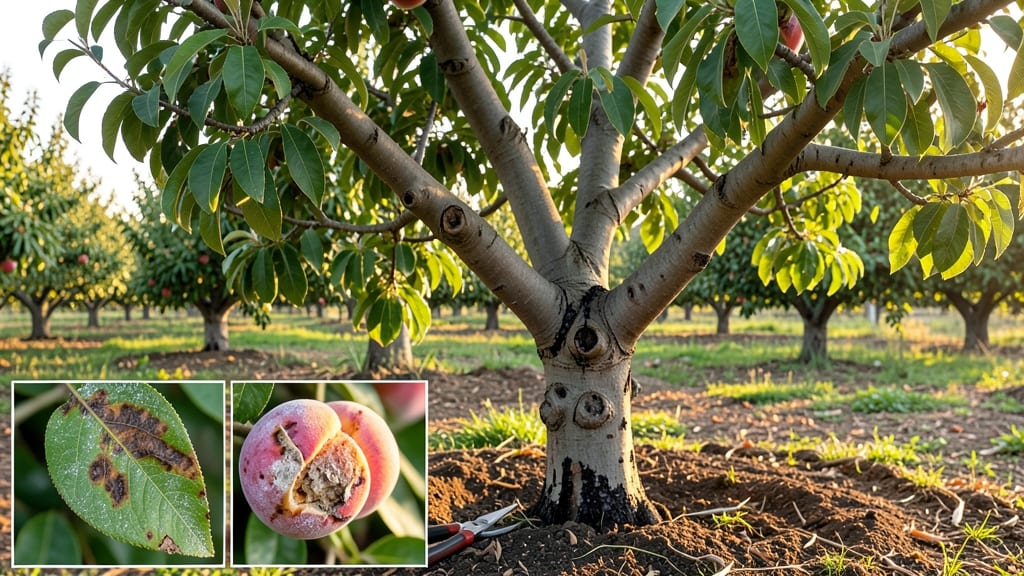
Most of these diseases start with tiny signs—yellowing leaves, strange spots, or odd growths—that you’ll miss if you’re not looking. The good news? Catching them early means you can stop them with simple fixes like pruning, fungicides, or even just better watering habits.
I’ve included the most effective organic treatments that actually work.
By the end, you’ll recognize the difference between harmless sap beetles and peach leaf curl, know when to call in a professional, and have a plan to keep your tree thriving. No more guessing games—just clear visuals and actionable steps for a healthier orchard.
Whether you’re dealing with a young tree or a mature one that’s seen better days, this guide covers the most common issues in your region. Let’s get your peach tree back to producing those sweet, juicy fruits it’s famous for.
Root Causes Behind Tree Ailments
Understanding why peach trees develop diseases is the first step in preventing them. These issues rarely occur in isolation—they’re often the result of a perfect storm of environmental, biological, or cultural factors.
Below, we break down the primary triggers behind peach tree diseases, so you can take proactive steps to protect your orchard.
Fungi are the #1 culprit behind peach tree diseases, thriving in warm, moist conditions.
Many fungal infections, like **brown rot (Monilinia fructicola) or leaf spot (Cercospora), spread via: - Spores in the air or water: Wind, rain, and even splashing irrigation can carry fungal spores from infected leaves, fruit, or soil onto healthy tissue. - Infected plant debris: Old mummified fruit, fallen leaves, or pruned branches left on the ground act as overwintering hosts, releasing spores when conditions are right. - Wounds on bark or fruit**: Fungal spores exploit any opening—whether from hail, insects, or improper pruning—to penetrate the tree’s defenses.
💡 Pro Tip: Remove and destroy infected debris immediately (don’t compost it!). Space trees properly for airflow to reduce humidity pockets where fungi love to grow.
Peach trees are resilient, but extreme or inconsistent conditions weaken their immunity, making them vulnerable to diseases. Key stressors include:
| Factor | How It Weakens Trees | Actionable Fixes |
|---|---|---|
| Excess Moisture | Soggy soil and prolonged leaf wetness (e.g., from rain or overhead watering) create ideal fungal breeding grounds. | Improve drainage, water at the base (not leaves), and mulch to regulate soil moisture. |
| Poor Air Circulation | Dense foliage or crowded trees trap humidity, slowing evaporation and encouraging fungal spread. | Prune to open the canopy, thin out branches, and avoid over-fertilizing with nitrogen. |
| Temperature Swings | Sudden shifts (e.g., cold snaps followed by heat) stress trees, making them susceptible to infections like **peach scab (Cladosporium carpophilum). | Choose disease-resistant varieties and mulch to insulate roots. |
| Drought Stress | Drought weakens trees, reducing their ability to fight off pathogens like bacterial leaf spot**. | Deep watering (1–2 inches per week) and drought-tolerant rootstocks help. |
🌡️ Warning Sign: If your tree’s leaves curl, yellow, or drop prematurely, it’s a red flag that environmental stress is compromising its health.
Insects and physical injuries don’t cause diseases directly, but they pave the way for pathogens.
Common culprits: - Sap-sucking insects (e.g., aphids, scale): Their feeding weakens leaves, making them prone to sooty mold or bacterial infections. - Borers (e.g., peach tree borers): They create tunnels in bark, giving fungi like canker a foothold. - Hail or mechanical damage: Bruised fruit or bark tears become entry points for brown rot or lecanicium canker.
🔪 Solution: Monitor for pests regularly, use reflective mulch to deter borers, and avoid heavy pruning during wet seasons to minimize wounds.
Even well-intentioned gardening practices can invite diseases.
Common offenders: - Overhead irrigation: Watering leaves (especially in the evening) extends moisture periods, perfect for fungal spores. - Improper pruning: Cutting too late in the season or leaving stubs invites bacterial canker or silver leaf disease. - Over-fertilizing with nitrogen: Excess nitrogen promotes lush, soft growth that’s more susceptible to infections. - Ignoring soil health: Compacted or nutrient-deficient soil stresses roots, making trees more vulnerable to root rots or armillaria.
✨ Game Changer: Sterilize pruning tools with rubbing alcohol between cuts, and mulch with wood chips (not plastic) to improve soil structure.
Fixing Peach Tree Diseases Fast
Peach trees are resilient, but when diseases strike, quick action can mean the difference between saving your harvest and losing your tree. Below, we’ve mapped out practical, step-by-step solutions for the most common fungal blights and pests, along with prevention tips to keep your tree thriving.
No fancy tools or chemistry required—just smart, hands-on care!
Fix: Prune and sanitize aggressively.
- 🔪 Step 1: Remove Infected Foliage Cut out all leaves with dark spots, holes, or yellowing edges. Dispose of them in a sealed trash bag (not compost)—this stops spores from spreading.
- 🧼 Step 2: Sterilize Tools Wipe pruners with 70% rubbing alcohol or a 10% bleach solution (1 part bleach to 9 parts water) between cuts to avoid cross-contamination.
- 🌱 Step 3: Thin Canopy for Airflow Bacterial diseases love humidity. Prune to open the tree’s center, letting sunlight and air circulate. Aim for 12–18 inches between branches.
- 💡 Prevention Pro Tip: Apply copper fungicide (like Copper Sulfate) every 2–3 weeks during wet seasons (spring/fall). For organic growers, neem oil spray (1 tbsp per gallon of water) works as a preventive barrier.
Fix: Copper sprays + winter prep.
- ❄️ Step 1: Late-Winter Copper Treatment As soon as buds swell (but before green tips appear), spray the entire tree with copper fungicide (follow label rates). Repeat once more 2 weeks later.
- 🌿 Step 2: Rake Up Debris Remove all fallen leaves—they harbor spores. Burn or trash them (don’t compost!).
- 🔄 Step 3: Post-Harvest Cleanup After fruit drops, prune out curled leaves and sanitize tools. This breaks the disease cycle for next year.
- 🎯 Prevention Tip: Plant resistant varieties like ‘Redhaven’ or ‘Elberta’. Avoid overhead watering—drip irrigation keeps foliage dry.
Fix: Fungicide schedule + cultural tweaks.
- 🍄 Step 1: Pre-Bloom Fungicide Apply sulfur-based fungicide (like Liqui-Cop) 2–3 times before buds open. Follow up with zinc sulfate sprays if scabs appear.
- 💦 Step 2: Water at the Base Scab thrives in wet leaves. Water trees at the soil level (not overhead) and avoid late-day watering to let foliage dry by sunset.
- 🌳 Step 3: Summer Pruning Remove scabbed fruit and leaves as soon as you spot them. Thin branches to reduce humidity pockets.
- ✨ Organic Hack: Mix 1 tsp baking soda + 1 tbsp horticultural oil + 1 drop dish soap per gallon of water. Spray every 10 days during wet spells.
Fix: Traps + pruning + oil sprays.
- 🕵️♂️ Step 1: Set Up Pheromone Traps Hang peach twig borer traps (available at garden centers) in early spring to catch adults before they lay eggs.
- 🔪 Step 2: Prune Damaged Branches Cut out any branches with sawdust-like frass (borer poop) or exit holes. Burn or bag them immediately.
- 🌿 Step 3: Apply Horticultural Oil In late winter or early spring, spray dormant oil on the tree. This smothers eggs and larvae before they hatch.
- 💡 Prevention Tip: Wrap trunks with tree guard (plastic or metal) to block adult borers from laying eggs. Check wraps monthly for sawdust.
Fix: Sanitation + fungicide timing.
- 🍒 Step 1: Remove Infected Fruit Pick up every mummified peach (even on the ground) and burn or bag them. Spores can survive years in soil.
- 🍄 Step 2: Post-Harvest Spray After picking, spray the entire tree with captan or thiophanate-methyl fungicide to kill lingering spores.
- 🌱 Step 3: Summer Pruning Thin branches to improve airflow—wet fruit stays diseased longer. Remove sucker growth at the base.
- 🎯 Prevention Schedule:
- Pre-bloom: Copper fungicide
- Petal fall: Captan spray
- Post-harvest: Cleanup + fungicide
Want to avoid diseases next season? Follow this 5-step routine:
- 🌱 Early Spring: Apply dormant oil (for pests) + copper fungicide (for leaf curl/scab).
- 🍑 Pre-Bloom: Thin branches for sunlight/airflow and remove old mulch.
- 💦 Watering: Use drip irrigation and water early in the day.
- 🍒 Harvest Time: Pick fruit before it’s overripe and sterilize bins.
- ❄️ Winter: Rake up ALL debris, prune dead wood, and store tools clean.
🚨 Remember: The key to fixing peach tree diseases is speed + sanitation. The longer you wait, the harder it gets. But with these steps, your tree can bounce back—and next year’s harvest will be spotless and sweet! 🍑✨
Frequently asked questions
Why do peach tree leaves turn yellow and curl?
Yellowing and curling leaves are classic signs of peach leaf curl, caused by the fungus Taphrina deformans. This disease thrives in wet, cool springs and overwinters on infected buds. The curled, thickened leaves can't photosynthesize properly, weakening your tree. Early copper fungicide sprays (before buds swell) are the best defense.
Can I save my peach tree if it has brown rot?
Yes, but act fast! Brown rot (Monilinia fructicola) spreads rapidly, so remove all infected fruit and mummified peaches immediately and destroy them (don't compost). Prune for airflow and apply fungicide like captan during bloom and post-harvest. Repeat treatments may be needed for severe cases.
What's the difference between bacterial spot and fungal leaf spot?
Bacterial spot shows water-soaked, greasy spots with yellow halos, often on both leaf surfaces, while fungal leaf spot creates dry, brown centers with yellow borders. Bacterial spot thrives in warm, wet conditions and spreads faster—use copper sprays. Fungal spots respond better to fungicides like chlorothalonil.
How often should I inspect my peach tree for diseases?
Check your tree weekly during growing season (spring through fall), focusing on new growth, leaves, and fruit. Early detection is key! Pay special attention after rain or when humidity is high—these are peak times for fungal spores to activate. Keep a small notebook to track changes over time.
Are there disease-resistant peach tree varieties?
Yes! Varieties like 'Redhaven', 'Elberta', and 'Loring' show good resistance to common diseases. For organic growers, 'Contender' and 'Relenta' are excellent choices. Always check local nursery recommendations—the best varieties vary by region and climate.