
Trees
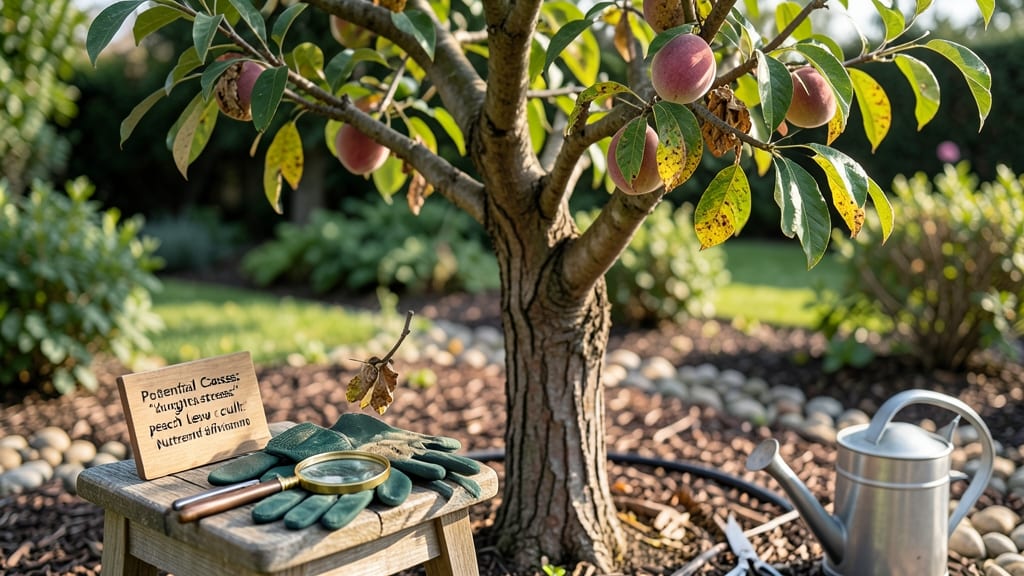
Your peach tree losing leaves isn’t always a death sentence—it’s often a cry for help you can fix fast. 🌳 I’ve watched trees go from bare branches to full, fruiting glory in just a few months by catching the right problem early.
The key is knowing whether your tree is thirsty, buggy, or sick—and acting before it’s too late.
Most leaf loss comes down to five culprits: drought stress, peach tree borers, fungal diseases like leaf curl, nutrient deficiencies, or even winter damage. The good news? Each has a targeted fix—whether it’s deep watering, pruning out borer holes, or a simple soil amendment.
I’ll walk you through how to spot the difference in just minutes.
By the end, you’ll have a plan to stop the leaf drop and restore your tree’s health—without losing next year’s harvest. Think of it like a checkup: the sooner you diagnose, the faster you can nurse it back to strength. Let’s get started with the quickest fixes first.
Pro tip: Grab a magnifying glass and inspect the undersides of leaves—that’s where pests and early disease signs hide. A little detective work now saves hours of guesswork later. Ready to save your tree?
Root Causes of Leaf Drop
Understanding why your peach tree is shedding leaves starts with identifying the primary stressors disrupting its health. Below, we break down the most common culprits—each with a clear scientific explanation and actionable insights to help you diagnose the issue accurately.
Peach trees (Prunus persica) are mesophytes, meaning they thrive in moderate climates but struggle with sudden temperature swings—especially when young or newly transplanted. Cold snaps, heatwaves, or frost damage can trigger abscission (the natural shedding of leaves) as the tree conserves energy.
- How it happens:
- Frost damage: Temperatures below 28°F (-2°C) can cause cellular rupture in leaves, leading to browning and drop within days.
- Heat stress: Prolonged exposure to 95°F+ (35°C+) disrupts photosynthesis, causing leaves to yellow (chlorosis) before falling.
- Transplant shock: Moving a tree without proper acclimatization (hardening off) stresses its root system, forcing leaf loss to redirect resources to root recovery.
- Actionable fix:
- Mulch heavily (3–4 inches of organic mulch) to insulate roots from temperature extremes.
- Use frost cloth in early spring or late fall for young trees.
- Water deeply before expected frost to protect cells (water acts as an insulator).
Peach trees are drought-tolerant but not drought-proof—improper watering is a top reason for leaf loss. Overwatering suffocates roots by cutting off oxygen, while underwatering causes wilting and abscission.
- How it happens: - Overwatering: Soggy soil leads to root rot (caused by Phytophthora or Fusarium fungi), which blocks nutrient uptake. Leaves turn yellow at the edges (scorching) before dropping. - Underwatering: Shallow roots dry out, triggering wilting (leaves droop, then fall).
Soil pulls away from the trunk, exposing roots to air. - Poor drainage: Clay-heavy soils trap water, creating anaerobic conditions that release ethylene gas—a plant hormone that accelerates leaf drop.
- Actionable fix:
- Check soil moisture 2 inches below the surface—water when dry (not bone-dry).
- Improve drainage by amending soil with compost or sand (avoid heavy clay).
- Water deeply but infrequently: 1–1.5 inches per week (more in extreme heat).
Pests like aphids, spider mites, peach tree borers, and Japanese beetles weaken trees by sapping nutrients or eating leaves directly, forcing the tree to shed foliage as a survival mechanism.
- How it happens: - Sap-suckers (aphids, mites): Inject toxins that cause yellow stippling or bronzing on leaves. Heavy infestations lead to premature drop. - Defoliators (beetles, caterpillars): Strip leaves, reducing the tree’s ability to photosynthesize.
Severe defoliation (50%+ loss) can kill a tree in one season. - Bacterial/fungal hitchhikers: Pests like peach tree borers introduce bacterial canker (Pseudomonas syringae), causing oozing cankers and leaf loss.
- Actionable fix:
- Inspect leaves (use a magnifying glass) for honeydew, webbing, or chewed edges.
- Spray neem oil (for soft-bodied pests) or kaolin clay (as a deterrent for beetles).
- Prune and destroy infested branches to prevent spread.
Peach trees require balanced nutrients—a deficiency in nitrogen, potassium, or micronutrients like zinc or magnesium can cause chlorosis (yellowing) and leaf drop.
- How it happens: - Nitrogen (N) deficiency: Leaves yellow uniformly (starting with older leaves) as the tree can’t produce chlorophyll.
Growth stalls. - Potassium (K) deficiency: Brown leaf edges (scorching) appear before drop, often paired with weak stems. - Zinc or magnesium deficiency: Interveinal chlorosis (yellowing between veins) on young leaves, caused by alkaline soil locking out nutrients.
- Actionable fix: - Test soil pH (ideal: 6.0–7.0 for peaches).
Adjust with sulfur (to lower pH) or lime (to raise pH). - Fertilize in spring with a balanced 10-10-10 formula, or use Epsom salt (magnesium sulfate) for yellowing leaves. - Avoid over-fertilizing nitrogen—it can burn roots and worsen leaf drop.
Diseases like peach leaf curl, bacterial spot, or powdery mildew attack leaves, causing discoloration, curling, or premature drop. These pathogens thrive in humid, wet conditions.
- How it happens: - Peach leaf curl (Taphrina deformans): Causes thickened, puckered leaves that turn red/purple before falling.
Spreads via rain splashes in winter. - Bacterial spot (Xanthomonas spp.): Creates small, greasy spots with yellow halos that expand and drop leaves. - Powdery mildew: White, dusty coatings block sunlight, leading to yellowing and drop.
- Actionable fix:
- Prune and dispose of infected leaves (do not compost).
- Apply copper fungicide (for bacterial spot) or neem oil (for mildew) before bud break.
- Space trees for airflow to reduce humidity around foliage.
Even healthy trees can lose leaves due to physical or chemical stress from their surroundings.
- How it happens:
- Windburn: Desiccates leaves (dries them out), causing brown, crispy edges—common in exposed locations.
- Air pollution (ozone, sulfur dioxide): Causes stippling or interveinal necrosis (dead spots between veins).
- Soil toxicity: High salt levels (from fertilizers or poor water) or metal contamination (e.g., copper) disrupt nutrient uptake.
- Actionable fix:
- Windbreaks: Plant fast-growing shrubs (like privet) as a barrier.
- Flush soil with water if salt buildup is suspected (test with a soil conductivity meter).
- Avoid synthetic fertilizers near the tree—opt for organic matter instead.
Moving a peach tree (even young ones) severely disrupts root systems, leading to transient leaf drop as the tree redirects energy to regrow roots.
- How it happens:
- Root pruning: Cutting roots during transplanting reduces water/nutrient absorption, causing wilting and drop.
- Girdling roots: Roots growing in circles around the trunk strangle the tree, cutting off nutrient flow.
- Improper planting depth: Burying the graft union (swollen area on the trunk) too deep suffocates the tree.
- Actionable fix:
- Dig a wide, shallow hole (twice as wide as the root ball) to minimize root disturbance.
- Water thoroughly before and after transplanting to reduce shock.
- Stake only if necessary (use soft ties to avoid trunk damage).
Revive Your Tree Fast
Now that you’ve pinpointed why your peach tree is shedding leaves, it’s time to take action! Below are practical, step-by-step solutions tailored to each cause—plus prevention tips to keep your tree thriving. Whether your tree is struggling from drought, pests, or disease, these fixes will help it bounce back.
If your tree is drooping or leaves are crispy/brown:
- 💧 Check the Soil Moisture
- Stick your finger 2–3 inches deep into the soil. If it’s bone-dry, water deeply. If soggy, hold off and improve drainage.
- 🚰 Water Correctly (Not Just a Sprinkle!)
- Deep watering (1–2 inches per week) is key. Use a soaker hose or drip irrigation to deliver water slowly to the roots.
- Avoid wetting leaves—this can encourage fungal diseases. Water at the base in the early morning.
- 🌿 Mulch Like a Pro
- Apply 2–4 inches of organic mulch (wood chips, straw) around the tree’s drip line (where branches extend). This retains moisture and regulates soil temperature.
- Keep mulch 6 inches away from the trunk to prevent rot.
✨ Prevention Tip:
- Install a rain gauge to track watering needs.
- In extreme heat, shade the tree with a lightweight cloth (like shade cloth) for a few hours a day.
If you see tiny bugs, webbing, or sawdust-like frass:
- 🔍 Inspect Closely
- Flip leaves over—aphids cluster on the undersides, while spider mites leave fine webs.
- Look for exit holes (borers) or chewed bark (caterpillars).
- 💦 Blast Them Away (Non-Toxic First!) - Spray with soapy water (1 tsp mild dish soap + 1 quart water) to suffocate soft-bodied pests like aphids. - Neem oil (1 tbsp per gallon of water + a drop of soap) disrupts feeding and reproduction.
Spray evenly on both sides of leaves.
- 🪰 Trap or Remove Larger Pests
- Borers? Prune and burn infested branches (don’t compost!). Apply beneficial nematodes to the soil.
- Caterpillars? Handpick them or use Bt (Bacillus thuringiensis), a natural bacteria that kills larvae.
✨ Prevention Tip:
- Encourage natural predators like ladybugs and lacewings by planting dill, fennel, or marigolds nearby.
- Prune regularly to remove hiding spots for pests.
If leaves have yellow spots, black speckles, or white powder:
- 🌡️ Improve Airflow
- Thin out dense branches to let sunlight and air circulate. Aim for 6–8 feet of space between trees.
- Remove fallen leaves (where spores hide) and sterilize pruners with rubbing alcohol.
- 💊 Treat with Fungicide (Organic Options First)
- Baking soda spray (1 tsp baking soda + 1 quart water + a drop of soap) helps with powdery mildew.
- Copper fungicide (follow label) works for leaf spot. Apply every 7–10 days until new growth appears.
- 🌧️ Adjust Watering Habits
- Water early in the day so leaves dry quickly.
- Avoid overhead sprinklers—use drip irrigation instead.
✨ Prevention Tip:
- Space trees properly (15–20 feet apart) to reduce humidity.
- Choose disease-resistant varieties like ‘Redhaven’ or ‘Elberta’ peach trees.
If leaves are pale, curled, or stunted:
- 📊 Test Your Soil
- Grab a DIY soil test kit (or send a sample to a local extension office) to check pH and nutrient levels.
- Peach trees prefer slightly acidic soil (pH 6.0–6.5).
- 🌿 Feed the Right Way
- For nitrogen deficiency (yellow lower leaves):
- Apply compost or aged manure around the drip line.
- Use a balanced fertilizer (10-10-10) in early spring.
- For zinc/magnesium deficiency (yellow between veins):
- Sprinkle Epsom salt (magnesium sulfate) around the base (1 tbsp per foot of tree height).
- For zinc, use zinc sulfate (follow package rates).
- For nitrogen deficiency (yellow lower leaves):
- 🌱 Boost Microbes
- Mycorrhizal fungi (available as powder) help roots absorb nutrients. Mix into soil at planting or in early spring.
✨ Prevention Tip:
- Mulch annually with compost to slowly release nutrients.
- Avoid over-fertilizing—too much can burn roots!
If leaves are scorched (brown edges) or wilting in heat:
- 🌞 Provide Shade (Temporarily)
- Use lightweight shade cloth (30–50%) during peak afternoon sun (1–4 PM).
- Reflective mulch (like white plastic sheeting) can reduce soil heat.
- 💦 Increase Humidity (For Heat Stress)
- Mist leaves in extreme heat (early morning only).
- Group plants together to create a microclimate.
If leaves are blackened or curled from cold:
- 🔥 Protect Young Trees
- Wrap the trunk with bubble wrap or tree guard in winter.
- Pile mulch higher (up to 6 inches) around the base.
✨ Prevention Tip:
- Plant in a sheltered spot (away from wind or frost pockets).
- Choose cold-hardy varieties like ‘Reliance’ or ‘Contender’ for colder climates.
Final Pro Tip: 🎯 Monitor your tree weekly—catching problems early (like pests or wilting) means faster recovery! With the right care, your peach tree will be back to lush and leafy in no time. 🍑🌿
Frequently asked questions
Why are my peach tree leaves turning yellow before falling?
Yellowing leaves before drop usually signals a nutrient deficiency (like nitrogen or magnesium) or overwatering. Check the soil: yellowing between veins often means magnesium deficiency (try Epsom salt), while uniform yellowing suggests nitrogen needs. For overwatering, let the top 2 inches of soil dry out between waterings.
Can peach trees recover if they lose all their leaves?
Yes, but it depends on the cause! If it’s dormancy or winter stress, new leaves will sprout in spring. For disease or severe pest damage, recovery takes 3–6 months with proper care. Focus on deep watering, pruning dead branches, and treating the root issue (like fungal infections) to encourage regrowth.
How do I tell if my peach tree has peach leaf curl disease?
Look for thickened, puckered leaves that turn red/purple before dropping—this is classic peach leaf curl. It spreads via rain splashes in winter, so prune and remove infected leaves immediately. Apply copper fungicide before bud break in late winter to prevent spread.
Is it normal for peach trees to lose leaves in summer?
Not typically! Healthy peach trees rarely drop leaves in summer unless stressed by extreme heat, drought, or pests. If leaves are crispy or wilting, water deeply (1–2 inches per week) and provide afternoon shade. For heat stress, mist leaves early in the morning to raise humidity.
What’s the fastest way to stop leaf drop from peach tree borers?
Borers tunnel under bark, so prune and burn infested branches immediately. Apply beneficial nematodes (like Steinernema carpocapsae) to the soil to kill larvae. For severe cases, use borer-specific insecticide (like bifenthrin) in early spring before adults emerge.