
Pruning
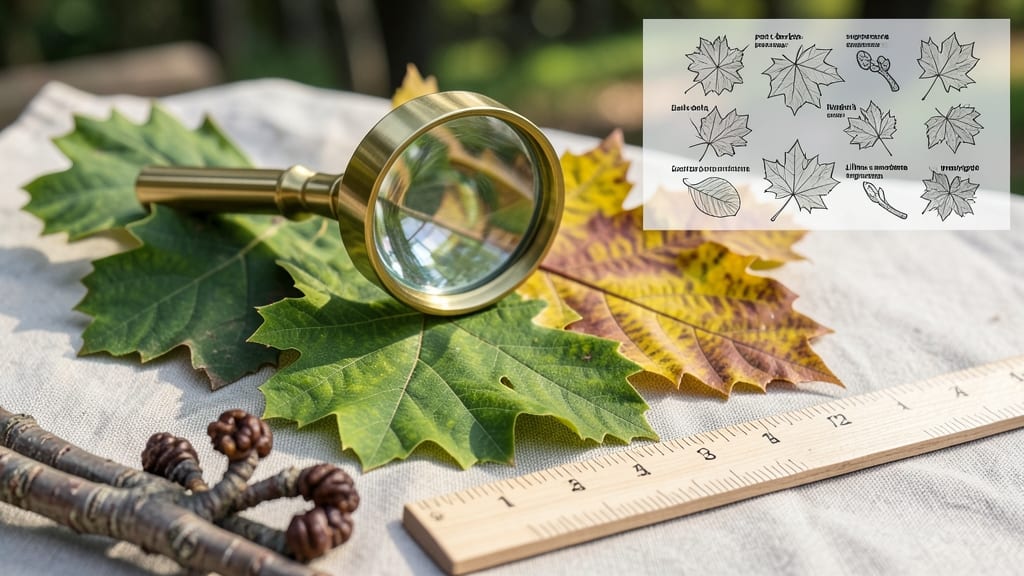
Mastering Oklahoma tree leaf identification saves you from guessing—and my first oak misidentification taught me that lesson the hard way. 🌳 The wrong pruning cut nearly took out a 30-year-old tree because I assumed it was a pecan instead.
Leaf shape, edge texture, and arrangement are all clues, and once you learn them, you'll spot these trees anywhere in the state.
Start with the big three: oaks have lobed leaves with pointed tips, pecans have long, smooth-edged leaves with a single point, and hickories have compound leaves with multiple leaflets.
A simple magnifying glass helps spot the subtle differences, like the fuzzy undersides of cottonwood leaves or the serrated edges of hackberry leaves. You'll quickly learn to match leaves to trees—like the star-shaped maple leaves or the needle-like leaves of eastern redcedar.
This skill helps with pruning, pest control, and even property value, because knowing your trees means you can care for them properly. For tricky cases, take a photo and compare it to local guides. The more you practice, the faster you'll recognize these species—even from a distance.
Now grab a notebook and start leaf-hunting!
📚 In This Guide
- What you need
- Instructions
- Tips and common mistakes
- Wrapping up and next steps
What you need
- ● Leaf samples: 20–50 fresh or dried leaves (from different trees in Oklahoma—no need to collect them all at once!)
- ● Field guide or app: A printed guide (e.g., Trees of Oklahoma) OR a smartphone app like LeafSnap or iNaturalist (free options available).
- ● Magnifying glass: 10x magnification (for examining leaf details like veins, edges, and texture).
- ● Ruler or measuring tape: 6-inch ruler (to record leaf length/width).
- ● Notebook or digital notes app: For logging observations (include date, location, and leaf characteristics).
- ● Camera or smartphone: With a macro setting (for high-quality photos of leaf undersides, buds, and bark).
- ● Plastic bags or pressboard: 2–3 small bags OR a leaf press kit (to preserve samples for later study).
- ● Field notebook: Waterproof, with pockets for storing samples (e.g., Rite in the Rain).
- ● Leaf identification key: A laminated quick-reference chart (available online or at garden centers).
- ● Gloves: Lightweight gardening gloves (to protect hands while handling thorny branches or rough bark).
- ● Tree bark rubbings kit: Crayons + paper (to capture bark textures for cross-referencing).
- ● Portable UV light: (For detecting fluorescence in leaves—fun for advanced ID!).
How to identify Oklahoma tree leaves like a pro
Mastering leaf patterns unlocks a whole new way to explore Oklahoma’s forests and parks.
🌿 Step 1: Learn the Key Leaf Shapes and Edges
Start with the basics: leaf shape and edge type. Oklahoma trees commonly have simple leaves (one blade per stem) or compound leaves (multiple leaflets). Simple leaves often have smooth, serrated, or lobed edges. For example, elm leaves have rough, jagged edges, while maple leaves have pointed lobes that look like fingers.
I always check the leaf attachment too—some leaves grow directly from the stem (alternate), while others grow in pairs (opposite). This is your first clue. Grab a notebook and sketch 3-5 leaves from each tree you encounter. Notice how oak leaves often have rounded lobes with bristle-tipped points, while hickory leaves have smooth, wavy edges.
☀️ Step 2: Observe Leaf Arrangement and Venation
Leaf arrangement (how they attach to the branch) and venation (vein patterns) are game-changers. Most Oklahoma trees have alternate leaves (one per node), but ash and buckeye have opposite leaves. Look closely at the veins: maple leaves have palmate veins (spreading from one point), while walnut leaves have pinnate veins (parallel lines).
Here’s a trick: Hold the leaf up to a window. The way light filters through the veins reveals hidden details. Sweetgum leaves have star-shaped veins, while black cherry leaves have smooth, parallel secondary veins. I’ve caught myself staring at leaves for minutes just to confirm this—it’s that fascinating.
📏 Step 3: Measure and Compare Leaf Size and Texture
Grab a ruler or your phone’s measuring app to note leaf length and width. Pecan leaves are long and narrow (up to 12 inches), while dogwood leaves are small and oval (3-5 inches). Texture matters too: sycamore leaves are rough and hairy on the underside, while redbud leaves are smooth and heart-shaped.
Run your fingers over the leaf surface. Hickory leaves feel almost waxy, while elm leaves have tiny, sharp teeth. If the leaf is compound, count the leaflets—black walnut has 11-23 leaflets, while honey locust has 10-20 pairs. Take photos of both sides of the leaf for reference later.
🌳 Step 4: Check for Distinctive Features Like Buds and Bark
Don’t stop at the leaf—buds and bark are your secret weapons. Elm buds are fuzzy and oval, while maple buds are pointed and smooth. Oak buds are often clustered in groups of 2-5. Even the bark tells a story: sycamore bark is scaly and patchy, while red oak bark is dark and furrowed.
I like to snap a photo of the branch with leaves and buds attached. This gives you a full picture. For example, persimmon leaves are simple and oval, but the orange-red fruit and exfoliating bark seal the ID. If you’re unsure, compare your findings to a field guide or app like iNaturalist or LeafSnap.
✂️ Step 5: Verify with Seasonal Clues and Fruit
Seasonal changes are your final check. Spring leaves are often lighter green and softer, while fall leaves turn vibrant colors (like sugar maple’s fiery red). Notice if the tree has fruit, nuts, or thorns—hawthorn has sharp thorns and red berries, while mulberry has fuzzy leaves and purple fruit.
If you’re still unsure, wait until fall when leaves change color dramatically. Black cherry turns deep red, while white oak stays brownish. Keep a leaf collection journal with photos, sketches, and notes on where you found each specimen. Over time, patterns will jump out at you.
Tips & tricks for mastering Oklahoma tree leaf identification
These practical insights will help you turn casual leaf-spotting into confident tree identification.
Visual Memory Technique: In Step 1, when you're sketching leaves, use a simple mnemonic device to remember key features. For example, think of "elm" as "rough edges" and "maple" as "finger-like lobes." I've found that pairing each tree type with a vivid image—like imagining a maple leaf as a hand with spread fingers—makes identification stick better when you're out in the field. This visual association works particularly well for distinguishing between similar species like oak and hickory.
Lighting Hack for Step 2: The window trick mentioned for observing venation is gold, but here's what nobody tells you—morning sunlight works even better than artificial light. The soft morning glow reveals subtle vein patterns more clearly than midday sun. If you're working in the afternoon, position yourself so the sun hits the leaf from behind, creating a natural backlight that highlights veins against the leaf's surface. This is especially helpful for distinguishing between star-shaped sweetgum veins and parallel walnut veins.
Texture Test for Step 3: When checking leaf texture in Step 3, don't just run your fingers over the surface—try this: Gently press the leaf between your thumb and forefinger. Sycamore leaves will feel noticeably fuzzy, while redbud leaves will have that smooth, almost velvety texture. I've caught myself missing this detail countless times until I started doing the "squeeze test." For compound leaves, count leaflets while holding them up to the sky—the contrast against the blue makes counting easier and more accurate.
Seasonal Calendar: Create a simple seasonal checklist for Step 5 that includes not just fall colors but also spring growth patterns. For example, note that pecan leaves emerge later than most in spring, while dogwood leaves appear early. I keep a small pocket calendar in my field notebook where I mark when I first see each tree's leaves in spring and when they change in fall. This seasonal timing often becomes the deciding factor when leaves look similar at other times of year.
Pro Tips for Oklahoma Tree Leaf Identification
- These practical insights will help you turn casual leaf-spotting into confident tree identification.
- Visual Memory Technique: In Step 1, when you're sketching leaves, use a simple mnemonic device to remember key features.
- Lighting Hack for Step 2: The window trick mentioned for observing venation is gold, but here's what nobody tells you—morning sunlight works even better than artificial light.
Frequently asked questions
Got questions about identifying Oklahoma tree leaves? You’re not alone!
Here are answers to the most common queries to help you confidently match leaves to trees—whether you're pruning, landscaping, or just curious about nature.
How do I tell the difference between oak and maple leaves?
Oak leaves have lobes with rounded or pointed tips (like fingers with rough edges), while maple leaves have smooth, pointed lobes with serrated edges. Check the veins too—oaks often have bristly hairs, while maples have a sleeker look. Pro tip: Rub a leaf between your fingers—oaks feel rougher!
When is the best time of year to identify tree leaves?
The ideal time is late spring to early summer (May–July), when leaves are fully mature and easy to spot. Avoid fall, when colors change and leaves may drop. For evergreens (like pine or cedar), anytime works—just look for needle shape and arrangement!
What if I can’t find my tree in your guide?
No worries! Start by checking leaf shape, edge type (smooth/serrated), and vein pattern. Use a tree ID app like LeafSnap or consult a local arborist. Oklahoma’s diverse climate means some rare species might not be listed—document photos for experts!
Can I identify trees by their leaves in winter?
Mostly no, but don’t give up! Look for buds, bark texture, or persistent fruit (like acorns or winged samaras). Evergreens are your best bet—compare needle length/arrangement (e.g., pines have clusters, while spruces are single-needled). Bundle up and explore!
What tools do I need for accurate leaf identification?
Keep it simple: a magnifying glass (for veins/edges), a notebook (to sketch details), and a camera (for color accuracy). Optional: a field guide or ruler (to measure leaf size). Avoid handling leaves with dirty hands—it smudges key features!
What if my tree leaves look diseased or damaged?
Inspect for spots, holes, or unusual discoloration—these could signal pests or disease. Compare your findings to Oklahoma State University’s plant clinic or contact a local extension office. Act fast if leaves are wilting or falling prematurely!
Wrapping up and next steps
Identifying Oklahoma’s trees by their leaves is a rewarding way to connect with nature—and now, you’ve got the tools to do it with confidence! 🌳 From the bold lobes of the Sugar Maple to the serrated edges of the Eastern Redbud, each leaf tells a unique story about Oklahoma’s diverse ecosystems.
Whether you’re a gardener, a nature enthusiast, or just curious, this guide has set you up for success.
Ready to take the next step? Grab a notebook, head outdoors, and start collecting leaf samples to build your own reference library. Pro tip: Snap a photo of each tree’s bark, flowers, or fruit too—it’ll help you master full-tree ID in no time! 📸✨