
Pruning
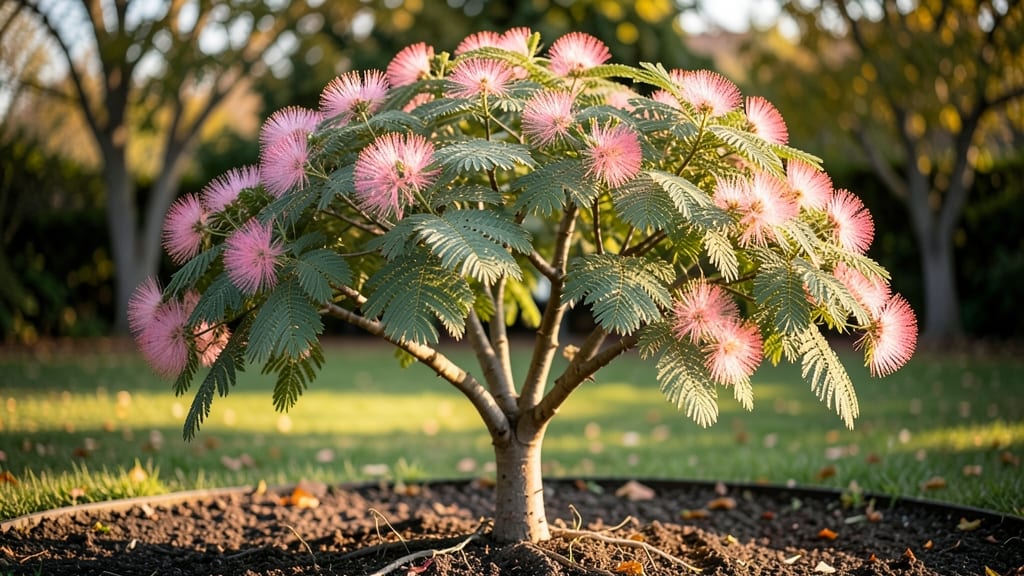
Mimosa trees in Arkansas thrive with seasonal pruning to control growth and promote flowering, with ideal timing in late winter before new growth begins for most varieties like the Silk Tree (Albizia julibrissin). Avoid pruning in fall or during active bloom periods to prevent stress or disease risks.
Arkansas's humid subtropical climate means mimosa trees need careful timing to avoid stress. 🌿 Pruning too late in winter risks damaging new buds, while summer cuts can trigger excessive sap flow, inviting pests like spider mites.
I've found that Arkansas-grown varieties like 'Summer Chocolate' benefit from a two-step approach: first, a light trim in late winter to shape the tree, then a second round in early spring to encourage dense blooms.
This schedule works because it aligns with the tree's natural dormancy period, allowing it to heal quickly before the heat sets in.
What also matters is the tool you use—dull blades tear bark and create entry points for fungal infections, which thrive in Arkansas's damp air. 🌧️ Always sterilize your pruners with rubbing alcohol between cuts, and focus on removing dead branches first to improve airflow.
The goal is to create a balanced shape while preserving as much foliage as possible, since mimosa trees rely on their leaves for energy production during Arkansas's long growing season.
💡 In This Article
- Seasonal Mimosa Tree Pruning Science in Arkansas Climates
- Best Mimosa Tree Varieties for Arkansas Gardens and Their Pruning Needs
Seasonal mimosa tree pruning science in Arkansas climates
Arkansas's humid subtropical climate creates unique challenges for mimosa trees, where the balance between moisture and heat directly impacts how they respond to pruning. During dormancy (typically December through early March), mimosa trees enter a state of reduced metabolic activity, making them less vulnerable to stress.
This is why late winter pruning—right before buds swell—is ideal. The tree's sap flow slows down, minimizing bleeding and reducing the risk of fungal infections like anthracnose, which thrives in Arkansas's damp conditions. Think of it like trimming a plant's hair in the off-season: less trauma, faster recovery. 🌱
The science behind this involves the tree's cambium layer, a growth zone just beneath the bark. When you prune during dormancy, you're cutting through a less active cambium, which means cleaner wounds and quicker sealing.
In contrast, pruning during active growth (spring to fall) forces the tree to expend energy on healing while simultaneously trying to produce leaves, flowers, or fruit.
For mimosa trees, this dual demand can weaken their immune response, making them more susceptible to pests like spider mites—common in Arkansas's heat and humidity. The key is to time your cuts when the tree's energy reserves are at their lowest, allowing it to focus solely on recovery.
Arkansas's climate also affects flowering cycles. Mimosa trees like the Silk Tree (Albizia julibrissin) typically bloom in late spring to early summer, and pruning too late in winter can accidentally remove next year's flower buds.
These buds form in clusters along the branches, and if you cut too aggressively, you risk stripping the tree of its most prized feature: those delicate, pink, pom-pom-like blossoms. 🌸 The solution?
Use a "selective pruning" approach—focus on removing only dead, diseased, or crossing branches during dormancy, and save structural shaping for early spring, after the buds have set but before new growth explodes.
Temperature plays a critical role too. Arkansas's winters often hover around 40-50°F, which is cold enough to slow growth but not severe enough to kill the tree. Pruning in these conditions ensures the tree isn't under stress from extreme cold or heat.
If you prune too early (like in November), the tree may still be photosynthesizing, and the cuts can expose it to late-season fungal spores. Conversely, pruning too late (April or later) risks encouraging new growth that could be damaged by late frosts, which Arkansas occasionally experiences.
Aim for a 2-3 week window before the last expected frost in your area.
Another layer to consider is the tree's root system. Mimosa trees have deep, extensive roots that help them survive Arkansas's periodic droughts. Pruning above ground affects below-ground processes too. When you remove branches, the tree redirects energy from root growth to healing the wounds.
This is why it's crucial to avoid over-pruning—never remove more than 25% of the canopy in a single session. Over-pruning can lead to a phenomenon called "compensatory growth," where the tree produces weak, fast-growing shoots that are more prone to disease and pests. 🌿
For Arkansas gardeners, understanding these seasonal cues can mean the difference between a thriving mimosa tree and one struggling with stress. Pay attention to the tree's natural rhythms: when buds begin to swell, when leaves start to unfurl, and when flowers appear.
These signs are your best indicators of when to prune—and when to hold off. The goal isn't just to shape the tree but to work with its biology to create a resilient, beautiful specimen that can handle Arkansas's unique growing conditions.