
Trees
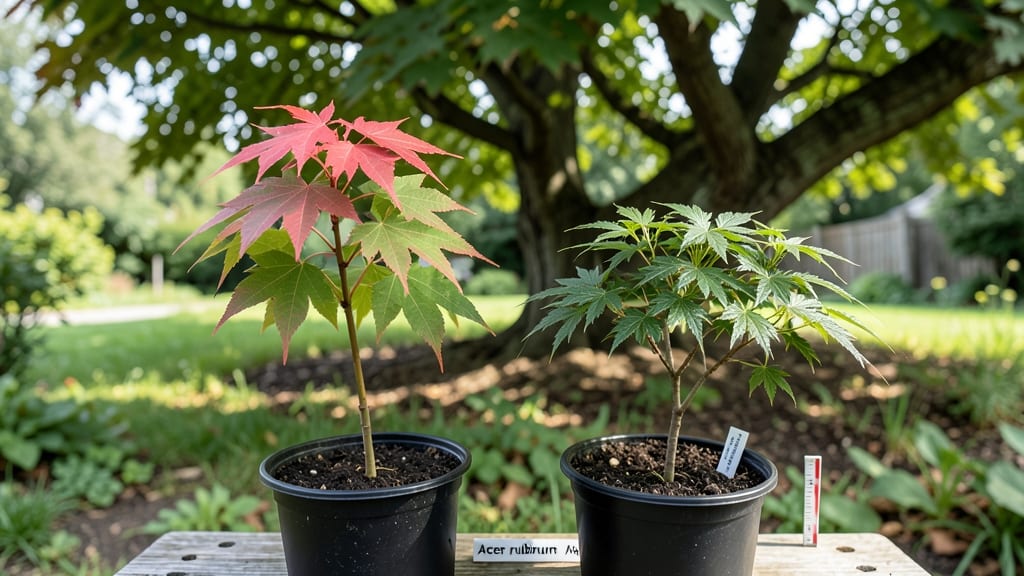
Mastering maple tree seedling identification starts with those distinctive leaves—each species has a signature shape that’s impossible to miss once you know what to look for. 🌿 I’ve spent years comparing sugar maple’s lobed edges to silver maple’s silvery undersides, and the differences become obvious after just a few side-by-side comparisons.
The key is focusing on leaf structure, bud patterns, and even bark texture at the base.
Sugar maples have 5-7 pointed lobes with U-shaped notches, while red maples sport 3-5 lobes that look almost star-shaped. Silver maples? Their leaves are deeply cut with sawtooth edges, and the undersides shimmer like polished silver.
These visual cues alone can narrow it down—but don’t stop there. Check the buds: sugar maples have smooth, egg-shaped buds, while red maples have pointed, overlapping scales.
Once you’ve matched the leaf to the species, the next step is simple: verify with a field guide or plant ID app. I swear by the free iNaturalist app for double-checking my finds—it’s saved me from mislabeling seedlings more times than I can count.
With accurate ID, you’ll know exactly how much sun, water, and space your young maple needs to thrive.
Pro tip: Dig a little deeper to check the bark. Young sugar maples have smooth gray bark, while silver maples develop ridged, furrowed patterns early on. These details make all the difference when planning long-term care—whether you’re transplanting a seedling or letting it grow wild in your yard.
Natural Factors Driving Seedling Differences
Identifying maple seedlings can feel like solving a botanical puzzle—especially when nature itself seems to rewrite the rules. While some variations stem from human influence (like grafting or cultivation), most differences in leaf shape, bud patterns, and growth habits boil down to genetics, environmental stress, and developmental stages.
Understanding these causes helps you decode whether a seedling is a Sugar Maple, Red Maple, or Silver Maple—or even a hybrid—with confidence.
Every maple seedling inherits a unique genetic code from its parent tree, dictating traits like leaf lobes, bud arrangement, and bark texture. Here’s how genetics play a role:
- Species-Specific Traits:
Maple trees are divided into hard maples (e.g., Sugar, Black) and soft maples (e.g., Red, Silver), each with distinct seedling characteristics. For example:
- Sugar Maples often sprout with 5–7 lobes and opposite buds (paired buds at each node).
- Red Maples may start with 3–5 lobes and asymmetrical bases, while Silver Maples can have deeply serrated edges and uneven growth.
- Hybrid Vigor:
Crossbreeding (intentional or via wind-pollinated seeds) creates seedlings with mixed traits. A Norway Maple × Silver Maple hybrid might exhibit lobes that are too rounded for a Sugar Maple but too serrated for a Red Maple.
- Polyploidy Quirks:
Some maples (like Bigleaf Maple) have extra chromosome sets, leading to larger leaves or slower growth. These seedlings may look "overgrown" compared to typical maples.
💡 Pro Tip: If a seedling’s traits don’t match any known species, it’s likely a hybrid. Cross-reference with local maple populations—hybrids are common in mixed forests!
Even identical seeds can produce wildly different seedlings if their growing conditions vary. Environmental factors act like a botanical Photoshop filter, altering leaf shape, color, and growth rate:
| Factor | Effect on Seedlings | Example |
|---|---|---|
| Light Exposure | Low light → larger, paler leaves with fewer lobes (shade adaptation). | A Red Maple seedling in deep shade might look like a Silver Maple due to softer lobes. |
| Water Stress | Drought → smaller, thicker leaves with curled edges (conserving moisture). | A Sugar Maple seedling in dry soil could mimic a Boxelder’s (a non-maple relative) leaf shape temporarily. |
| Soil Nutrients | Nitrogen-poor soil → darker green, slower growth; phosphorus deficiency → purple-tinged leaves. | A Silver Maple seedling in clay soil might develop deep red veins, confusing it with a Red Maple. |
| Wind Damage | Exposed seedlings develop stunted, irregular lobes or twisted stems. | Coastal Red Maple seedlings often have lopsided leaves due to salt spray. |
⚠️ Watch Out: Stress-induced changes are temporary—once conditions improve, the seedling may revert to its "true" species traits. Wait until second-year growth for accurate ID.
Maple seedlings don’t look like adults right away—just like human babies go through phases before resembling their parents. Here’s how age affects identification:
- First Year (Cotyledons):
New seedlings sprout with seed leaves (cotyledons) that resemble none of the parent tree’s mature leaves. These are often:
- Oval-shaped (not lobed)
- Smooth-edged (no serrations)
- Opposite or alternate (depending on species)
Example: A Sugar Maple seedling’s first leaves might look like a Linden tree’s!
- Second Year (True Leaves):
Now the juvenile leaves emerge, which closer resemble the adult but may still lack full lobing. Key clues:
- Red Maple: Leaves may have 3–5 lobes with pointed tips but softer edges.
- Silver Maple: Early leaves can be highly serrated but not yet deeply lobed.
- Third Year + (Mature Traits):
By this stage, seedlings typically lock into species-specific patterns. However, some maples (like Sycamore Maples) take 5+ years to show definitive traits.
🎯 Key Takeaway: Always compare second-year true leaves to adult reference charts. First-year seedlings are wild cards!
By separating genetic hardwiring, environmental pressure, and growth phases, you’ll stop guessing—and start diagnosing—why maple seedlings look so different. Next, we’ll tackle how to cross-reference these clues for foolproof identification.
Fixing Common Maple Seedling Confusions
Now that you understand why misidentifying maple seedlings can happen, let’s tackle the solutions—practical steps to ensure accurate identification every time.
Whether you're dealing with overlapping leaf shapes, bud mix-ups, or seasonal challenges, these fixes will help you confidently distinguish between species like sugar maple, red maple, or silver maple seedlings.
Before diving into tricky cases, build a solid foundation with these essentials: - Leaf Shape & Venation: Sketch or photograph seedlings in late spring to early summer when leaves are fully mature.
Compare them side by side with a reference guide (like the USDA’s tree identification tool or local arboretum resources). - Bud Patterns: Examine buds in winter or early spring when leaves are absent.
Use a hand lens (10x magnification) to spot key differences, such as: - Opposite vs. alternate arrangement (sugar maple = opposite; red maple = alternate). - Bud scale texture (smooth vs. hairy).
✨ Pro Tip: Press a few leaves between book pages to create a portable "specimen guide" for future comparisons.
Problem: Leaves change shape as seedlings mature, and buds may not be visible year-round. Solution:
- Spring/Summer Fix: Focus on leaf lobes and edges. For example:
- Sugar maple: 3–5 lobes with U-shaped sinuses (indentations).
- Red maple: 7–11 lobes with pointed tips and serrated edges.
- Use a ruler or smartphone app (like LeafSnap) to measure lobe depth and angle.
- Fall/Winter Fix: Look for seedling clusters near mature trees. Collect fallen leaves or twigs and compare their buds to known samples. Store them in a cool, dry place (like a seed envelope) for winter reference.
💡 Quick Hack: Snap a photo of the seedling’s base (where the stem meets the soil) to check for root suckers—a common trait in silver maples that can hint at species.
Problem: Buds can look deceptively similar, especially in young seedlings. Solution: Use this bud comparison table as a quick reference:
| Trait | Sugar Maple | Red Maple | Silver Maple |
|---|---|---|---|
| Bud Arrangement | Opposite pairs | Alternate | Opposite pairs |
| Bud Shape | Egg-shaped, pointed | Oval, slightly flattened | Elongated, sharp-pointed |
| Bud Scales | Smooth, slightly sticky | Hairy or smooth | Hairy, especially at tips |
| Winter Twigs | Reddish-brown | Reddish, often with corky ridges | Greenish, slender |
🔥 Fire Drill: If buds are too small to inspect, gently peel back one scale to reveal the inner bud color—sugar maples often have a reddish hue inside.
- Label Your Seedlings: Use waterproof tags with the species name and date planted. Include a small leaf sketch for future reference. - Grow a "Comparison Patch": Plant 3–5 seedlings of each type in a small garden area.
Observe their growth patterns side by side over a season. - Join a Local Tree Club: Many communities host tree-ID workshops where experts can verify your findings.
Websites like Native Plants Network list regional groups. - Use Tech Tools: - Apps: PictureThis or iNaturalist can help cross-reference your photos. - Drones: For larger properties, a low-altitude drone (with a camera) can capture seedling clusters without disturbing the soil.
✨ Bonus: Press a few leaves from each type into a herbarium sheet (or even cardstock) to create a personal reference library.
If all else fails:
- Send a Sample: Mail a small twig with buds to a local university extension office (many offer free ID services).
- Consult an Arborist: Professional tree services often provide free consultations for landowners.
- Post in Forums: Share photos on Reddit’s r/whatsthisthing or Facebook groups like "Tree Identification Help." Include your location for regional expertise.
By combining visual checks, seasonal adaptability, and preventive habits, you’ll turn even the trickiest maple seedling into a clear identification. The key? Patience and repetition—the more you practice, the sharper your eye becomes! 🌳🔍
Frequently asked questions
How do I tell the difference between a sugar maple and red maple seedling?
Look at the leaf lobes and bud patterns: sugar maple seedlings have 5-7 lobes with U-shaped notches, while red maple seedlings typically show 3-5 lobes with pointed tips. Also check the bud arrangement—sugar maples have opposite buds (paired at each node), while red maples have alternate buds.
Can I identify a maple seedling just from its first-year leaves?
No, first-year seedlings (cotyledons) don't resemble mature leaves—they're usually oval-shaped and smooth-edged. Wait until the second-year true leaves emerge for reliable identification. Compare them to reference charts during late spring or early summer when leaves are fully developed.
What's the best way to verify my identification if I'm still unsure?
Use a field guide or plant ID app like iNaturalist or LeafSnap to cross-reference your findings. For absolute certainty, collect a small twig with buds and send it to your local university extension office—many offer free identification services. Include photos from multiple angles for better accuracy.
Why do some maple seedlings look different from the adult trees?
Seedlings often exhibit juvenile traits that differ from mature trees, especially in their first 2-3 years. Environmental factors like light exposure, water stress, and soil nutrients can also alter leaf shape and growth patterns. Always compare second-year leaves to adult reference charts for the most accurate identification.
Can I transplant a maple seedling I've identified?
Yes, but timing is crucial—transplant in early spring or fall when temperatures are mild. Dig a hole twice as wide as the root ball and water thoroughly after planting. Remember that sugar maples prefer well-drained soil while silver maples tolerate wetter conditions. Always research your specific species' care requirements first.