
Pruning
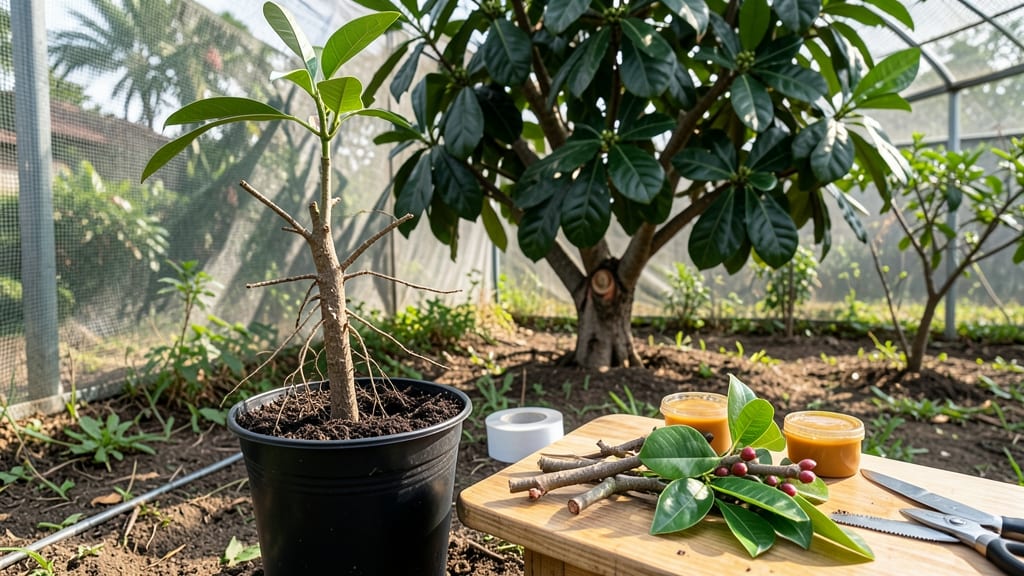
Precision cuts mean fruit-filled branches in just 12 months. ✨ Lychee fruit tree grafting transforms a basic rootstock into a high-yielding tree bearing your favorite varieties—like the sweet 'Brewster' or fragrant 'Kwai Mi Pang.'
The key is matching compatible scions to rootstocks and timing the graft when the tree is actively growing but before flowering. You'll need sharp grafting tools, a clean workspace, and a sunny spot to monitor progress.
The whip-and-tongue method works best for lychees, creating a seamless union that heals faster than cleft grafting. Most beginners struggle with cambium alignment or moisture control—we'll cover exactly how to avoid those pitfalls. By late summer, you'll see new shoots emerging from the graft union.
With proper care, these will mature into productive branches by next season. The payoff? Trees that produce fruit years earlier than seed-grown plants and resist common lychee diseases better. This works for both container-grown trees and in-ground plantings. Let's get those scions attached!
📚 In This Guide
- What you need
- Instructions
- Tips and common mistakes
- Wrapping up and next steps
What you need
- ● Rootstock: A healthy, disease-free lychee rootstock (1–3 years old) with a trunk diameter of ½–1 inch.
- ● Scion wood: Mature lychee scion (desired variety) with 3–5 buds, cut from a healthy branch (pencil-thick).
- ● Grafting knife: Sharp, sterilized knife or pruning shears (for clean cuts).
- ● Grafting tape or rubber bands: 1–2 inches wide (to secure the graft).
- ○ Pruning sealant: Optional but recommended (e.g., tree wound paint) to prevent infection.
- ● Plastic bag or grafting sleeve: To maintain humidity around the graft (e.g., 12x18-inch clear bag).
- ● Watering can or spray bottle: For gentle hydration post-grafting.
- ● Hormone rooting gel: Speeds up scion establishment (e.g., 1% IBA).
- ● Humidity dome: A small greenhouse or cloche for controlled conditions.
- ● Disinfectant (e.g., rubbing alcohol or bleach solution): To sterilize tools.
- ● Grafting wax: Alternative to sealant for larger cuts.
- ● Notebook & pen: To track graft progress and dates!
Step-by-step instructions for grafting a lychee tree
Mastering lychee grafting unlocks faster fruiting and disease resistance—here's how I do it with precision.
🌱 Step 1: Select and Prepare the Rootstock and Scion
Choose a healthy 1-2 year-old lychee rootstock with a 4-6 inch diameter trunk and vigorous new growth. The scion should come from a high-quality, disease-free tree, ideally a mature branch with pencil-thick shoots and at least 3-4 nodes. I always select scions in late winter when the tree is dormant but buds are just swelling.
Clean both rootstock and scion with a 70% alcohol solution to sterilize the cuts. Use a sharp grafting knife—a dull blade crushes cells and seals the wound, preventing proper union. Make your cuts just before grafting to prevent drying. The rootstock should have a smooth, slanted cut about 2-3 inches long, while the scion should have a matching tapered end with at least 2-3 buds visible.
✂️ Step 2: Make the Precision Cuts for Perfect Alignment
For whip-and-tongue grafting (best for lychee), start by making a vertical cut about 1/3 the depth of the scion and rootstock. Then, cut a tongue—a 1/4 inch wide triangular section—from the bottom of the scion and top of the rootstock. The tongues should interlock like puzzle pieces when joined.
Here's the thing—alignment matters more than anything. The cambium layers (the green growth ring just under the bark) must touch completely around the graft. If gaps remain, the graft will fail. Test-fit the pieces before applying grafting wax. You'll see the perfect union when the cambium layers align like a zipper.
💧 Step 3: Bind and Seal the Graft
Wrap the grafted union with rafting tape or plastic grafting tape, starting just below the cut and extending 2-3 inches above. Pull the tape snug but not tight—you want to hold the scion firmly without crushing it. Then, apply a thin layer of grafting wax over the entire cut area to seal moisture and prevent disease.
I like to add a small wooden stake beside the graft for support, especially if the scion is long. Water the base of the tree lightly immediately after grafting—just enough to settle the soil without soaking the graft. Keep the soil evenly moist (not soggy) for the next 4-6 weeks while the graft heals.
☀️ Step 4: Protect and Monitor the Graft
Place the grafted tree in a sheltered spot with dappled sunlight for the first 2-3 weeks. Too much direct sun causes the scion to dry out before the graft takes. Watch for new growth—this is your signal the graft succeeded. You'll see tiny pink buds breaking through the tape after 6-8 weeks in ideal conditions.
Remove the tape 8-10 weeks after grafting when the union is fully healed. If the tape has grown into the bark, peel it off carefully to avoid damaging new growth. Once the scion is established, prune the rootstock 6-12 inches above the graft to redirect the tree's energy into the scion. This ensures the new top grows strong and produces fruit.
Tips & tricks for perfect lychee tree grafting
Precision is everything when it comes to lychee grafting—here's how to avoid the mistakes that sink even the best-intentioned grafts.
Scion Selection Matters: Late winter is your golden window for selecting scions, but timing isn't everything—look for branches with 3-4 nodes that are pencil-thick and show early signs of bud swelling. I've grafted with scions that looked perfect but had hidden internal rot; tap the branch firmly—if it sounds hollow, it's compromised. The 2-3 buds at the base of your scion should be plump and firm, not shriveled or cracked. This ensures you're not just grafting a stick.
Tool Sharpness is Non-Negotiable: That sharp grafting knife isn't just a suggestion—it's the difference between a clean cut that heals properly and a crushed wound that seals itself shut. Test your knife on a scrap piece of bark before making your cuts. If it drags or tears, sharpen it further. A dull blade crushes the cambium layer, which is exactly where new growth will form. I keep a small pocket sharpener in my grafting kit specifically for this reason.
Cambium Alignment is Your Secret Weapon: When making those 1/4 inch wide tongues in Step 2, think of them as nature's Velcro. The cambium layers must touch completely around the graft—no gaps, no overlaps. Here's a trick I learned from old-school orchardists: hold the scion and rootstock up to a bright light. You'll see the cambium as a thin green line just under the bark. Align these lines perfectly before you even think about tape or wax. This single detail determines whether your graft takes or fails.
Post-Grafting Care Prevents Failure: That first 2-3 weeks of dappled sunlight protection is critical, but don't stop there. I've seen grafts dry out even with proper shading because people forget about humidity. Misting the leaves lightly in the morning creates a microclimate that keeps the scion hydrated. And remember—evenly moist soil means your finger should sink about an inch when you press it, not come out dry or leave a muddy hole. Overwatering is just as deadly as underwatering at this stage.
Pro Tips for Lychee Fruit Tree Grafting
- Precision is everything when it comes to lychee grafting—here's how to avoid the mistakes that sink even the best-intentioned grafts.
- Scion Selection Matters: Late winter is your golden window for selecting scions, but timing isn't everything—look for branches with 3-4 nodes that are pencil-thick and show early signs of bud swelling.
- Tool Sharpness is Non-Negotiable: That sharp grafting knife isn't just a suggestion—it's the difference between a clean cut that heals properly and a crushed wound that seals itself shut.
Frequently asked questions
Got questions about lychee tree grafting?
You’re not alone! Here are answers to the most common queries—from timing to troubleshooting—to help you master the art of grafting like a pro.
When is the best time to graft a lychee tree?
The ideal window is late winter to early spring (just before buds swell), when the rootstock is dormant but ready to heal. Avoid extreme heat or cold—aim for 50–75°F (10–23°C) for optimal success. Pro tip: Morning grafts heal faster with cooler temps!
How long does it take for a grafted lychee tree to bear fruit?
Patience is key! With proper care, grafted lychee trees typically take 3–5 years to produce fruit. Early signs of success include new shoots emerging from the graft union—monitor closely for compatibility (some rootstocks may reject scions).
Can I use any lychee variety for grafting?
Not all lychees play well together! Stick to compatible cultivars (e.g., ‘Brewer’ or ‘Kwai Mi’ rootstocks work for most scions). Avoid grafting wild lychees—their growth habits may conflict with cultivated varieties. Check local agricultural extensions for region-specific recommendations.
What if my graft fails or the scion dies?
Don’t panic! Common causes include poor wound alignment, disease, or stress. Re-graft using a clean, sharp tool and seal the cut with grafting wax. If the scion wilts, check for girdling (rootstock growth over the graft) and prune carefully. Persistence pays off!
Are there alternatives to traditional grafting for lychee trees?
Yes! Air-layering (for propagation) or budding (smaller cuts) are gentler options. However, grafting ensures genetic consistency and faster fruiting. For beginners, whip-and-tongue grafting is the most forgiving method—start here!
Wrapping up and next steps
Grafting your lychee fruit tree is a rewarding skill that unlocks bigger harvests and healthier growth—just like a pro! With the right tools, timing, and techniques, you can transform even a struggling tree into a fruit-bearing powerhouse. 🌱✨
Ready to take the next step? Start by practicing on a few branches before tackling your main tree, and don’t hesitate to experiment with different rootstocks for optimal results. Your future lychee feast begins with one precise cut!